

Research
- +10
Rosa Balfour, Frances Z. Brown, Yasmine Farouk, …
{
  "authors": [
    "Moisés Naím"
  ],
  "type": "legacyinthemedia",
  "centerAffiliationAll": "",
  "centers": [
    "Carnegie Endowment for International Peace"
  ],
  "collections": [],
  "englishNewsletterAll": "",
  "nonEnglishNewsletterAll": "",
  "primaryCenter": "Carnegie Endowment for International Peace",
  "programAffiliation": "",
  "programs": [],
  "projects": [],
  "regions": [
    "North America",
    "South America"
  ],
  "topics": [
    "Political Reform",
    "Democracy"
  ]
}
Source: Getty
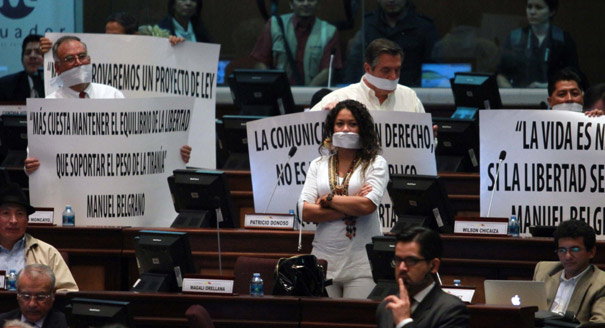
While Ecuador’s leadership advertises the country on the world stage as a champion of the right to criticize governments, it is muzzling its own critics at home.
Source: Financial Times
Amid all their vicissitudes, WikiLeaks founder Julian Assange and Edward Snowden, the National Security Agency leaker, can rejoice in their good luck in at least one aspect: they are not Ecuadorian journalists. They are very lucky that the president of the nation aggrieved by their leaks is Barack Obama of the US and not Rafael Correa.
Mr Correa, the self-anointed protector of global whistleblowers, doesn’t take too kindly to Ecuadoran journalists who report on the corruption and abuses of his government.
In 2012, according to Fundamedios, an Ecuadorian non-profit press watchdog, there were 173 “acts of aggression” against journalists, including one killing and 13 assaults. On February 16 2012, Catalina Botero, the special rapporteur for freedom of expression of the Inter-American Commission on Human Rights, and Frank La Rue, the UN special rapporteur on freedom of opinion and expression, expressed deep concern over a decision of Ecuador’s National Court of Justice. The decision affirmed the criminal and civil judgment against three executives and a journalist from El Universo newspaper, sentencing them to three years in jail and payment of $40m, for the publication of a column that offended, and allegedly criminally libelled, Mr Correa.The Inter American Press Association calls a new media law pushed by Mr Correa “the most serious setback for freedom of the press and of expression in the recent history of Latin America”. The Colombian Association of Newspapers and Informative Media (Andiarios) calls it “the final stab” against freedom of expression in Ecuador.
A Washington Post editorial notes that Mr Snowden should be particularly interested in Section 30 of Ecuador’s gag law, which bans the “free circulation, especially by means of the communications media” of information ‘protected under a reserve clause established by law.’ The legislation empowers a new superintendent of information and communication to heavily fine anyone involved in releasing such information, even before they are prosecuted in the courts. In other words, had Mr Snowden done his leaking in Ecuador, not just he but also any journalist who received his information would be subject to immediate financial sanction, followed by prosecution”.
Yet, in an outburst of hypocrisy and double standards, Ricardo Patiño, Ecuador’s foreign minister, stated in a speech at the Organization of American States in August 2012 that: “The asylum granted to Mr Julian Assange is the struggle for freedom of expression, the struggle for human rights, the struggle for life, the struggle for the figure of asylum to be respected in any place in the world,” no less. After meeting with Mr Assange, he said: “I was able to say face to face to him, for the first time, that the government of Ecuador remains firmly committed to protecting his human rights. During the meeting we were able to speak about the increasing threats against the freedom of people to communicate and to know the truth, threats which come from certain states that have put all of humanity under suspicion.” It would be nice if Mr Patiño were as stridently concerned for the human rights and free speech of his fellow Ecuadorians.
At the same time as the Ecuadorian government is muzzling its internal critics, it is pushing itself forward on the world stage as a champion of the right to criticise governments. Journalists who know Ecuador know that the propaganda from Mr Correa and Mr Patiño in support of Mr Assange and Mr Snowden is empty and hypocritical propaganda. And we all know that, so far, the leaks have mostly targeted one government: that of the US. We are all looking forward with great interest and expectation to the WikiLeaks or Snowden revelations about the secret communications of the Russian, Iranian, Chinese or Cuban governments. Or even the Ecuadorian one.
This article was originally published in the Financial Times.

Distinguished Fellow
Moisés Naím is a distinguished fellow at the Carnegie Endowment for International Peace, a best-selling author, and an internationally syndicated columnist.
Recent Work



Rosa Balfour, Frances Z. Brown, Yasmine Farouk, …
Moisés Naím
Carnegie does not take institutional positions on public policy issues; the views represented herein are those of the author(s) and do not necessarily reflect the views of Carnegie, its staff, or its trustees.
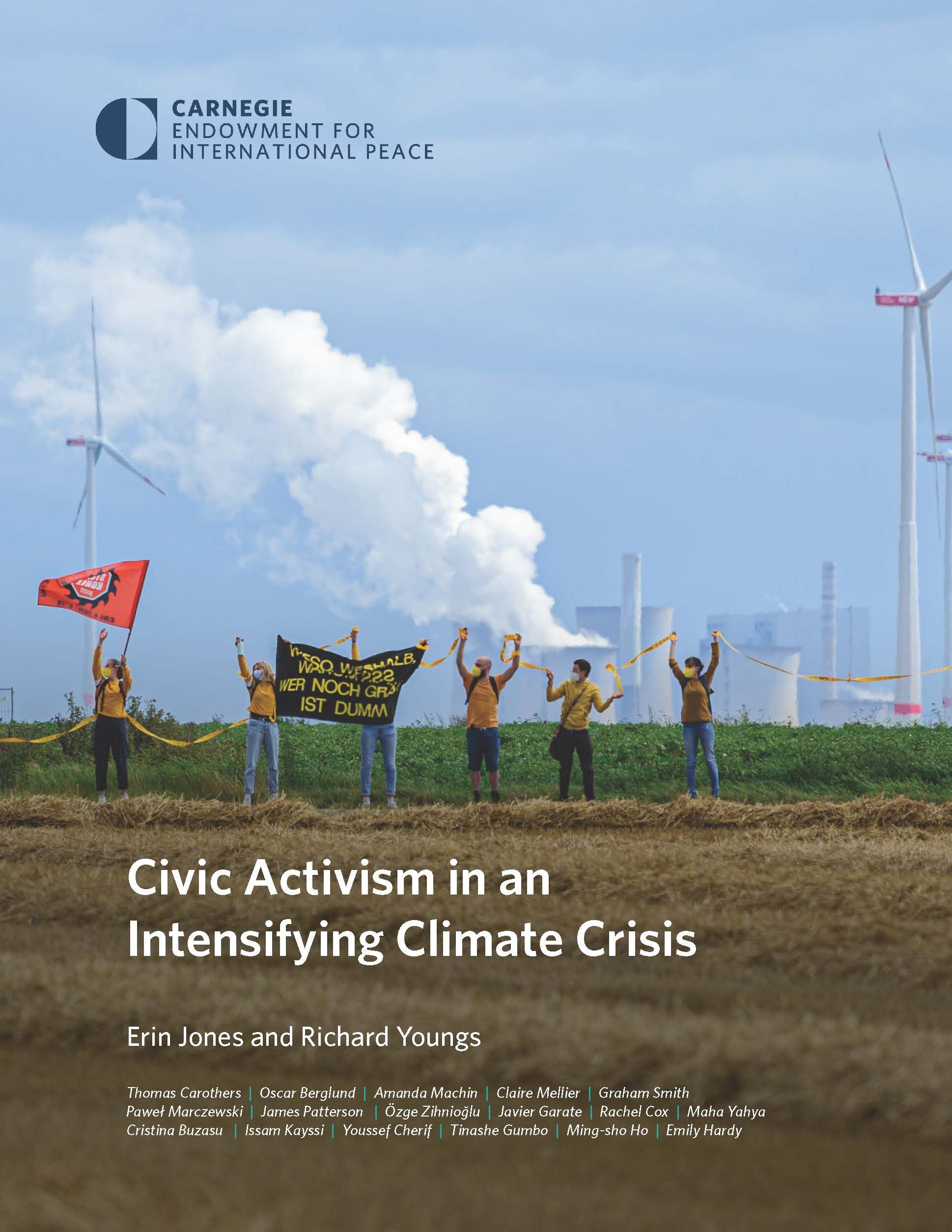
To address the deepening climate crisis, climate activism is employing a wider variety of tactics and aiming at a broader set of goals. In response, the movement faces stronger repression and civic backlash against climate action.

Erin Jones, Richard Youngs
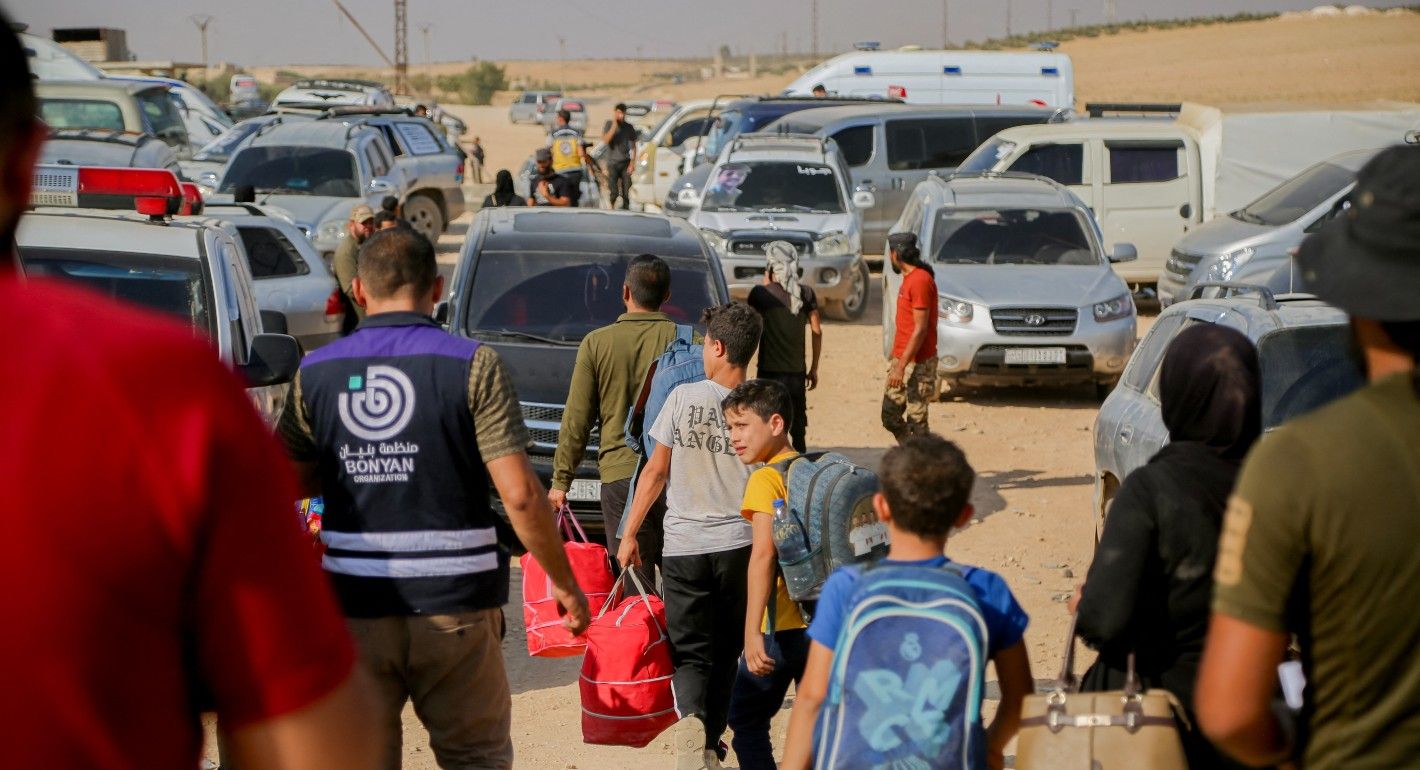
A humanitarian crisis in Lebanon deepens, and Syrian refugees face a perilous choice: remain in a war-torn environment or return to Syria where they risk encountering significant dangers and discrimination. There are significant challenges and risks to their search for safety in Syria.
Haid Haid
In Syria’s border regions, changes in demographics, economics, and security mean that an inter-Syrian peace process will require consensus among main regional powers that Syria must remain united, that no one side can be victorious, and that perennial instability threatens the region.

Kheder Khaddour, Armenak Tokmajyan
The interaction of national armed forces and private business sectors offers a useful lens for viewing the politics of numerous countries of the so-called Global South. A rising trend of military political activism—often accompanied by military commercial activity—underlines the importance of drivers and outcomes in these relationships.

Yezid Sayigh, Hamza Meddeb
For many in the society, the post-Ben Ali years were mainly about successive economic crises and political instability.
Jasmine Khelil