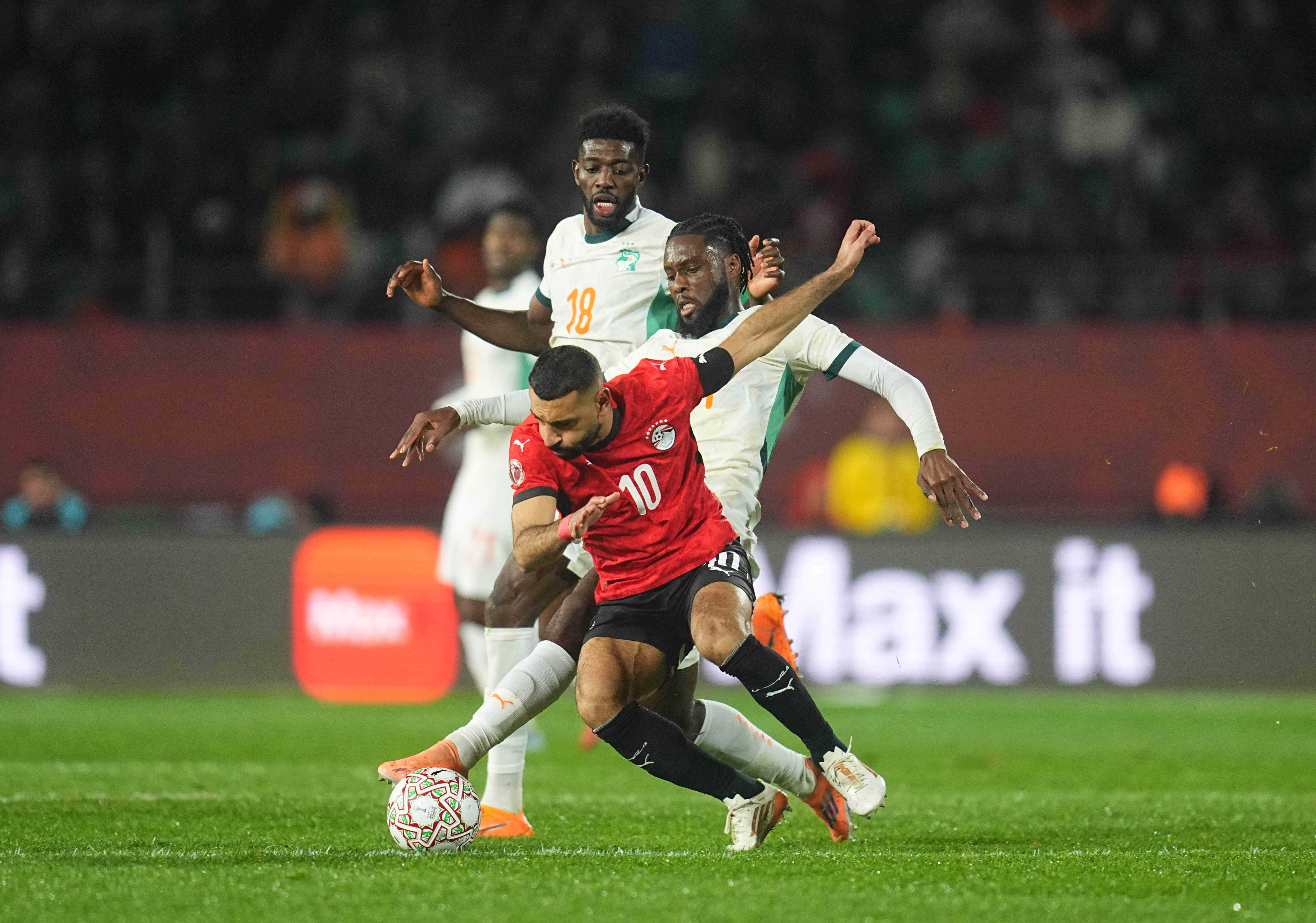

The recent African Cup of Nations tournament in Morocco touched on issues that largely transcended the sport.
Issam Kayssi, Yasmine Zarhloule
{
"authors": [],
"type": "other",
"centerAffiliationAll": "",
"centers": [
"Carnegie Endowment for International Peace"
],
"collections": [],
"englishNewsletterAll": "",
"nonEnglishNewsletterAll": "",
"primaryCenter": "Carnegie Endowment for International Peace",
"programAffiliation": "",
"programs": [],
"projects": [],
"regions": [
"North Africa",
"Egypt"
],
"topics": []
}Source: Getty
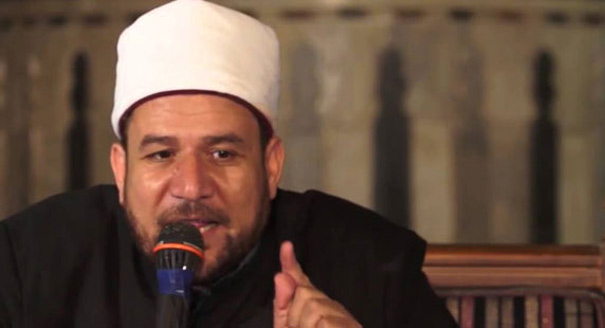
A brief profile of Mohamed Mokhtar Gomaa.
This resource was published on 09/20/2013 and is not updated to reflect changing circumstances.
Mohamed Mokhtar Gomaa was sworn in as Egypt’s minister of religious endowments on July 16, 2013, nearly two weeks after the ouster of former Egyptian president Mohamed Morsi at the hands of the military. The author of several books on Arabic literature and poetry, Gomaa was the dean of the Faculty of Islamic and Arabic Studies at al-Azhar University, the country’s premier religious institution. He was also a member of the senior clerical establishment at al-Azhar, head of al-Azhar’s religious media, and a forty-year member of the Egyptian Journalists’ Syndicate.
Since assuming office, Gomaa has taken a series of controversial steps to reassert state control over Egypt’s sprawling network of mosques and to limit the influence of the Muslim Brotherhood and other Islamist organizations.
Between July and September 2013, Gomaa has undertaken a number of measures, including:
Gomaa has long been a proponent of the religious moderation favored by al-Azhar. Since becoming minister, he has frequently warned preachers to avoid political messages in their sermons.
Carnegie does not take institutional positions on public policy issues; the views represented herein are those of the author(s) and do not necessarily reflect the views of Carnegie, its staff, or its trustees.
The recent African Cup of Nations tournament in Morocco touched on issues that largely transcended the sport.
Issam Kayssi, Yasmine Zarhloule
The UN Support Mission in the country should reassess its approach so that consensus between the warring parties becomes the eventual goal, rather than a procedural matter that dogs the negotiating process at every turn.
Soraya Rahem
Mustaqbal Misr has expanded its portfolio with remarkable speed, but a lack of transparency remains.
Yezid Sayigh
The burden of environmental degradation is felt not only through physical labor but also emotional and social loss.
Yasmine Zarhloule, Ella Williams
For the traditionally nomadic Amazigh pastoralists in the Draa-Tafilalet region, environmental change has exacerbated long-standing inequities, forcing the community to adapt, which has laid bare the blind spots of state-centered climate policy frameworks.
Yasmine Zarhloule, Ella Williams