

Q&A
Suzanne Maloney, Aaron David Miller, Karim Sadjadpour
{
  "authors": [
    "Karim Sadjadpour"
  ],
  "type": "legacyinthemedia",
  "centerAffiliationAll": "dc",
  "centers": [
    "Carnegie Endowment for International Peace",
    "Malcolm H. Kerr Carnegie Middle East Center"
  ],
  "collections": [
    "Iranian Proliferation"
  ],
  "englishNewsletterAll": "menaTransitions",
  "nonEnglishNewsletterAll": "",
  "primaryCenter": "Carnegie Endowment for International Peace",
  "programAffiliation": "MEP",
  "programs": [
    "Middle East"
  ],
  "projects": [],
  "regions": [
    "United States",
    "Middle East",
    "Iran"
  ],
  "topics": [
    "Security",
    "Foreign Policy",
    "Nuclear Policy"
  ]
}
Source: Getty
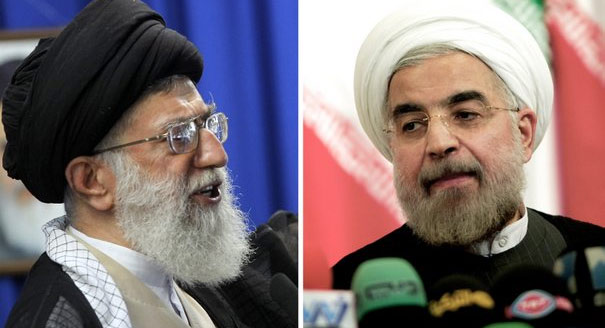
Though the diplomatic thaw between Iran and the West is a significant step forward, it remains to be seen whether Iran wants a rapprochement with the United States and will fundamentally change its foreign and domestic policy.
Source: Agenda with Steve Paikin
The diplomatic thaw between Iran and the West is a significant step forward after years of tensions. As Carnegie’s Karim Sadjadpour explains, the question, however, is whether Iran wants a rapprochement with the United States and if Tehran will fundamentally change its foreign and domestic policy. Speaking to the Agenda with Steve Paikin, Sadjadpour argued that Iranian president Hassan Rouhani is a pragmatic politician and the team around him has a much more sophisticated world view than Ahmadinejad’s. They recognize that in order for Iran to fulfill its true potential and improve the state of the domestic economy, it can’t have an adversarial policy towards the outside world.
Sadjadpour explained that one of the fundamental challenges facing the Iranian regime is reconciling their state ideology, which has been based on resistance against America and a rejection of Israel’s existence. He contended that it will be very difficult for the regime to dilute those pillars which have been fundamental sources of identity for the system. Sadjadpour described the likelihood of Iran entirely giving up its nuclear program as slim to none and underlined that the big question is whether there is a middle ground between the U.S. Congress and the Supreme Leader, where Iran would make significant nuclear compromises in exchange for sanctions relief.

Senior Fellow, Middle East Program
Karim Sadjadpour is a senior fellow at the Carnegie Endowment for International Peace, where he focuses on Iran and U.S. foreign policy toward the Middle East.
Recent Work


Suzanne Maloney, Aaron David Miller, Karim Sadjadpour

Aaron David Miller, Karim Sadjadpour, Robin Wright
Carnegie does not take institutional positions on public policy issues; the views represented herein are those of the author(s) and do not necessarily reflect the views of Carnegie, its staff, or its trustees.

Huawei pushed hard to enter the Egyptian data centers market, until the Americans made a better offer.

Angie Omar

Middle Eastern states should welcome an accelerated U.S. disengagement from their region.

Michael Young

In an interview, former ambassador Charles Freeman assesses the Trump administration’s war against Iran.
Michael Young

The accord represents a pivotal moment in the region to avert a security vacuum in the Gulf.


Azeema Cheema, Mohanad Hage Ali

In an interview, Jason Burke discusses his sweeping account of the “revolutionists” who so shaped the 1970s and early 1980s.
Michael Young