

Report
- +3
James M. Acton, Alexey Arbatov, Vladimir Dvorkin, …
{
  "authors": [
    "Petr Topychkanov"
  ],
  "type": "commentary",
  "centerAffiliationAll": "",
  "centers": [
    "Carnegie Endowment for International Peace",
    "Carnegie Russia Eurasia Center"
  ],
  "collections": [],
  "englishNewsletterAll": "",
  "nonEnglishNewsletterAll": "",
  "primaryCenter": "Carnegie Russia Eurasia Center",
  "programAffiliation": "",
  "programs": [],
  "projects": [
    "Eurasia in Transition"
  ],
  "regions": [
    "North America",
    "United States",
    "South Asia",
    "India",
    "Afghanistan",
    "Pakistan",
    "Western Europe"
  ],
  "topics": [
    "Global Governance",
    "Foreign Policy"
  ]
}
Source: Getty
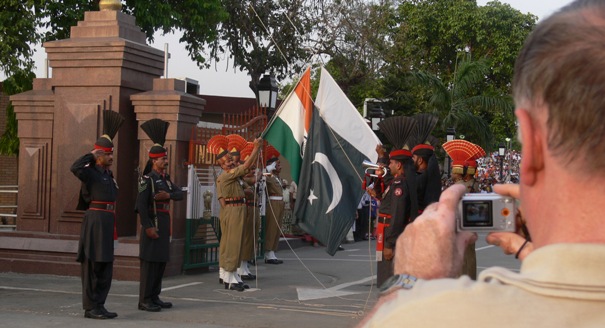
The slump of interest in South Asia in the West is a positive development, because it makes clearer which countries are the real partners of Afghanistan, India, and Pakistan. Also, if left to themselves these three countries will get a chance to build their relations without external pressure.
The Munich Security Conference reflects change in Western countries’ level of interest in South Asian affairs. If we compare the 2014 Conference with earlier events, we see that this region received the highest level of attention in 2010 and 2011, when a number of the region’s political figures attended the conference, including President Hamid Karzai of Afghanistan, Chief of Army Staff Ashfaq Parvez Kayani of Pakistan, and National Security Advisor Shivshankar Menon of India. This year there will be only two representatives of South Asia: Afghanistan Minister of Foreign Affairs Zarar Ahmad Osmani and Ambassador Menon, who travels to Munich every year for the event. Unlike in past years there will be no separate section on Afghanistan this year.
If there really is falling interest in South Asia in the West, the mass media could be one of the reasons. For example, Afghanistan is a country where hundreds of Americans and Europeans were killed, and thousands wounded in more than twelve years. But according to Pew Research Journalism Project “U.S. media coverage of the war in Afghanistan has been sporadic and often sparse,” or “for a long time, the most noteworthy aspect of mainstream media coverage of the war in Afghanistan was its scarcity.” Some people believe that this is evidence of attempts to redirect public attention from the ISAF mission failure in Afghanistan to other issues. But it is hard to agree with this conclusion, because facts suggest the opposite. Even in years when politicians paid huge attention to Afghanistan, mass media had very limited interest in this country.
Now neither politicians, the media, nor the Western public are much interested in South Asia. Decline of interest to Afghanistan and Pakistan is interdependent. One of the reasons Pakistan can still make the headlines is that it has nuclear weapons. Newspapers repeat bogeyman stories about terrorists getting hold of a bomb in Pakistan. The slump in interest in India, which has now entered into a dramatic election period, is not so evident. It is happening slowly and latently, emerging suddenly in the form of deep political crisis, such as the deterioration of India’s relations with the United States over diplomat Devyani Khobragade, or its relations with the EU over two Italian marines who face the death penalty in India. Serious slowdown in India’s economic growth is another factor. India doesn’t seem so lucrative a market for foreign investors anymore.
The slump of interest in South Asia is undoubtedly a positive development overall. First, it makes clearer which countries are the real partners of Afghanistan, India, and Pakistan, and which countries have only short-term goals in the region. Second, if left to themselves these three countries will get a chance to build their relations without external pressure. As a senior politician from India noted in a conversation with me about another country in South Asia several years ago, its main problem was that other countries were trying to use it for their own purposes. The same thing can be said about the entire region of South Asia.
Former Fellow, Nonproliferation Program, Moscow Center
Topychkanov was a fellow in the Carnegie Moscow Center’s Nonproliferation Program.
Recent Work


James M. Acton, Alexey Arbatov, Vladimir Dvorkin, …
Petr Topychkanov
Carnegie does not take institutional positions on public policy issues; the views represented herein are those of the author(s) and do not necessarily reflect the views of Carnegie, its staff, or its trustees.

As the U.S. stumbles in its war with Iran, we are likely to see an acceleration of its disengagement from the region.

Michael Young

Huawei pushed hard to enter the Egyptian data centers market, until the Americans made a better offer.

Angie Omar

Middle Eastern states should welcome an accelerated U.S. disengagement from their region.
Michael Young

In an interview, former ambassador Charles Freeman assesses the Trump administration’s war against Iran.
Michael Young

By failing to address Palestinian representation, the current process is bound to lead to just another temporary arrangement.

Nathan J. Brown