

Research
- +5
Alper Coşkun, Fatih Ceylan, Tacan İldem, …
{
  "authors": [
    "Sinan Ülgen"
  ],
  "type": "legacyinthemedia",
  "centerAffiliationAll": "dc",
  "centers": [
    "Carnegie Endowment for International Peace",
    "Carnegie Europe",
    "Malcolm H. Kerr Carnegie Middle East Center"
  ],
  "collections": [
    "Turkey’s Transformation",
    "Transatlantic Cooperation"
  ],
  "englishNewsletterAll": "ctw",
  "nonEnglishNewsletterAll": "",
  "primaryCenter": "Carnegie Europe",
  "programAffiliation": "EP",
  "programs": [
    "Europe"
  ],
  "projects": [],
  "regions": [
    "Middle East",
    "Europe",
    "Türkiye",
    "Western Europe",
    "Iran"
  ],
  "topics": [
    "Security",
    "Political Reform",
    "Foreign Policy"
  ]
}
Source: Getty
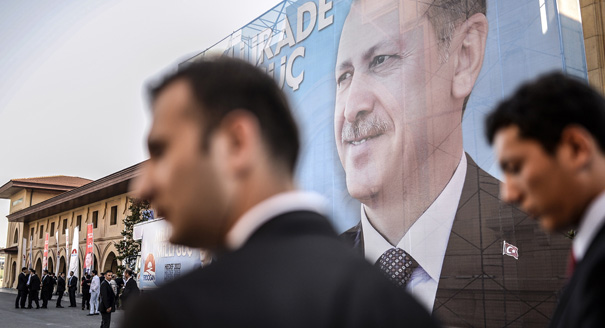
The security risks in the Middle East will strengthen Turkey’s partnership with Western allies.
Source: Bloomberg TV On the Move
Speaking to Jonathan Ferro on Bloomberg Television’s On the Move, Carnegie Europe’s Sinan Ülgen discussed Turkey’s foreign policy and economic priorities following the Turkish presidential elections.
Owing to recent developments in the Middle East, “Turkey is looking at the region rather as a security challenge more than trying to establish economic partnerships” he argued. “The trend is to try to establish better relations with Europe and the United States.”Ülgen added that the tensions in Gaza and Iraq are likely the first foreign policy issues that president Erdoğan needs to tackle in collaboration with Turkey’s Western partners, in particular the U.S.
Domestically, Erdoğan enjoys the support of the population, “One of the strong assets of Erdoğan and his government in the past decade has been economic performance,” Ülgen added.

Senior Fellow, Carnegie Europe
Sinan Ülgen is a senior fellow at Carnegie Europe in Brussels, where his research focuses on Turkish foreign policy, transatlantic relations, international trade, economic security, and digital policy.
Recent Work

Alper Coşkun, Fatih Ceylan, Tacan İldem, …
Carnegie does not take institutional positions on public policy issues; the views represented herein are those of the author(s) and do not necessarily reflect the views of Carnegie, its staff, or its trustees.

In an interview, Ian Lustick and Eli Clifton discuss their new book on why a prominent ally has so much influence in America.

Michael Young

As the U.S. stumbles in its war with Iran, we are likely to see an acceleration of its disengagement from the region.
Michael Young

Huawei pushed hard to enter the Egyptian data centers market, until the Americans made a better offer.

Angie Omar

Middle Eastern states should welcome an accelerated U.S. disengagement from their region.
Michael Young

In an interview, former ambassador Charles Freeman assesses the Trump administration’s war against Iran.
Michael Young