

Paper
Thomas Carothers
{
  "authors": [
    "Thomas Carothers"
  ],
  "type": "legacyinthemedia",
  "centerAffiliationAll": "dc",
  "centers": [
    "Carnegie Endowment for International Peace"
  ],
  "collections": [
    "Democracy and Governance"
  ],
  "englishNewsletterAll": "democracy",
  "nonEnglishNewsletterAll": "",
  "primaryCenter": "Carnegie Endowment for International Peace",
  "programAffiliation": "DCG",
  "programs": [
    "Democracy, Conflict, and Governance"
  ],
  "projects": [],
  "regions": [
    "North America",
    "United States"
  ],
  "topics": [
    "Political Reform",
    "Democracy",
    "Foreign Policy"
  ]
}
Source: Getty
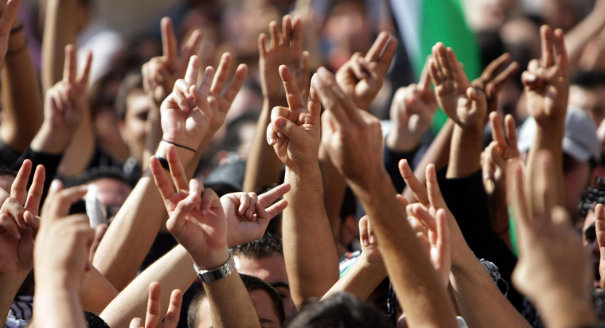
Supporting democracy, human rights, and better governance more effectively will not produce instant solutions to the current global crises. But such aid can be a crucial part of the necessary longer-term solutions.
Source: Washington Post
U.S. assistance to advance democracy worldwide is in decline. Such spending has shrunk by 28 percent during Barack Obama’s presidency and is now less than $2 billion per year. The decline has been especially severe at the U.S. Agency for International Development, which traditionally funds the bulk of U.S. democracy assistance and established itself in the 1990s as the largest source of such aid worldwide. According to data provided by the agency, USAID spending to foster democracy, human rights and accountable governance abroad has fallen by 38 percent since 2009.
The drop-off affects almost every region to which such aid is directed. It has been largest in the Middle East — a startling 72 percent cut that came just as much of the Arab world attempted a historic shift toward democracy. In Africa, a 43 percent decline has left a paltry $80 million for democracy work for the entire continent outside of Liberia and South Sudan. Overall, the number of countries where USAID operates dedicated democracy programs has fallen from 91 to 63.
To grasp just how unimpressive the U.S. commitment to aiding democracy abroad has become, consider this: Leaving aside Iraq, Afghanistan and Pakistan, USAID spending on democracy, rights and governance in fiscal 2014 — $860 million — totaled less than what just one U.S. citizen, George Soros, spends annually to foster open society globally (full disclosure: I chair an advisory board of one program of the Soros foundations). The main aid agency of the country that prides itself on being an unmatched force for democracy cannot even match the financial commitment of one of its citizens?Of course aid is not the only means by which the United States seeks to foster democracy in the world. Skillful diplomacy — resolving electoral standoffs, bolstering promising pro-democratic leaders and punishing toxic undemocratic ones — can accomplish much. But democracy aid plays a distinctive role. It can be the glue that helps cement into place the foundational elements — such as effective legal institutions, representative parliaments, pluralistic political parties, civil society organizations and independent media — necessary to sustain democratic breakthroughs. Shortchanging the aid side of democracy support ensures longer-term failures.
Why this striking reduction in democracy aid? It is not a product of a broader contraction of U.S. foreign aid spending, which remains robust overall. Rather, it is a policy choice, reflecting both skepticism about the relative importance of democracy work by senior U.S. aid officials and, more generally, the muted emphasis on democracy-building by the Obama foreign policy team.
Some might see the decline in U.S. democracy aid as an understandable response to the more unstable and conflict-prone world confronting policymakers. U.S. foreign policy in such a convulsive climate, the thinking goes, should emphasize stability above all — democracy will have to wait. A tempting idea, perhaps, but a dangerously wrong one.
With the Middle East wracked by multiple civil wars, falling back on the old habit of relying on authoritarian friends there to help manage security challenges to the United States may look like an appealing option. But it was precisely the festering sociopolitical and governance decay under stagnant dictatorial Arab governments that produced the conditions underlying today’s civil conflicts and extremism.
In Ukraine, the persistent failure over more than two decades to establish the rule of law and consolidate an accountable democratic system has led to the country’s periodic political meltdowns, endemic corruption and vulnerability to Russian meddling. The key to resolving the security sinkhole that Ukraine has become for the West is finally taking seriously those institution-building goals.
In West Africa, decades of mercurial dictators scornful of basic institution-building produced a legacy of crippling state weakness that left the region poorly prepared to deal with the Ebola crisis. No emergency health delivery measures, no matter how heroic in the short term, will solve the deeper governance problem.
Supporting democracy, human rights and better governance more substantially and effectively will not produce instant solutions to these and other crises. But patiently and seriously pursued, such aid can be a crucial part of the longer-term solutions we seek. Troubled though our democracy can seem at home, our society still enjoys its unique stability and security thanks to its pluralistic, open political system rooted in democratic accountability and the rule of law. That formula remains the right one for our pursuit of stability and security abroad.
This article was originally published in the Washington Post.

Harvey V. Fineberg Chair for Democracy Studies; Senior Fellow, Democracy, Conflict, and Governance Program
Thomas Carothers, a senior fellow in the Carnegie Endowment for International Peace’s Democracy, Conflict, and Governance Program, is a leading expert on comparative democratization and international support for democracy.
Recent Work
Thomas Carothers
Thomas Carothers
Carnegie does not take institutional positions on public policy issues; the views represented herein are those of the author(s) and do not necessarily reflect the views of Carnegie, its staff, or its trustees.

Middle Eastern states should welcome an accelerated U.S. disengagement from their region.

Michael Young

In an interview, former ambassador Charles Freeman assesses the Trump administration’s war against Iran.
Michael Young

By failing to address Palestinian representation, the current process is bound to lead to just another temporary arrangement.

Nathan J. Brown

Morocco and Algeria, each in its own way, are having to navigate the global economic fallout of the U.S.-Israeli military campaign against Iran.

Yasmine Zarhloule
Any move by the United States to make good on Trump’s suggestion that Washington persuade Damascus to confront Hezbollah militarily would have catastrophic consequences.
Kheder Khaddour