Source: Diplomat
China’s relationship with Africa continues to be a source of fascination and more than a little debate. However, oftentimes the complex economic relationship between China and Africa is viewed in isolation, rather than as a part of global economic trends. To delve more deeply into the puzzle of China-Africa economic relations, the Diplomat interviewed Dr. Tang Xiaoyang, a resident scholar at the Carnegie–Tsinghua Center for Global Policy and an associate professor in the Department of International Relations at Tsinghua University who specializes in China-Africa relations. Dr. Tang is also the author of the Chinese-language book China-Africa Economic Diplomacy and What It Reveals About the Global Supply Chain.
Critics often accuse China of economically exploiting African countries, particularly by extracting their natural resources. In your book, you offer a different take. How would you refute accusations of “neocolonialism” often leveled at China?
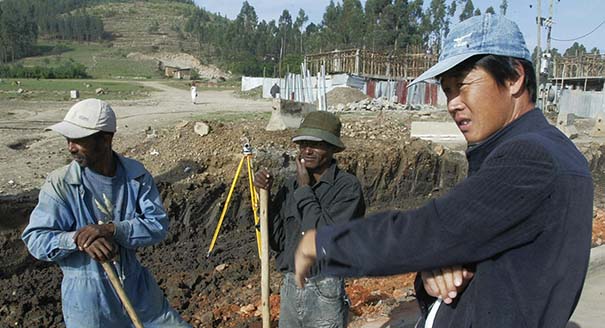
The accusation is based on the assumption that China is only interested in exploiting Africa’s natural resources and does not contribute to Africa’s socio-economic development. My book used data and first-hand research findings to reveal that Chinese engagements with Africa cover a broad spectrum, from aid and infrastructure construction to investments in agriculture and manufacturing. Actually in the extractive sector, China’s influence is much smaller than what people assumed, because it’s mainly a trading relationship. It’s rather in the infrastructure and manufacturing sectors that we can see China’s huge impacts. Therefore Chinese engagements in Africa have been indeed facilitating the continent’s socio-economic modernization.
30 years ago China itself was in a similar position like Africa today, dependent on exporting natural resources and receiving foreign investment. But the interaction with external world proved helpful for China’s own development. We can see that this kind of development experience has been transferred to Africa through Sino-African interaction, e.g. special economic zones, resources for infrastructure loans. Thus China’s impacts on Africa are positive in general.
As China pursues its own economic restructuring at home, what changes might be in store for the China-Africa economic relationship?
Definitely many labor intensive and low value-added products will move away from China as labor and production costs rise. Some of them may come to Africa, but I don’t expect that there will be a lot of factories coming directly from China to Africa, because the infrastructure and industrial basis is still very poor in the continent.
I rather believe that more Chinese businessmen would invest in Africa to produce locally to replace imports from China in the future. As Chinese exports become more expensive, this provides opportunities for manufacturers in Africa. I saw from my field research that hundreds of factories have been established by former Chinese traders. This trend will likely continue and increase.
There’s some debate over whether China’s unique economic system makes it impossible for other countries to follow a “China model.” Are there particular lessons African countries can learn from China’s development?
Nobody can copy other countries’ system. Learning from development models just means borrowing the key principles. In my opinion, gradualist reform and pragmatism in the transformation toward a market economy were key to China’s successful transition over last decades.
In 2014, we saw China become more deeply involved than ever before in the international response to the Ebola outbreak in West Africa. Was this event an outlier or should we except China to become similarly involved in future humanitarian crises?
It’s not a new thing for China to provide relief for humanitarian crises. Since the 1960s and 1970s, the Chinese government has sent people and offered material relief and monetary donations to over a dozen of African countries. The difference is only that the Chinese government and media are now better at public relations and more skillful in cooperating with other countries. Therefore people in the West may see it as something new. The trend of coordinating with other donors will certainly continue and grow in the future.
What implications does China’s “21st Century Maritime Silk Road” strategy have for Africa? What role can African ports play in this project?
From the current plan of the “Maritime Silk Road,” we see that merely the coast of Northeast Africa is covered. But I believe that a growing regional cooperation will have spillover effect for Africa as well. The economic ties between Asia and Africa will strengthen with improving harbors and infrastructure.
Have China’s investments and activities in Africa translated to political or cultural influence?
Growing economic ties usually help forge better bilateral political relations, and the improvement of the political relationship aims to maintain mutually beneficial economic cooperation. However, increasing economic interactions may sometimes cause complaints in a country — for example, if Chinese imports threaten African local manufacturers or illegal miners damage the environment. But African leaders understand that cooperation with China benefits their own countries in general. They only take measures to enhance market regulation, but never target the Chinese business community as a whole. Even Zambia’s former president Michael Sata repaired the relationship with China after he came to power.
Chinese influence Africans with their ethics and culture at work, but Africans only take what they perceive as good and adapt it. The cultural influence is an interactive process. Besides, as mentioned in my book, the work ethic of Chinese people is not purely “Chinese,” but rather a form of global capitalistic ethics.
This interview was originally published in the Diplomat.