

Q&A
Suzanne Maloney, Aaron David Miller, Karim Sadjadpour
{
  "authors": [
    "Karim Sadjadpour"
  ],
  "type": "legacyinthemedia",
  "centerAffiliationAll": "dc",
  "centers": [
    "Carnegie Endowment for International Peace",
    "Malcolm H. Kerr Carnegie Middle East Center"
  ],
  "collections": [
    "Iranian Proliferation"
  ],
  "englishNewsletterAll": "menaTransitions",
  "nonEnglishNewsletterAll": "",
  "primaryCenter": "Carnegie Endowment for International Peace",
  "programAffiliation": "MEP",
  "programs": [
    "Middle East"
  ],
  "projects": [],
  "regions": [
    "Middle East",
    "Iran",
    "Israel"
  ],
  "topics": [
    "Political Reform",
    "Security",
    "Nuclear Policy",
    "Foreign Policy"
  ]
}
Source: Getty
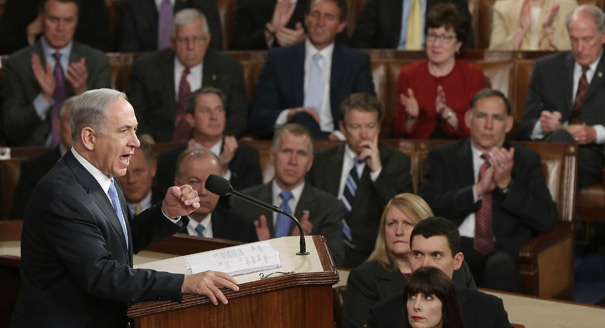
Netanyahu’s speech to the Congress makes it harder for the administration to sell a nuclear deal in the United States.
Source: WBUR’s Here & Now
Israeli Prime Minister Netanyahu’s speech to Congress on the nuclear negotiations with Iran has provoked strong responses in the United States. Speaking on WBUR’s Here & Now, Carnegie’s Karim Sadjadpour said that there was tremendous support for Netanyahu’s speech in Congress, which will make it harder for President Obama and Secretary Kerry to sell a deal in the United States, if one is reached. He added that while Netanyahu spoke about the nature of the Iranian regime and its support for radicalism, he did not propose any better alternatives to the nuclear deal.
Sadjadpour added that the Iranian people would find Netanyahu’s speech “deeply disappointing.” Iran is a young country and the majority of its population was born after the revolution, making its society “post-ideological, post-revolutionary… that aspires to be part of the outside world.”
For the radical elements in Iran, he added, Netanyahu’s speech was a “godsend.” Those radicals prosper in Iran’s political and economic isolation, and have been concerned about the prospect for a nuclear deal. Netanyahu’s speech was probably “quietly applauded” by hardliners in Iran, Sadjadpour concluded.
This interview was originally broadcast by WBUR’s Here & Now.

Senior Fellow, Middle East Program
Karim Sadjadpour is a senior fellow at the Carnegie Endowment for International Peace, where he focuses on Iran and U.S. foreign policy toward the Middle East.
Recent Work


Suzanne Maloney, Aaron David Miller, Karim Sadjadpour

Aaron David Miller, Karim Sadjadpour, Robin Wright
Carnegie does not take institutional positions on public policy issues; the views represented herein are those of the author(s) and do not necessarily reflect the views of Carnegie, its staff, or its trustees.

The accord represents a pivotal moment in the region to avert a security vacuum in the Gulf.


Azeema Cheema, Mohanad Hage Ali

In an interview, Jason Burke discusses his sweeping account of the “revolutionists” who so shaped the 1970s and early 1980s.

Michael Young

By failing to address Palestinian representation, the current process is bound to lead to just another temporary arrangement.

Nathan J. Brown

Morocco and Algeria, each in its own way, are having to navigate the global economic fallout of the U.S.-Israeli military campaign against Iran.

Yasmine Zarhloule
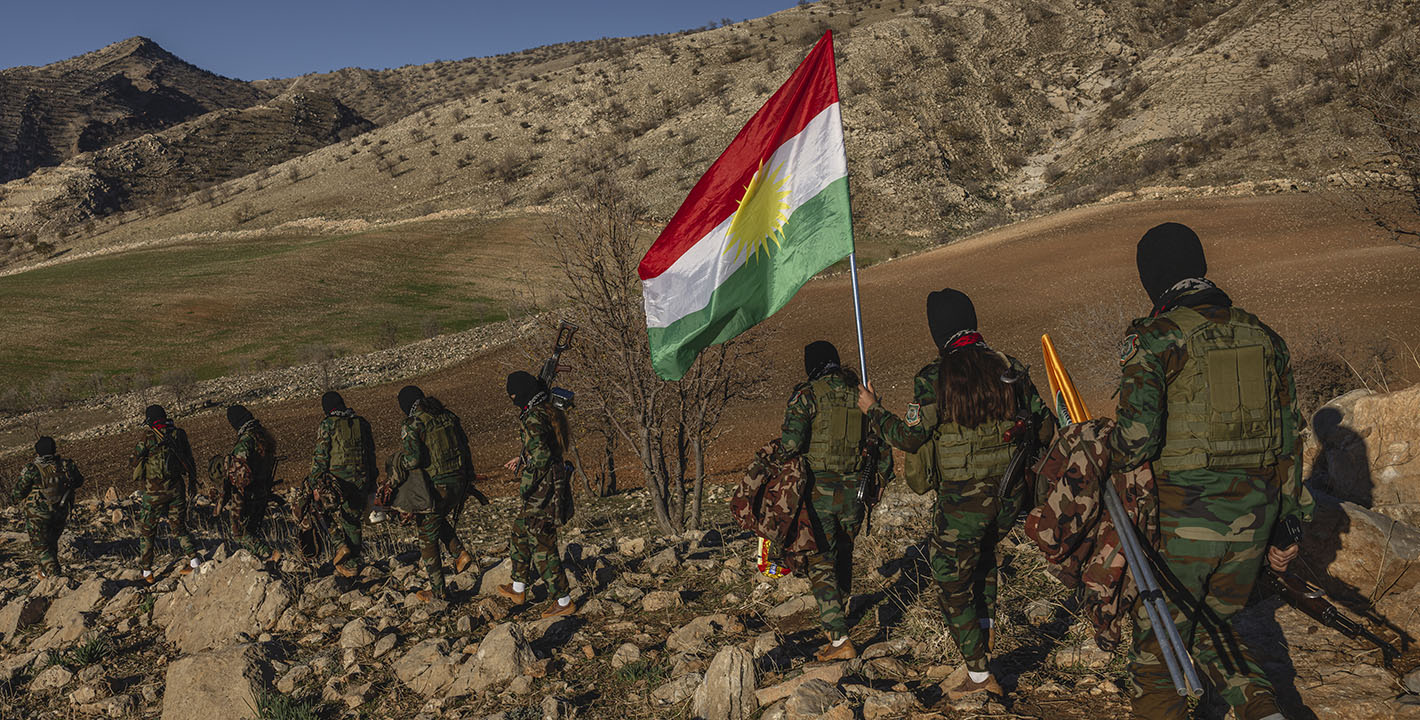
Following its deal with the United States, Iran may act against Iraq-based dissidents.
Wladimir van Wilgenburg