

Commentary
Andrei Kolesnikov
{
  "authors": [
    "Andrei Kolesnikov"
  ],
  "type": "commentary",
  "centerAffiliationAll": "",
  "centers": [
    "Carnegie Endowment for International Peace",
    "Carnegie Russia Eurasia Center"
  ],
  "collections": [
    "Inside Russia"
  ],
  "englishNewsletterAll": "",
  "nonEnglishNewsletterAll": "",
  "primaryCenter": "Carnegie Endowment for International Peace",
  "programAffiliation": "",
  "programs": [],
  "projects": [],
  "regions": [
    "Russia"
  ],
  "topics": [
    "Political Reform",
    "Civil Society"
  ]
}
Source: Getty
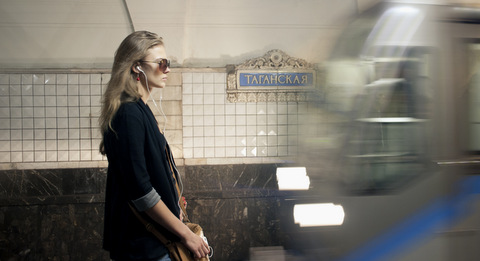
In a system that requires participation, mere nonparticipation comes across as a sign of foreign political culture to the regime. Even more so, it is a form of resistance.
Russia’s hybrid authoritarianism is clearly manifest in its formally democratic but informally autocratic characteristics, but it also has totalitarian characteristics, which older generations are very familiar with. Ellendea Proffer’s memoir about Joseph Brodsky, which was just published in Russian, contains an amazingly accurate passage to this effect: “As any totalitarian system, the Soviet one didn’t simply demand obedience, it required participation.” This observation is borne out by the research on totalitarianism: back in the 1950’s, Zbigniew Brzezinski noted one of the key features of totalitarian regimes: they are not satisfied if one merely refrains from doing something prohibited , one must do what the regime prescribes.
The severity of these and other similar prescriptions varies, but the Russian regime is not completely totalitarian either; even its authoritarianism is theatrical on occasion, though it is no longer funny. It is hybrid, just like the wars that are fought along Russian borders.
Of course, this hybrid regime aspires to be totalitarian. In her classic 1951 work, Hannah Arendt asserts that in totalitarian regimes, the state is the only force that determines what people feel and think. This is what the current regime is instinctively striving for—it has created its own imitated civil society (everything else is suppressed or declared to be a “foreign agent”), and imitated media that serve to disseminate propaganda rather than inform the public.
In a system that requires participation, mere nonparticipation comes across as a sign of foreign political culture to the regime. Even more so, it is a form of resistance. Being prepared to lose one’s job at some state-run university where one now has to ask management for permission to leave the country is a form of resistance. In fact, the management notices the resistance and looks for ways to counteract it.
There is no hypocrisy here. These people are deliberately trying to live without noticing that their former work colleagues are becoming more and more like members of a Communist Party committee or a vice squad. They just want to live freely.
Merab Mamardashvili once said, “it is believed that we are free when we are able to choose; the more choice, the more freedom. But the philosopher says something else… Freedom is a phenomenon that appears in a place where one has no choice. Necessity is intrinsic to freedom. Something that is a necessity for itself is freedom.”
If an individual has inner freedom, the system can do nothing to him. Even if he no longer has political or personal choice.
This article originally appeared in Russian in Vedomosti.
Former Senior Fellow, Carnegie Russia Eurasia Center
Kolesnikov was a senior fellow at the Carnegie Russia Eurasia Center.
Recent Work
Andrei Kolesnikov
Andrei Kolesnikov
Carnegie does not take institutional positions on public policy issues; the views represented herein are those of the author(s) and do not necessarily reflect the views of Carnegie, its staff, or its trustees.
The country’s leadership is increasingly uneasy about multiple challenges from the Levant to the South Caucasus.

Armenak Tokmajyan
The country’s youthful protest movement is seeking economic improvement, social justice, and just a little hope.

Yasmine Zarhloule
In an interview, Daniela Richterova speaks about her book on Czechoslovakia’s Cold War ties to Palestinian groups and others.

Michael Young
In fragmented political contexts, climate activism is a way to contest both ecological harm and the structures of violence and neglect that allow it to persist.

Issam Kayssi, Mohanad Hage Ali
The downfall of the Assad regime represented a setback, but Russia’s primary focus remains Ukraine.
Sergei Melkonian