

Article
Deborah Gordon, Smriti Kumble, David Livingston
{
  "authors": [
    "David Livingston"
  ],
  "type": "other",
  "centerAffiliationAll": "dc",
  "centers": [
    "Carnegie Endowment for International Peace"
  ],
  "collections": [],
  "englishNewsletterAll": "ctw",
  "nonEnglishNewsletterAll": "",
  "primaryCenter": "Carnegie Endowment for International Peace",
  "programAffiliation": "SCP",
  "programs": [
    "Sustainability, Climate, and Geopolitics"
  ],
  "projects": [
    "Carnegie Oil Initiative"
  ],
  "regions": [
    "North America",
    "United States"
  ],
  "topics": [
    "Climate Change"
  ]
}
Source: Getty
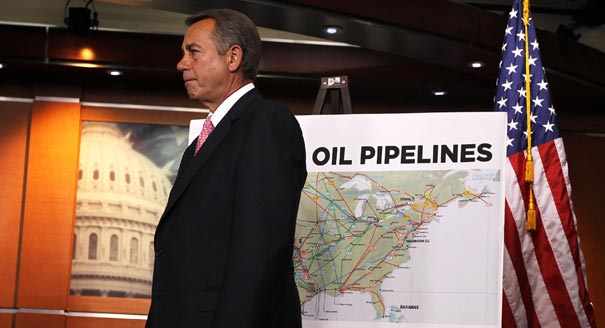
Recent upheavals in the oil market, most notably the growth in North American unconventional oil and the evolving response of OPEC, are prompting a reappraisal of conventional wisdom across a number of areas.
Source: European Centre for Energy and Resource Security
Recent upheavals in the oil market, most notab ly the growth in North American unconventional oil and the evolving response of OPEC, are prompting a re - appraisal of conventional wisdom across a number of areas. Though analysis has tended to focus on global dynamics, many of the oil market’s defining ch aracteristics are determined by regionalized micro - competition. This article explores evolving supply dynamics in the U.S. Gulf Coast, the most important refining hub and single largest source of heavy oil refining capacity. The implications of these evolv ing dynamics hold repercussions for the debate over the Keystone XL pipeline, Saudi Arabia’s ability to maintain a foothold in the North American market, and the heightened competition among heavy crude oils in the Western Hemisphere. It is suggested that U.S. policymakers place their ultimate focus not upon individual pieces of infrastructure, but instead upon establishing strategic priorities for managing the new and dynamic supplies of oil – including heavy oil – that is competing for refinery capacity i n North America.
This article was originally published by the European Centre for Energy and Resource Security.
Former Associate Fellow, Energy and Climate Program
Livingston was an associate fellow in Carnegie’s Energy and Climate Program, where his research focuses on emerging markets, technologies, and risks.
Recent Work

Deborah Gordon, Smriti Kumble, David Livingston

Erik Brattberg, David Livingston
Carnegie does not take institutional positions on public policy issues; the views represented herein are those of the author(s) and do not necessarily reflect the views of Carnegie, its staff, or its trustees.
As talks begin between Washington and Tehran, Beirut has an opening to advance a regional plan for the party’s disarmament.

Michael Young

What is behind Marco Rubio’s announcement that the body is now an international nongovernmental organization?

Zaha Hassan

Policy discussion is ignoring that the Palestinian national project is hollowed out and apartheid is a present danger.

Nathan J. Brown
As negotiations with Iran and Lebanon continue, chaos is at the heart of the Netanyahu government’s calculations.
Michael Young
Across the Middle East and North Africa, climate stress interacts with economic fragility, governance failures, social marginalization, and conflict.

Camille Ammoun