

Commentary
Marc Pierini
{
  "authors": [
    "Marc Pierini"
  ],
  "type": "legacyinthemedia",
  "centerAffiliationAll": "dc",
  "centers": [
    "Carnegie Endowment for International Peace",
    "Carnegie Europe",
    "Malcolm H. Kerr Carnegie Middle East Center"
  ],
  "collections": [
    "Conflict and Refugees"
  ],
  "englishNewsletterAll": "ctw",
  "nonEnglishNewsletterAll": "",
  "primaryCenter": "Carnegie Europe",
  "programAffiliation": "EP",
  "programs": [
    "Europe"
  ],
  "projects": [],
  "regions": [
    "Middle East",
    "Europe",
    "Levant",
    "Western Europe",
    "Iran"
  ],
  "topics": [
    "EU",
    "Migration",
    "Political Reform"
  ]
}
Source: Getty
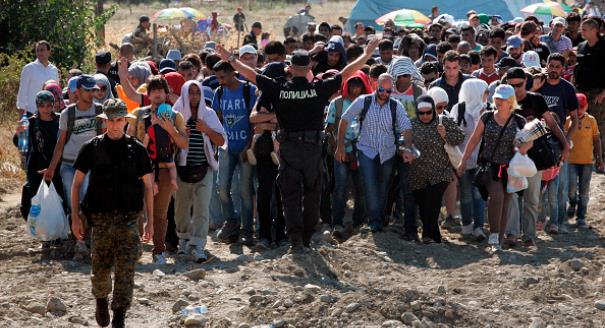
European governments are reacting differently to the refugee crisis. An agreement among European member states is a necessary step in facing the emergency.
Source: TRT World
Europe is struggling to cope with the influx of refugees from war-torn countries like Syria. Can a political agreement be reached among European member states to manage the refugee crisis?
On TRT World, Marc Pierini assesses the situation in Europe and discusses what diplomatic efforts can end the conflict in Syria.

Senior Fellow, Carnegie Europe
Marc Pierini is a senior fellow at Carnegie Europe, where his research focuses on developments in the Middle East and Turkey from a European perspective.
Recent Work
Marc Pierini
Marc Pierini
Carnegie does not take institutional positions on public policy issues; the views represented herein are those of the author(s) and do not necessarily reflect the views of Carnegie, its staff, or its trustees.

The accord represents a pivotal moment in the region to avert a security vacuum in the Gulf.


Azeema Cheema, Mohanad Hage Ali

In an interview, Jason Burke discusses his sweeping account of the “revolutionists” who so shaped the 1970s and early 1980s.

Michael Young

Morocco and Algeria, each in its own way, are having to navigate the global economic fallout of the U.S.-Israeli military campaign against Iran.

Yasmine Zarhloule
Following its deal with the United States, Iran may act against Iraq-based dissidents.
Wladimir van Wilgenburg
There is a disturbing structural parallel between the old global energy economy and the new green transition.

Angie Omar