

Report
- +9
Richard Youngs, Erik Jones, Dan Baer, …
{
  "authors": [
    "Richard Youngs"
  ],
  "type": "legacyinthemedia",
  "centerAffiliationAll": "dc",
  "centers": [
    "Carnegie Endowment for International Peace",
    "Carnegie Europe"
  ],
  "collections": [
    "Europe’s Southern Neighborhood"
  ],
  "englishNewsletterAll": "ctw",
  "nonEnglishNewsletterAll": "",
  "primaryCenter": "Carnegie Europe",
  "programAffiliation": "EP",
  "programs": [
    "Europe"
  ],
  "projects": [],
  "regions": [
    "Middle East",
    "Asia",
    "North Africa",
    "Southeast Asia",
    "Iran"
  ],
  "topics": [
    "Democracy",
    "Civil Society"
  ]
}
Source: Getty
The UN sustainable development goal of peace, justice, and strong institutions is an important step forward for global development, but its meaning is inevitably imprecise.
Source: OECD Institutions and Stability
While SDG Goal 16 is an important step forward for the global development agenda, its meaning is inevitably imprecise. It opens a Pandora’s box of unresolved questions about what kind of political arrangements best guarantee ‘inclusive’ and ‘accountable’ societies.
Civil society support will be one key component of efforts to advance SDG16. A common assumption that shapes development work is donors’ conviction that support for civil society is a key part of fostering wider inclusion and accountability. Yet, if civil society support is to contribute its maximum potential towards SDG Goal 16 it will need to evolve in significant ways.
Analysts and development practitioners have been arguing for many years that donors’ civil society initiatives need to embrace a wider range of partners beyond professional NGOs. While some donors have made modest steps in this direction, however, in practice there has been no major, qualitative change in the general make-up of civil society programmes.
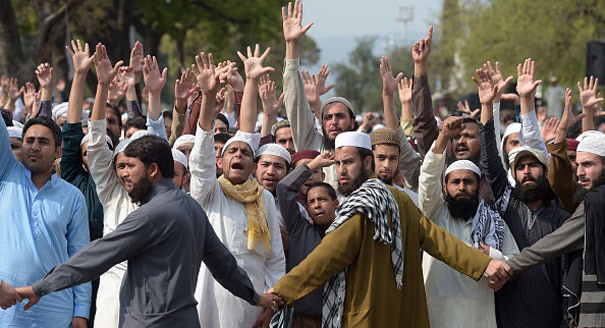
Events on the ground in many developing societies now make such a shift increasingly urgent and overdue. One of the defining trends across the developing world is the eruption of apparently spontaneous social mobilization and protest. The intensity and frequency of mass mobilizations have increased markedly in the last five years. Moreover, these mobilizations are today more often targeted at local and development-related issues than was previously the case.This trend raises important questions for the pursuit of SDG Goal 16. Citizen mobilization should in principle be good for participative processes of development. Yet, strong criticism has been aimed at the looser forms of social organization that seem to drive today’s global protests. Critics argue that the proliferation of dispersed, leaderless networks feeds a highly disruptive politics – a directionless discontent that has not proven itself capable of contributing well-worked solutions to developmental or democracy-related problems. In addition, many such groups seem to shun external funders.
The challenge today is not so much for donors to coax inert civil societies into life through basic training and capacity building, but rather to catch-up with the chaotic and diverse civic vibrancy that has taken shape in developing-country politics. In many contexts, the most difficult and pressing questions are about how to cohere rather than ignite civil society.
The wave of global protest witnessed in recent years – across Latin America, Africa, Asia and parts of the Middle East, not to say within the West itself – clearly represents a major trend in international politics. But there is still much uncertainty about this trend’s ultimate significance. Are we really witnessing a long-term trend towards unprecedented civic empowerment? What is and what is not ‘new’ about these protests? How far does the heightened intensity of protests represent a qualitative change in democratic (or anti-authoritarian) politics?
As there are no easy answers to these questions, the development community will need highly sophisticated and nuanced understandings if the changing face of social activism is to be channeled effectively towards SDG16.
There is great diversity and heterogeneity among today’s civic activism and global protests. These new types of civil society mobilization do not conform to any single explanatory model. Some militate for democracy, while others do not. Some are anti-globalization, while others are not. It is impossible to attach any one, uniform meaning to the spread of civic protest across the world.
Moreover, both the positive and critical views of new civic movements are sometimes presented in terms that are too black and white. Networked mobilization and protests are neither a cure-all panacea nor a mere disruptive failing to democratic politics. Such civic activism is of great consequence to development efforts – but that consequence differs between countries.
So, how can the OECD Development Assistance Committee’s Network on Governance (Govnet) help in this challenge of encouraging the positive aspects of social mobilization and minimizing its downsides? Govnet, which brings together governance experts and practitioners from development co-operation agencies from DAC countries and multilateral agencies to develop cutting-edge thinking on governance support, could:
This article was originally published on the OECD Institutions and Stability blog.

Senior Fellow, Democracy, Conflict, and Governance Program
Richard Youngs is a senior fellow in the Democracy, Conflict, and Governance Program, based at Carnegie Europe. He works on EU foreign policy and on issues of international democracy.
Recent Work

Richard Youngs, Erik Jones, Dan Baer, …

Richard Youngs, Thomas Carothers
Carnegie does not take institutional positions on public policy issues; the views represented herein are those of the author(s) and do not necessarily reflect the views of Carnegie, its staff, or its trustees.

The armed forces champion a form of capitalism that is generating revenue, but its reliance on rent faces diminishing returns, leaving the country with massive sunk costs and deferred returns, deepening dependency on external borrowing.

Yezid Sayigh

Morocco and Algeria, each in its own way, are having to navigate the global economic fallout of the U.S.-Israeli military campaign against Iran.

Yasmine Zarhloule
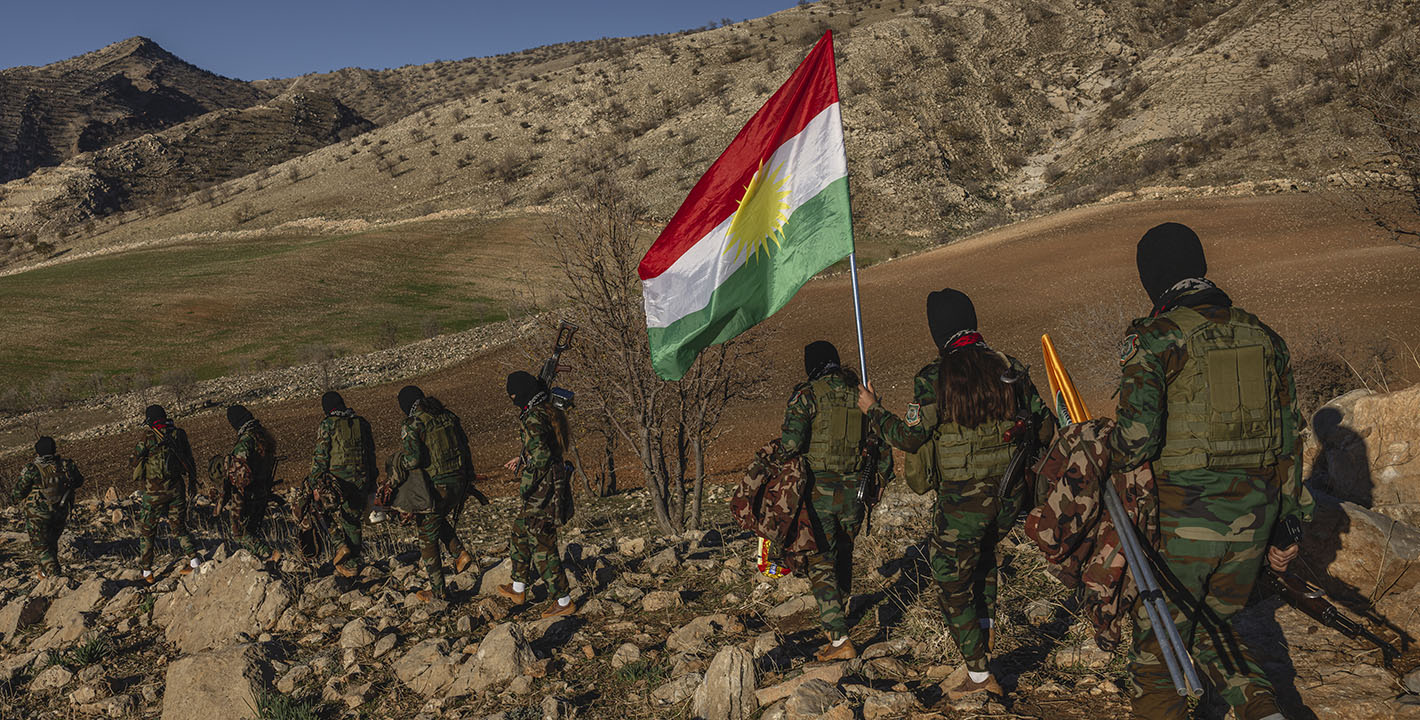
Following its deal with the United States, Iran may act against Iraq-based dissidents.
Wladimir van Wilgenburg
There is a disturbing structural parallel between the old global energy economy and the new green transition.

Angie Omar
This will be the region’s most representative tournament, amid broad changes in its footballing landscape.
Issam Kayssi