

Research
- +5
Alper Coşkun, Fatih Ceylan, Tacan İldem, …
{
  "authors": [
    "Sinan Ülgen"
  ],
  "type": "legacyinthemedia",
  "centerAffiliationAll": "dc",
  "centers": [
    "Carnegie Endowment for International Peace",
    "Carnegie Europe"
  ],
  "collections": [
    "Turkey’s Transformation"
  ],
  "englishNewsletterAll": "ctw",
  "nonEnglishNewsletterAll": "",
  "primaryCenter": "Carnegie Europe",
  "programAffiliation": "EP",
  "programs": [
    "Europe"
  ],
  "projects": [],
  "regions": [
    "Europe",
    "Türkiye",
    "Middle East",
    "Western Europe",
    "Iran"
  ],
  "topics": [
    "EU",
    "Migration",
    "Foreign Policy"
  ]
}
Source: Getty
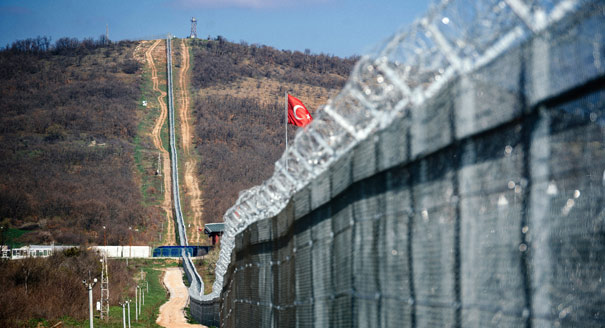
Ankara aims to exact additional commitments from Europe in the refugee deal. Above all, the Turkish government wants visa-free travel to Europe for its citizens.
Source: Financial Times
The European Council summit under way in Brussels has turned into a rescue operation. At stake is the survival of the refugee deal with Turkey. Last week, Ankara upended expectations by agreeing to take back from Europe migrants from countries such as Afghanistan and Morocco as well as Syrians stranded in the Greek islands.
The accord represented a political victory for Angela Merkel, the German chancellor, who from the outset had championed a European solution centred on a managed programme of refugee resettlement. At the same time the Turkish offer could eliminate the incentive to cross the Aegean — it would become an exercise in futility, with refugees being returned to Turkey.Why is Turkey eager to accept this potentially large extra population of migrants and refugees? One reason is that it can cope. Unlike many countries in central and eastern Europe, where the appearance of a few hundred refugees from Syria was cause for political upheaval, Turkey has provided refuge to more than 2.5m Syrians fleeing the atrocities of civil war without any substantive domestic reaction.
Despite acrimonious local, national and presidential elections, the issue of refugees was never hijacked by the Turkish political class. For most Turks, a humanitarian embrace is the fitting response to such a large-scale tragedy affecting an Islamic population.
Turkey’s imperial legacy has led to a society that traces its roots to many corners of the lost empire, a significant factor underpinning popular and political tolerance.
But Ankara also aims to exact additional commitments from Europe. Turkey expects the EU to deliver more money for the refugees, a resettlement plan for the Syrians and a commitment to restart stalled accession talks. Above all, the Turkish government wants visa-free travel to Europe for its 78m citizens.
The abolition of Schengen visas would be a huge win for Turkey’s ruling elites. Removing the humiliating process of visa applications is certain to raise the popularity of the ruling Justice and Development party (AKP). Visa-free travel is the cornerstone of the deal, which will survive or die depending on whether the EU delivers.
This gathering of European leaders will be tasked with finalising the agreement with Turkey but the political backdrop does not augur well.
Most EU member states will find condoning visa-free travel for Turkey to be a difficult proposition. Governments in eastern Europe have shifted to an illiberal, anti-immigration discourse that will hinder their appetite for such a deal.
In the west, France appears the main stumbling block. François Hollande, the president, is keenly aware of his country’s political dynamics in the wake of the Paris attacks. In the popular mind, the issue of refugees has blended with terrorism, leading to a rise in support for the far-right National Front. The final potential obstacle is the European Parliament, which is critical of Turkey’s recent record on human rights, the rule of law and press freedom.
As the architect of the Turkey deal, Ms Merkel will have to cajole, pressure and possibly blackmail her counterparts to get their backing. Her strongest argument will be that the alternative to visa freedom for Turkey is far worse, in the form of an uncontrolled wave of migrants. She will also have to debunk the illusion of there being a third option: suspending free movement in Europe and building walls to protect its borders.
After overcoming the euro crisis, Europe finds itself once again at a decisive moment. This time its future will be determined not by its ability to impose fiscal discipline but rather whether it can find a common will to grant visa-free travel to Turkish citizens.
This article was originally published on the Financial Times.

Senior Fellow, Carnegie Europe
Sinan Ülgen is a senior fellow at Carnegie Europe in Brussels, where his research focuses on Turkish foreign policy, transatlantic relations, international trade, economic security, and digital policy.
Recent Work

Alper Coşkun, Fatih Ceylan, Tacan İldem, …
Carnegie does not take institutional positions on public policy issues; the views represented herein are those of the author(s) and do not necessarily reflect the views of Carnegie, its staff, or its trustees.

By failing to address Palestinian representation, the current process is bound to lead to just another temporary arrangement.

Nathan J. Brown

Morocco and Algeria, each in its own way, are having to navigate the global economic fallout of the U.S.-Israeli military campaign against Iran.

Yasmine Zarhloule
Following its deal with the United States, Iran may act against Iraq-based dissidents.
Wladimir van Wilgenburg
There is a disturbing structural parallel between the old global energy economy and the new green transition.

Angie Omar
This will be the region’s most representative tournament, amid broad changes in its footballing landscape.

Issam Kayssi