

Other
Michael D. Swaine
{
  "authors": [
    "Michael D. Swaine"
  ],
  "type": "legacyinthemedia",
  "centerAffiliationAll": "dc",
  "centers": [
    "Carnegie Endowment for International Peace",
    "Carnegie Russia Eurasia Center"
  ],
  "collections": [],
  "englishNewsletterAll": "asia",
  "nonEnglishNewsletterAll": "",
  "primaryCenter": "Carnegie Endowment for International Peace",
  "programAffiliation": "AP",
  "programs": [
    "Asia"
  ],
  "projects": [],
  "regions": [
    "East Asia",
    "China"
  ],
  "topics": [
    "Political Reform"
  ]
}
Source: Getty
China’s global governance ideology shows great continuity between pre- and post-2008–9 periods. All sources on Chinese views generally indicate that China’s proposed changes to the existing international order are adjustments of that order, not radical acts of departure or overturn.
Source: China Leadership Monitor
China’s global governance ideology shows much continuity between pre- and post-2008–9 periods. Authoritative, semi-authoritative, and non-authoritative sources on Chinese views all generally indicate that China’s proposed changes to the existing international order—such as reforming the international system to correct “unjust” arrangements, strengthening the influence of developing countries, expanding the idea of state sovereignty into new areas of state behaviors, and buttressing the equality of sovereignty—are adjustments of that order only, not radical acts of departure or overturn. Indeed, China reaffirms its commitment to an open economic system and other long-standing features of the Liberal International Order while resisting proposed changes regarding, for example, humanitarian intervention. Thus, differences between pre- and post-2008–9 are largely matters of degree, not kind. One caveat is that some non-authoritative sources since 2008–9 suggest an emerging debate within China over Beijing’s rigid support for state sovereignty and its past relatively passive stance toward many areas of global governance.
***
Global governance refers to the ways in which global affairs are managed among nation states and non-state actors in the absence of a global government. It normally denotes those structures, processes, and norms—usually organized into “regimes”—that provide public goods for the global community. Such public goods include security provisions (e.g., against WMD proliferation, terrorism, and other nontraditional security threats), environmental protection, global and regional economic stability, human rights protections, and the like. International regimes exist in all of these and other areas.The current form of global governance is often described as the “Liberal International Order” (hereafter referred to as LIO). This refers primarily to a set of values, institutions, and processes centered on the promotion of open trade and liberal or free-market economic systems; the provision of economic and social assistance to developing states; the protection or advancement of human rights among individuals and social/ethnic groups, both internationally and within individual nation-states; and opposition to the spread of weapons of mass destruction (WMD).1 More recently, efforts to improve the global environment and slow climate change have been added to this list.
Since at least the mid-1980s, China has generally complied with the formal norms and structures of the above global governance regimes.2 Today, however, some observers of China’s rise are arguing that Beijing is now using its growing power and influence on the world stage to more extensively and fundamentally undermine many of the main features of the LIO, especially in areas such as human rights, global and regional free trade, and development assistance.
However, other observers argue that, despite its newcomer status and authoritarian political system, China has profited immensely from the LIO, especially in the economic realm, and continues to have few incentives to upend that order. Moreover, according to this argument, China’s alleged revisionist or revolutionary views and actions in the area of global governance amount to limited modifications designed primarily to increase Chinese influence within existing international bodies, or to create new, supplemental (not alternative) bodies, often in response to Western stonewalling or a strong need for such entities in certain areas, such as international investment.
Obviously, any serious effort to assess China’s relationship to the existing system of global governance today requires a close examination not only of Chinese views, but also of policies and practices over time and in relation to the key elements of the LIO, as scholars have done in the past. Unfortunately, no detailed study has yet emerged covering the Hu Jintao and Xi Jinping eras. The CLM format cannot remedy that shortcoming, given its short length. However, as we have undertaken with other foreign policy–related topics, it does permit a close reading of Chinese views on global governance occurring in recent years, thus offering a frame of reference for more comprehensive studies of actual behavior.
This article will examine in some detail Chinese views on global governance, focusing in particular on the most recent period, from roughly 2008–2009 to the present (i.e., the late Hu Jintao and early Xi Jinping eras). This time span is selected because many observers believe it marks the beginning of a growing level of Chinese “assertiveness” and “contrariness” in behavior and approaches in the foreign policy realm,3 and a general proclivity to offer concepts or structures that appear to challenge some key tenets of the LIO.
As in past issues of the Monitor, the examination of Chinese views is divided into authoritative, quasi-authoritative, and non-authoritative sources in order to distinguish between official and unofficial perceptions, and to identify possible differences and lines of debate within both official and unofficial leadership and elite circles. The second section offers some implications of the preceding findings for the outside debate over China’s stance toward global governance....
This article was originally published by China Leadership Monitor.
1 James Rosenau, “Toward an Ontology for Global Governance,” in Martin Hewson and Timothy J. Sinclair (eds.), Approaches to Global Governance Theory (Albany, NY: State University of New York, 1999); Robert Keohane, “Global Governance and Democratic Accountability,” in David Held and Mathias Koenig-Archibugi (eds.), Taming Globalization: Frontiers of Governance (Cambridge: Policy Press, 2003).
2 Ann Kent, Beyond Compliance: China, International Organizations, and Global Security (Stanford, CA: Stanford University Press, 2007), pp. 4–6; Hu Jintao, “Report at 17th Party Congress,” Xinhua, October 24, 2007, http://news.xinhuanet.com/english/20 07-10/24/content_6938749.htm; Jiang Zemin, “Report at 16th Party Congress,” Xinhua, November 18, 2002, http://en.people.cn/200211/18/eng20021118_106985.shtml; Jiang Zemin, “Report at the 15th Party Congress,” Federation of American Scientists, September 12, 1997, http://fas.org/news/china/1997/970912-prc.htm; Jiang Zemin, “Report at 14th Party Congress,” Beijing Review, October 12, 1992, http://www.bjreview.com.cn/document/txt/2011-03/29/content_363504.htm.
3 Michael D. Swaine, “China’s Assertive Behavior, Part One: On ‘Core interests,’” China Leadership Monitor, no. 34 (Winter 2011), http://www.hoover.org/research/chinasassertive- behavior-part-one-core-interests.

Former Senior Fellow, Asia Program
Swaine was a senior fellow at the Carnegie Endowment for International Peace and one of the most prominent American analysts in Chinese security studies.
Recent Work
Michael D. Swaine
Michael D. Swaine
Carnegie does not take institutional positions on public policy issues; the views represented herein are those of the author(s) and do not necessarily reflect the views of Carnegie, its staff, or its trustees.

China has aligned its cooperation model with Saudi Arabia’s own priorities, most notably since the kingdom unveiled its Vision 2030. Although China announced the Belt and Road Initiative in 2013, the big push in relations happened only after the ascendance of King Salman to the throne in 2015 and Riyadh’s push for Beijing to meet Saudi needs.

Hesham Alghannam
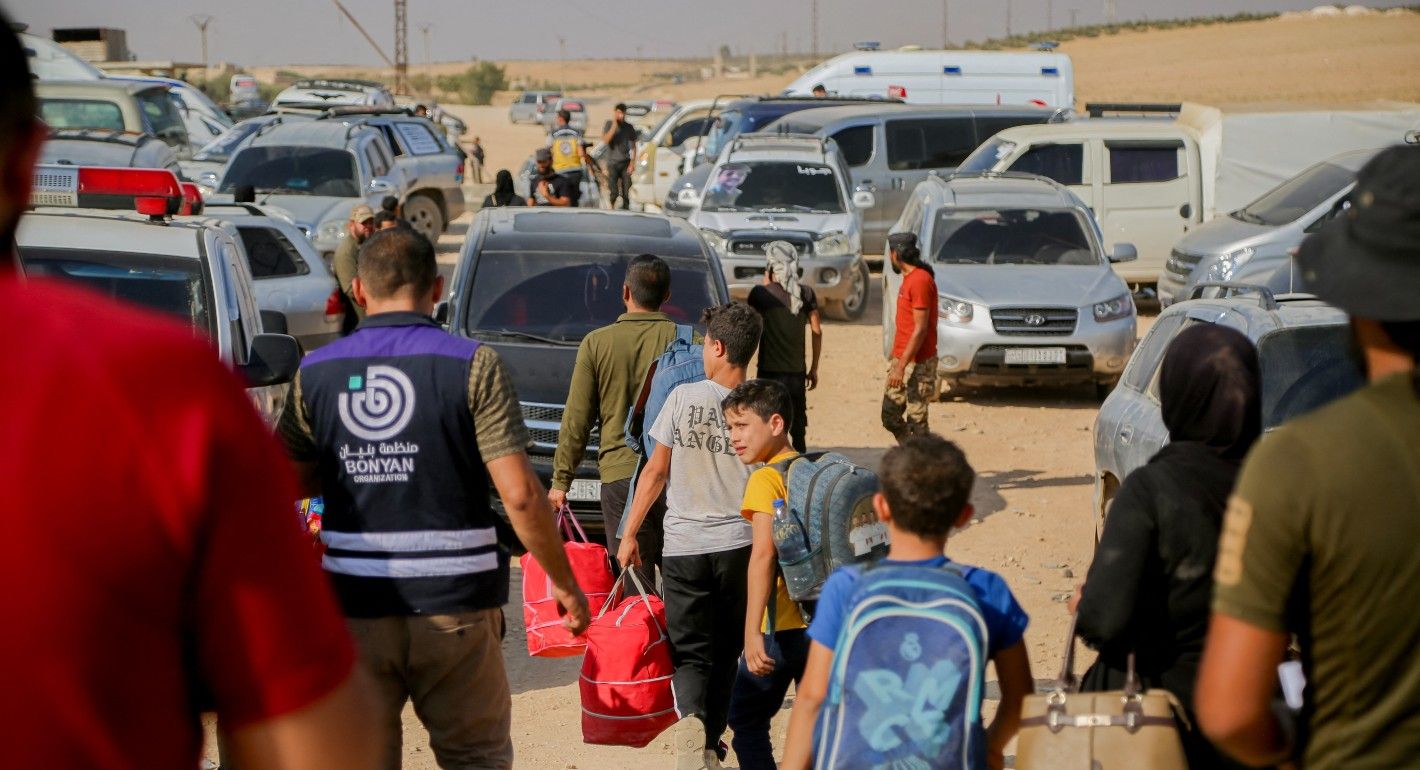
A humanitarian crisis in Lebanon deepens, and Syrian refugees face a perilous choice: remain in a war-torn environment or return to Syria where they risk encountering significant dangers and discrimination. There are significant challenges and risks to their search for safety in Syria.
Haid Haid
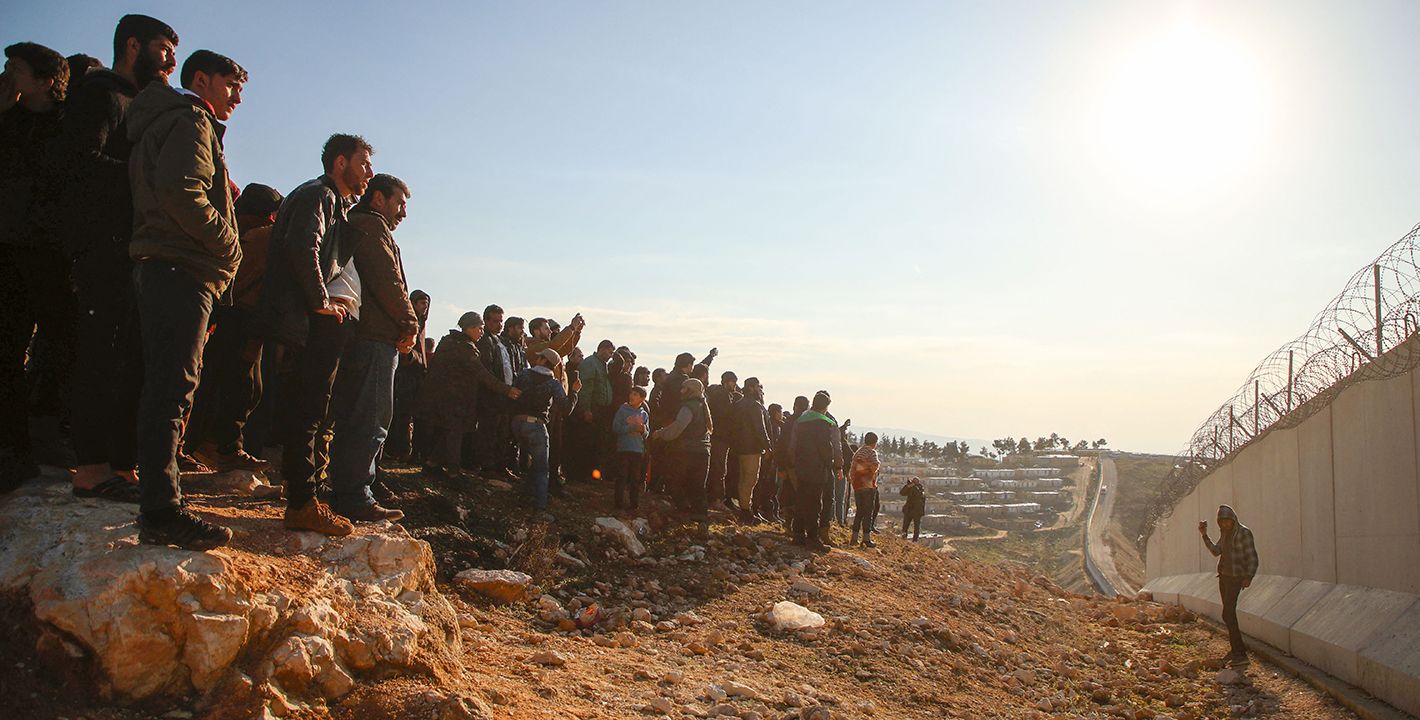
In Syria’s border regions, changes in demographics, economics, and security mean that an inter-Syrian peace process will require consensus among main regional powers that Syria must remain united, that no one side can be victorious, and that perennial instability threatens the region.

Kheder Khaddour, Armenak Tokmajyan

For many in the society, the post-Ben Ali years were mainly about successive economic crises and political instability.
Jasmine Khelil

The Gulf Cooperation Council has shifted its energy export focus to Asia, particularly India and China. This is part of a broader shift as GCC members look to expand their geopolitical alliances away from the West.

Alexandre Kateb