

Commentary
Nathalie Tocci, Jan Techau
{
  "authors": [
    "Jan Techau"
  ],
  "type": "legacyinthemedia",
  "centerAffiliationAll": "dc",
  "centers": [
    "Carnegie Endowment for International Peace",
    "Carnegie Europe"
  ],
  "collections": [
    "Transatlantic Cooperation"
  ],
  "englishNewsletterAll": "ctw",
  "nonEnglishNewsletterAll": "",
  "primaryCenter": "Carnegie Europe",
  "programAffiliation": "EP",
  "programs": [
    "Europe"
  ],
  "projects": [],
  "regions": [
    "Europe",
    "North America",
    "Western Europe",
    "Iran"
  ],
  "topics": [
    "EU",
    "Global Governance"
  ]
}
Source: Getty
If mainstream politicians do not start taking greater risks, less savory figures will take their place.
Source: Financial Times
An illness is afflicting societies in both Europe and North America: sophisticated state failure. It fuels the Donald Trump and Marine Le Pen insurgencies and endangers the ability of advanced societies to secure a bright future for their citizens. Sophisticated state failure is a cancer eating away at societies in the west and undermining the liberal world order that, up to now, they have upheld.
Yet by and large, everything works as it should in the mature democracies of the developed world. Elections are fair and free. The courts work, and so do the tax authorities. The police can mostly be trusted, corruption is comparatively low and, overall, the institutions of public administration function as they should. In other words, none of the classic elements of state failure are present. Yet nothing gets done.
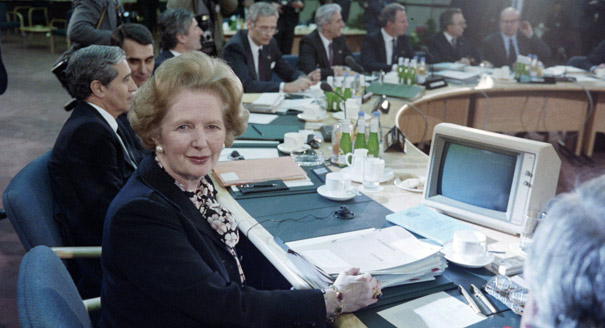
For roughly 30 years, since Margaret Thatcher performed drastic surgery on an ailing British economy, the western world has done piecemeal reform at best. Politicians have promised change, of course — reform of pensions, labour markets, the tax system and education. They have promised smaller states and less bureaucracy.But with a few notable exceptions, little of this has ever materialised in any meaningful way. Much of it died before it could reach the statute books. That is the definition of sophisticated state failure: to have a functioning state in which nothing gets done.
There are countless examples of this: the inability of successive French governments to reform their labour market; the wasted majorities of Silvio Berlusconi and Tony Blair, or the eurozone’s inability to put the common currency on a solid footing.
There are many reasons for sophisticated state failure. The sheer difficulty of governing complex, highly diverse societies should not be underestimated, but since lawmakers often do not (and cannot) know what they are doing, they decide instead to do very little.
The benefits of globalisation and the entry of China into the world economy, along with low interest rates, led to an unnaturally long period of growth during which politicians grew complacent and voters developed a strong sense of entitlement.
Voters are now more fickle, and so majorities are less stable, which leads politicians to avoid controversial issues and shun big risks. As Jean-Claude Juncker, the president of the European Commission, put it, politicians “know exactly what they need to do, but they don’t know how to get re-elected”.
As long as this dilemma remains unresolved, the result is paralysis. Over time, as disappointments have accumulated, growing numbers of voters have begun to voice their frustrations. Political elites, however, are disposed to protect the status quo, so opportunities for painless change are routinely missed. The result is the slow migration of discontent from the fringes to the centre.
Populism, whether of right or left, is not the answer to sophisticated state failure. While populists such as Mr Trump or Ms Le Pen are often good at pointing out when things are broken, they are almost invariably wrong on how to fix them.
The only lasting way out of sophisticated state failure is for responsible politicians to worry less about getting re-elected and to start risking their political careers for things that need to be done — just as Thatcher did in the 1980s and as Gerhard Schröder did with labour market reform in Germany in the mid- 2000s.
If mainstream politicians do not start taking these risks, less savoury figures will take their place. Institutions will suffer lasting damage and the worst political instincts, ones that have previously lurked beneath the surface, will be unleashed. And with that, sophisticated state failure will eventually turn into real state failure.
This article was originally published by the Financial Times.
Director, Europe Team, Eurasia Group
Techau is director with Eurasia Group's Europe team, covering Germany and European security from Berlin. Previously, he was director of Carnegie Europe.
Recent Work

Nathalie Tocci, Jan Techau
Jan Techau
Carnegie does not take institutional positions on public policy issues; the views represented herein are those of the author(s) and do not necessarily reflect the views of Carnegie, its staff, or its trustees.

Middle Eastern states should welcome an accelerated U.S. disengagement from their region.

Michael Young

In an interview, former ambassador Charles Freeman assesses the Trump administration’s war against Iran.
Michael Young

Morocco and Algeria, each in its own way, are having to navigate the global economic fallout of the U.S.-Israeli military campaign against Iran.

Yasmine Zarhloule

Following its deal with the United States, Iran may act against Iraq-based dissidents.
Wladimir van Wilgenburg

This will be the region’s most representative tournament, amid broad changes in its footballing landscape.

Issam Kayssi