Source: Washington Post
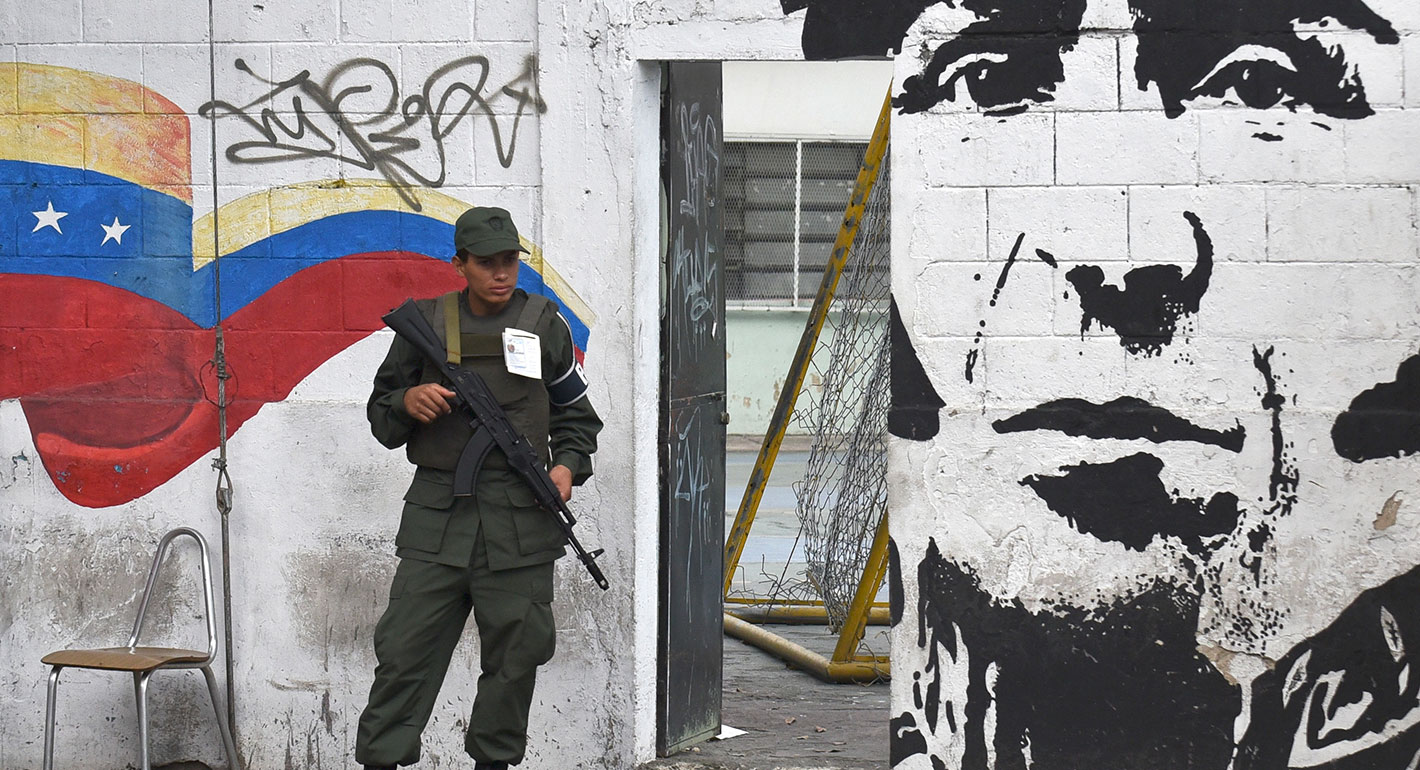
Today, Venezuela is the sick man of Latin America, buckling under chronic shortages of everything from food and toilet paper to medicine and freedom. Riots and looting have become commonplace, as hungry people vent their despair while the revolutionary elite lives in luxury, pausing now and then to order recruits to fire more tear gas into crowds desperate for food.
Not long ago, the regime that Hugo Chávez founded was an object of fascination for progressives worldwide, attracting its share of another-world-is-possible solidarity activists. Today, as the country sinks deeper into the Western Hemisphere’s most intractable political and economic crisis, the time has come to ask some hard questions about how this regime — so obviously thuggish in hindsight — could have conned so many international observers for so long.
Chávez was either admired as a progressive visionary who gave voice to the poor or dismissed as just another third-world buffoon. Reality was more complex than that: Chávez pioneered a new playbook for how to bask in global admiration even as he hollowed out democratic institutions on the sly.
Step one was his deft manipulation of elections. Chávez realized early that, as long as he kept holding and winning elections, nobody outside Venezuela would ask too many questions about what he did with his power in the interim. And so he mastered the paradoxical art of destroying democracy one election at a time.
Venezuelans have gone to the polls 19 times since 1999, and chavismo has won 17 of those votes. The regime has won by stacking the election authorities with malleable pro-government officials, by enmeshing its supporters in a web of lavishly petro-financed patronage and by intimidating and marginalizing its opponents. It worked for more than a decade — until it didn’t work anymore.
After every election, another little piece of the constitution would be chipped away: Courts and oversight bodies were stacked high with supporters, checks and balances stripped, basic freedoms eroded.
The key was the torrent of oil dollars that poured into the country during the long oil boom of 2003 to 2014, complemented by massive debt now estimated at $185 billion. (Argentina defaulted on a $100 billion debt.) An enormous import-led consumption boom created an illusion of harmony even as the economy crumbled just out of sight.
When oil prices fell, the illusion ended, and the government fell back on Plan B: Allow elections to go on, but strip virtually all power from every institution it lost control of.
When Caracas elected an opposition mayor, his powers were stripped out from under him, and he was eventually jailed. When voters mischievously gave the opposition a two-thirds majority in the National Assembly, a newly packed Supreme Tribunal took to overturning its acts. The government’s faith in democracy lasted exactly as long as its majority.
Something similar happened with the media. The government learned early on that shutting down dissident media carried major political costs. So it turned to cronies to buy up critical outlets and rein in their journalists. As dozens of critical journalists who’ve been intimidated or forced out of their jobs can attest, media freedom in Venezuela today is a sham: The airwaves have been scrubbed clean of dissent.
Under Fidel Castro’s tutelage, Chávez successfully cultivated a pro-poor, anti-American posture . Endless professions of concern for the poor followed furious denunciations of gringo imperialism.
But this, too, was a charade. We now know that the fiery speeches professing unconditional love and support for the poor were a ruse to deflect attention from the wholesale looting of the state. In fact, more than $100 billion in oil profits stashed in a “National Development Fund” were simply never accounted for.
The regime’s actions reveal a deep, even cruel contempt for the poor. This year, the protests of the destitute have been met with open violence and repression while regime-connected politicians run their luxury yachts aground after drunken romps. While newborn babies die for lack of simple medicines at state hospitals, the stacked Supreme Tribunal censures the opposition-run parliament for asking for international humanitarian assistance.
You would think that preying on the world’s largest oil reserves would be enough for even the most voracious of kleptocratic elites, but no. The regime is also deeply involved in drug trafficking. The DEA has put multiple high-ranking officials on its wanted lists.
Late last year, a sting operation in Haiti recorded two of the first lady’s nephews offering to sell hundreds of kilos of cocaine to “buyers” who turned out to be undercover Drug Enforcement Administration agents. The two sit in a cell in New York, awaiting trial. Their aunt, the first lady, has responded by accusing the United States of kidnapping them.
You’d think the international community would have run out of patience for these kinds of shenanigans long ago. Sadly, the Venezuelan crisis is also highlighting a cruel reality of the 21st century: The international community wrings its hands, but its professed solidarity is thin. Talk is cheap; the millions of innocent Venezuelans who fell victim to chavismo’s long con need more than declarations.
For the newborns who have died from medicine shortages, it’s already too late. The least we can do to honor their memory is to say it loud and clear: Venezuela’s democratic facade has crumbled altogether, and the predatory dictatorship it used to cover up is now plain for all to see.
This article was originally posted in the Washington Post.