

Commentary
As the U.S. stumbles in its war with Iran, we are likely to see an acceleration of its disengagement from the region.
Michael Young
{
  "authors": [
    "Cornelius Adebahr",
    "Benedetta Berti",
    "Mohamed Eljarh",
    "Kristina Kausch"
  ],
  "type": "legacyinthemedia",
  "centerAffiliationAll": "dc",
  "centers": [
    "Carnegie Endowment for International Peace",
    "Carnegie Europe"
  ],
  "collections": [
    "Europe’s Southern Neighborhood"
  ],
  "englishNewsletterAll": "ctw",
  "nonEnglishNewsletterAll": "",
  "primaryCenter": "Carnegie Europe",
  "programAffiliation": "EP",
  "programs": [
    "Europe"
  ],
  "projects": [],
  "regions": [
    "Middle East",
    "North Africa",
    "Iran"
  ],
  "topics": [
    "Security"
  ]
}
Source: Getty
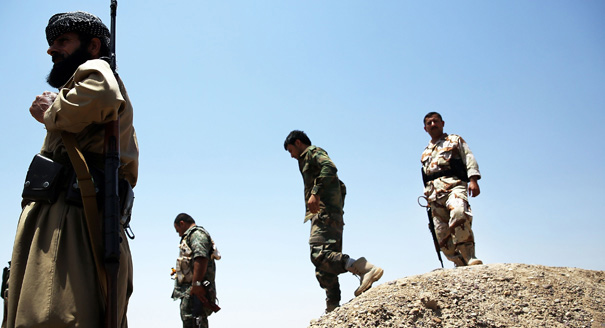
From peaceful political and social grassroots movements to violent extremists, nonstate actors can put pressure on flawed states by demanding accountability, justice, revolutionary change, or power.
Source: Konrad Adenauer Stiftung
The state system in the Arab world is being challenged from within. Weak institutions, hollowed out for decades under successive authoritarian strongmen, are besieged by a myriad of newly empowered non-state actors. Spanning across widely diverse groupings, from peaceful political and social grassroots movements to violent extremists, non-state actors can put pressure on flawed states by demanding accountability, justice, revolutionary change, or power.
Deficient state institutions and enhanced socio-economic and security challenges have created governance vacuums in which prospective alternative providers have been able to thrive. However, the deterioration of state-citizen relations not only rests on the states’ failure to deliver services, but also on its fading value as a provider of a cohesive national identity. As sources of higher authority – such as Arab nationalism or royal families – lose ground, sectarian and communitarian sources of identity gain traction. States’ lacking capacity to provide social services and security has pushed many people to seek shelter and assistance within their traditional communities. At the same time, the strengthening of local identities makes consensus on how the shared state should be designed in order to accommodate the various communities’ needs and preferences increasingly difficult.
Governments have reacted to the global rise of non-state challengers in many different ways. The rise of the Islamic State (IS) as an expansionist territorial project and the spread of violent jihadi movements have led to military responses of different kinds and magnitude. At the same time, incumbent regimes have utilized the tangible security threat posed by violent extremism to justify pre-emptive repression of political and social grassroots movements which they perceive as a threat to their rule and privileges. Non-state actors have also increasingly become proxy agents in national conflict scenarios by state players who seek to further a larger regional agenda.
Who are the emerging influential non-state actors in the Southern Mediterranean; and how does their interplay with state institutions of a given territory affect local and regional security?
This publication was originally published by the Konrad Adenauer Stiftung.

Former Nonresident Fellow, Carnegie Europe
Cornelius Adebahr was a nonresident fellow at Carnegie Europe. His research focuses on foreign and security policy, in particular regarding Iran and the Persian Gulf, on European and transatlantic affairs, and on citizens’ engagement.
Benedetta Berti
Berti is the head of policy planning in the office of the Secretary General at NATO.
Mohamed Eljarh

Deputy Managing Director and Senior Fellow at the German Marshall Fund.
Kristina Kausch is the deputy managing director and Senior Fellow at the German Marshall Fund.
Carnegie does not take institutional positions on public policy issues; the views represented herein are those of the author(s) and do not necessarily reflect the views of Carnegie, its staff, or its trustees.

As the U.S. stumbles in its war with Iran, we are likely to see an acceleration of its disengagement from the region.

Michael Young
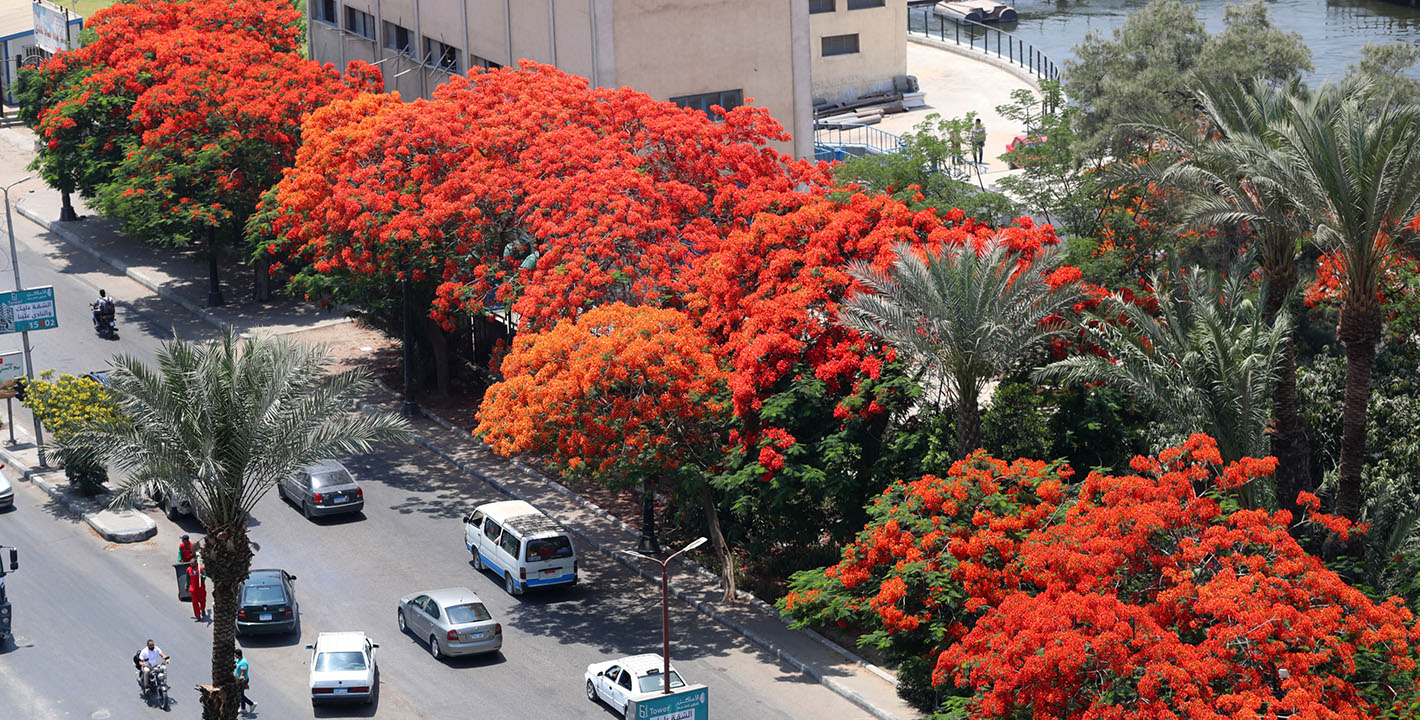
In Egypt’s dense cities, the disappearance of foliage has health implications and punishes daily commuters.

Angie Omar

Huawei pushed hard to enter the Egyptian data centers market, until the Americans made a better offer.
Angie Omar

Middle Eastern states should welcome an accelerated U.S. disengagement from their region.
Michael Young

In an interview, former ambassador Charles Freeman assesses the Trump administration’s war against Iran.
Michael Young