

Paper
Renée DiResta, Rachel Kleinfeld, Margot Treadwell
{
  "authors": [
    "Rachel Kleinfeld"
  ],
  "type": "legacyinthemedia",
  "centerAffiliationAll": "dc",
  "centers": [
    "Carnegie Endowment for International Peace"
  ],
  "collections": [
    "Democracy and Governance"
  ],
  "englishNewsletterAll": "ctw",
  "nonEnglishNewsletterAll": "",
  "primaryCenter": "Carnegie Endowment for International Peace",
  "programAffiliation": "russia",
  "programs": [
    "Russia and Eurasia",
    "Democracy, Conflict, and Governance"
  ],
  "projects": [],
  "regions": [
    "North America",
    "United States",
    "Russia"
  ],
  "topics": [
    "Democracy",
    "Security",
    "Military",
    "Foreign Policy"
  ]
}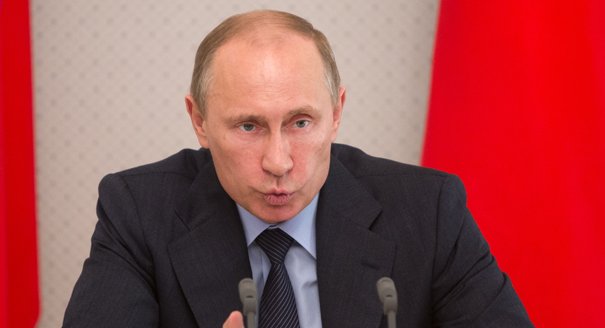
Source: Getty
War proceeds differently today than it used to. Russia partakes in ‘war by stealth’ through funding domestic violent groups, cyberattacks, and other such measures in order to keep other countries weak.
Source: Background Briefing with Ian Masters
Rachel Kleinfeld, a senior associate in the Democracy and Rule of Law Program at the Carnegie Endowment for International Peace and a former member of the Foreign Affairs Policy Board, the advisory body to the U.S. Department of State, spoke with Background Briefing with Ian Masters about Republican efforts to slow walk any Senate Intelligence Committee Inquiry into a potential intelligence dossier held by the Russians that contains compromising information on Preside Trump and their efforts to shut down the Justice Department Inspector General’s investigation into the alleged Russian interference. Kleinfeld discussed how the changing nature of war in the modern era, explaining that Russia partakes in ‘war by stealth’ through funding domestic violent groups, cyberattacks, and other such measures in order to keep other countries weak.
Listen to the broadcast on Background Briefing with Ian Masters.

Senior Fellow, Democracy, Conflict, and Governance Program
Rachel Kleinfeld is a senior fellow in Carnegie’s Democracy, Conflict, and Governance Program, where she focuses on issues of rule of law, security, and governance in democracies experiencing polarization, violence, and other governance problems.
Recent Work
Renée DiResta, Rachel Kleinfeld, Margot Treadwell
Political Violence Researchers, Rachel Kleinfeld, ed., Dalya Berkowitz, ed.
Carnegie does not take institutional positions on public policy issues; the views represented herein are those of the author(s) and do not necessarily reflect the views of Carnegie, its staff, or its trustees.

In an interview, Rozina Ali discusses her new book on the rise and manifestations of Islamophobia in the United States.

Michael Young

In an interview, Ian Lustick and Eli Clifton discuss their new book on why a prominent ally has so much influence in America.
Michael Young

As the U.S. stumbles in its war with Iran, we are likely to see an acceleration of its disengagement from the region.
Michael Young

Middle Eastern states should welcome an accelerated U.S. disengagement from their region.
Michael Young

In an interview, former ambassador Charles Freeman assesses the Trump administration’s war against Iran.
Michael Young