

Commentary
Michael Pettis
{
  "authors": [
    "Michael Pettis"
  ],
  "type": "legacyinthemedia",
  "centerAffiliationAll": "dc",
  "centers": [
    "Carnegie Endowment for International Peace",
    "Carnegie China"
  ],
  "collections": [],
  "englishNewsletterAll": "asia",
  "nonEnglishNewsletterAll": "",
  "primaryCenter": "Carnegie Endowment for International Peace",
  "programAffiliation": "AP",
  "programs": [
    "Asia"
  ],
  "projects": [],
  "regions": [
    "East Asia",
    "China"
  ],
  "topics": [
    "Political Reform",
    "Economy"
  ]
}
Source: Getty
Whether regulators can succeed in reining in credit creation this time is ultimately a political question, and depends on the central government’s ability to force through necessary reforms.
Source: Bloomberg
China's regulators, it seems, are on the attack. Guo Shuqing, chairman of the China Banking Regulatory Commission, announced recently that he'd resign if he wasn't able to discipline the banking system. Under his leadership, the CBRC is stepping up scrutiny of the role of trust companies and other financial institutions in helping China's banks circumvent lending restrictions.
The People's Bank of China has also been on the offensive. It has recently raised the cost of liquidity, attacked riskier funding structures among smaller banks, and discontinued a program that effectively monetized one-fifth of last year's increase in lending.
Are the regulators finally getting serious about reining in credit creation? The answer is an easy one: Yes if they're willing to allow economic growth to slow substantially, probably to 3 percent or less, and no if they aren't.
This is because there's a big difference between China's sustainable growth rate, based on rising demand driven by household consumption and productive investment, and its actual GDP growth rate, which is boosted by massive lending to fund investment projects that are driven by the need to generate economic activity and employment.
Economists find it very difficult to formally acknowledge the difference between the two rates, and many don't even seem to recognize that it exists. Yet this only shows how confused economists are about gross domestic product more generally. The confusion arises because a country's GDP is not a measure of the value of goods and services it creates but rather a measure of economic activity. In a market economy, investment must create enough additional productive capacity to justify the expenditure. If it doesn't, it must be written down to its true economic value. This is why GDP is a reasonable proxy in a market economy for the value of goods and services produced.
But in a command economy, investment can be driven by factors other than the need to increase productivity, such as boosting employment or local tax revenue. What's more, loss-making investments can be carried for decades before they're amortized, and insolvency can be ignored. This means that GDP growth can overstate value creation for decades.
That's what has happened in China. In the first quarter of 2017, China added debt equal to more than 40 percentage points of GDP -- an amount that has been growing year after year. In 2011, the World Economic Forum predicted that China's debt would increase by a worrying $20 trillion by 2020. By 2016, it had already increased by $22 trillion, according to the most conservative estimates, and at current rates it will increase by as much as $50 trillion by 2020. These numbers probably understate the reality.
If all this debt hasn't boosted China's GDP growth to substantially more than its potential growth rate, then what was the point? And why has it proven so difficult for the government to rein it in? It has promised to do so since 2012, yet credit growth has only accelerated, reaching some of the highest levels ever seen for a developing country.
The answer is that credit creation had to accelerate to boost GDP growth above the growth rate of productive capacity. Much, if not most, of China's 6.5 percent GDP growth is simply an artificial boost in economic activity with no commensurate increase in the capacity to create goods and services. It must be fully reversed once credit stops growing. To make matters worse, if high debt levels generate financial distress costs for the economy -- as already seems to be happening -- the amount that must be reversed will substantially exceed the original boost.
Once credit is under control, China will have lower but healthier GDP growth rates. If the economy rebalances, most Chinese might not even notice: It would require that household income -- which has grown much more slowly than GDP for nearly three decades -- now grow faster, so that the sharp slowdown in economic growth won't be matched by an equivalent slowdown in wage growth.
But to manage this rebalancing requires substantial transfers of wealth from local governments to ordinary households to boost consumption. This is why China hasn't been able to control credit growth in the past. The central government has had to fight off provincial "vested interests," who oppose any substantial transfer of wealth. Without these transfers, slower GDP growth would mean higher unemployment.
Whether regulators can succeed in reining in credit creation this time is ultimately a political question, and depends on the central government's ability to force through necessary reforms. Until then, as long as China has the debt capacity, GDP growth rates will remain high. But to see that as healthy is to miss the point completely.

Nonresident Senior Fellow, Carnegie China
Michael Pettis is a nonresident senior fellow at the Carnegie Endowment for International Peace. An expert on China’s economy, Pettis is professor of finance at Peking University’s Guanghua School of Management, where he specializes in Chinese financial markets.
Recent Work
Michael Pettis
Michael Pettis
Carnegie does not take institutional positions on public policy issues; the views represented herein are those of the author(s) and do not necessarily reflect the views of Carnegie, its staff, or its trustees.

The armed forces champion a form of capitalism that is generating revenue, but its reliance on rent faces diminishing returns, leaving the country with massive sunk costs and deferred returns, deepening dependency on external borrowing.

Yezid Sayigh

In an interview, Ishac Diwan looks at the merits and flaws in the draft legislation distributing losses from the financial collapse.

Michael Young
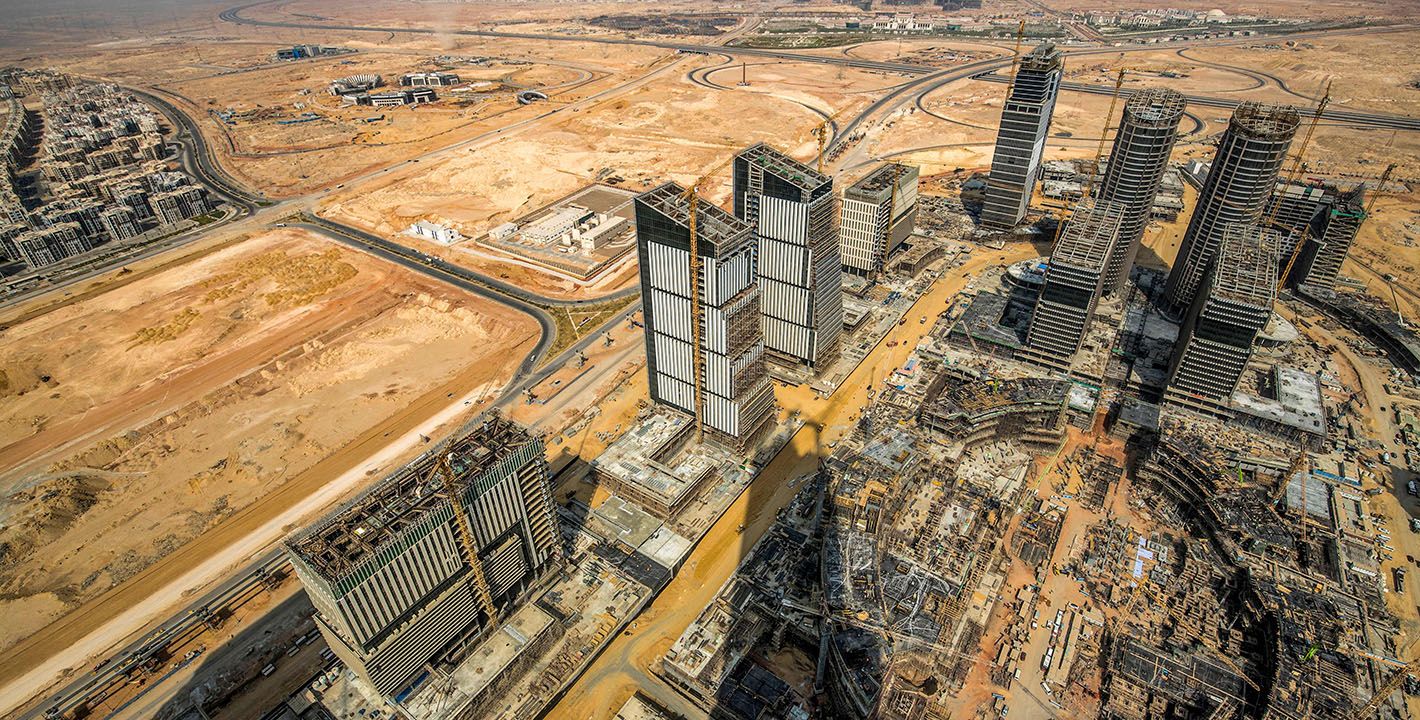
Mustaqbal Misr has expanded its portfolio with remarkable speed, but a lack of transparency remains.
Yezid Sayigh

Arab diaspora business communities in Egypt often mirror the same systemic challenges facing Egyptian businesses.

Nur Arafeh, Yezid Sayigh, Qaboul al-Absi, …

Largely characterized thus far by a single-minded focus on extractivism, Riyadh must commit to greater equitability in its approach to investment and development deals with Sudan, Ethiopia, and Eritrea.

Hesham Alghannam