

Commentary
In an interview, Ian Lustick and Eli Clifton discuss their new book on why a prominent ally has so much influence in America.
Michael Young
{
  "authors": [
    "Arushi Kumar"
  ],
  "type": "legacyinthemedia",
  "centerAffiliationAll": "",
  "centers": [
    "Carnegie Endowment for International Peace",
    "Carnegie India",
    "Malcolm H. Kerr Carnegie Middle East Center"
  ],
  "collections": [],
  "englishNewsletterAll": "",
  "nonEnglishNewsletterAll": "",
  "primaryCenter": "Carnegie India",
  "programAffiliation": "",
  "programs": [],
  "projects": [],
  "regions": [
    "South Asia",
    "Afghanistan",
    "Middle East",
    "Iran"
  ],
  "topics": [
    "Economy",
    "Foreign Policy"
  ]
}
Source: Getty
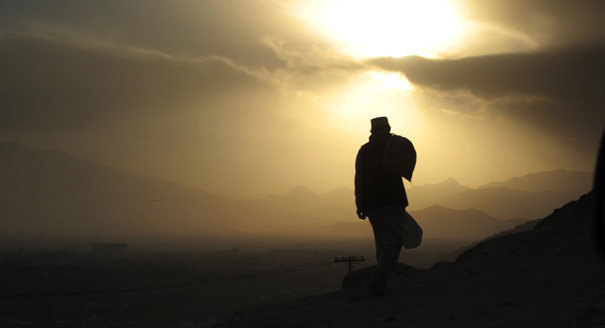
Regional connectivity projects give Afghanistan a substantive trading alternative to Pakistan and provide a powerful mechanism for trade and economic development.
Source: Economic Times
Afghanistan has traditionally relied on overland and maritime routes through Pakistan for international trade. In recent times, Pakistan has unilaterally initiated border closures at regular intervals to economically pressure Afghanistan. Regional connectivity projects, such as India’s ambitious proposal to build the Chabahar Port in Iran and the US’ New Silk Road project, give Afghanistan a substantive trading alternative to its fickle neighbour and provide a powerful mechanism for trade and economic development. Both India and the US should leverage their growing strategic convergence to bolster Afghanistan’s economic capacity by integrating it with its neighbourhood through commercial ties. This would allow it to attract new sources of foreign investment and create employment so it is no longer dependant on foreign aid.
While India has remained actively engaged in Afghanistan’s economic and infrastructural development since 2001 by contributing over $2 billion in aid, President Trump’s May budget proposal revived the New Silk Road infrastructure project, first conceived in 2011. The project envisages economic growth and stability in Afghanistan by connecting it with the economies of Central Asia through multilateral development banks, private sector investments, and regional trade blocs.
The cornerstone of India’s connectivity plans in the region is the India-Iran Agreement for the development of the Chabahar Port in Iran. The port, deemed the gateway to ‘golden opportunities’ by Road Transport, Highways and Shipping Minister Nitin Gadkari, would allow India to access Afghanistan directly while circumventing Pakistan, and would link it to a network of trade corridors like the International North South Transport Corridor that allow access to Europe through Central Asia. India is also financing the Zaranj-Delaram Highway in Afghanistan, which connects the Garland Highway, linked to all Afghan cities, to Chabahar and provides Afghanistan stable access to regional markets.
While the Chabahar Port was conceptualized at the New Delhi Declaration in 2003, progress has stalled due to Western sanctions on Iran. Following the signing of the Joint Comprehensive Plan of Action (JCPOA) between the P5+1 and Iran in 2015, India, Iran, and Afghanistan stepped up engagement in 2016 and agreed to speedily implement the Agreement. At this juncture, where it is crucial that India match its diplomatic outreach with concrete efforts to deepen long-term engagement on connectivity, India should work with the United States to ensure Iran has the space to effectively gain commercial momentum after international sanctions were lifted.
The principal challenge to developing the Chabahar Port is the uncertainty among financiers and terminal operators given a series of mixed signals from the Trump administration towards Iran. The White House imposed new sanctions on Iran a day after it certified to Congress that Iran has complied with the JCPOA. Commercial ties between both nations appear to be improving, with Boeing signing a $3 billion deal with an Iranian airline for thirty 737 jets with an option for thirty more, which will likely create thousands of jobs in the United States. Finally, the re-election of President Hassan Rouhani, who won by a landslide against the conservative cleric Ebrahim Raisi, represents a mandate from the Iranian people to remain engaged with the global economy.
The Trump administration has taken the right step by revitalising plans for the New Silk Road infrastructure project. However, the US will squander this opportunity if it lacks the strategic foresight to recognize Iran’s critical role and work closely with partners like India to strengthen Afghanistan’s connectivity and economic capacity.
This article was originally published in the Economic Times.
Arushi Kumar
Carnegie does not take institutional positions on public policy issues; the views represented herein are those of the author(s) and do not necessarily reflect the views of Carnegie, its staff, or its trustees.

In an interview, Ian Lustick and Eli Clifton discuss their new book on why a prominent ally has so much influence in America.

Michael Young

As the U.S. stumbles in its war with Iran, we are likely to see an acceleration of its disengagement from the region.
Michael Young

Middle Eastern states should welcome an accelerated U.S. disengagement from their region.
Michael Young

In an interview, former ambassador Charles Freeman assesses the Trump administration’s war against Iran.
Michael Young

The accord represents a pivotal moment in the region to avert a security vacuum in the Gulf.


Azeema Cheema, Mohanad Hage Ali