

Commentary
In an interview, Marc Lynch discusses his new book decrying the post-1990 U.S.-dominated order in the Middle East.
Michael Young
{
  "authors": [
    "Tristan Volpe",
    "Ulrich Kühn"
  ],
  "type": "other",
  "centerAffiliationAll": "dc",
  "centers": [
    "Carnegie Endowment for International Peace"
  ],
  "collections": [],
  "englishNewsletterAll": "ctw",
  "nonEnglishNewsletterAll": "",
  "primaryCenter": "Carnegie Endowment for International Peace",
  "programAffiliation": "NPP",
  "programs": [
    "Nuclear Policy"
  ],
  "projects": [],
  "regions": [
    "Western Europe",
    "Germany"
  ],
  "topics": [
    "Nuclear Policy"
  ]
}
Source: Getty
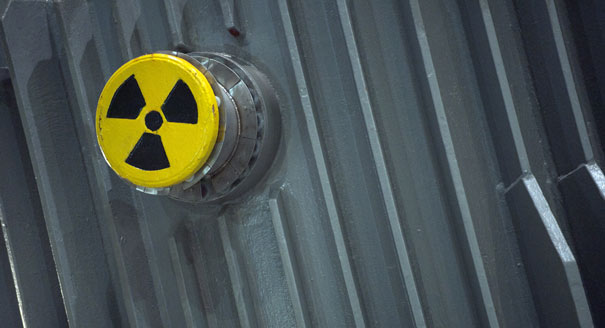
Days after the 2016 U.S. election, a small group of German experts began to publicly debate whether Berlin should pursue one of three nuclear options. Although the shallow debate was short-lived, over time this effort may turn out to be a bellwether of fundamental change in Germany’s national identity.
Source: Washington Quarterly
In this article, Tristan Volpe and Ulrich Kühn find that the short-lived German nuclear debate of 2016/17 was not a chimeric response to an impeding threat or an ill-designed attempt to signal concerns to either Washington or Moscow. Instead, the debate appears to have been crafted to familiarize the German public with strategic nuclear policy issues. The article comes with an open source data base—Tracking the German Nuclear Debate—which provides the first detailed overview of the brief German nuclear debate from October 2016 until September 2017, based on primary sources.
Only a few days after the U.S. presidential election in November 2016, a small group of pundits, scholars, journalists, as well as a senior Member of the German Bundestag began to individually debate whether Germany should, perhaps, pursue one of three nuclear options: (1) fielding an indigenous nuclear force; (2) preserving a latent nuclear hedge capacity; or (3) cooperating with the French to open an extended nuclear deterrent umbrella over Europe.
For most observers, that debate, which almost exclusively took place in the German and later English-speaking media, came as a shock. Germany is one of the staunchest supporters of nuclear nonproliferation and global disarmament. Moreover, German public opinion remains overwhelmingly opposed to nuclear weapons and even civil nuclear energy. As a result, the German nuclear debate is often portrayed as a “phantom debate”—one that was either too short-lived to warrant serious consideration or never gained traction with official German decision makers. The latter charge is certainly valid, as only one German politician voiced support for a Eurodeterrent in public: Roderich Kiesewetter, a senior member of Angela Merkel’s ruling party and the Special Representative for Foreign Affairs of the German Bundestag’s Committee on Foreign Affairs. Yet the debate attracted proponents and opponents from across the political spectrum in Germany. It has been repeatedly covered by all major news outlets in Germany—most notably Der Spiegel, Frankfurter Allgemeine Zeitung, Süddeutsche Zeitung, Zeit, Welt, Frankfurter Rundschau, and ARD—and reporting only started to fade out a few months after Trump’s election. Indeed, the magnitude of public German attention to this small group’s nuclear musings has no recent historical precedent in the country.
Despite this obvious contradiction between broad coverage and the lack of official support or even engagement in the debate, there is another striking factor: Germany’s nuclear proponents have failed to explain how the country would use its nuclear capabilities to accomplish foreign policy goals. Upon close examination, we find that the three options capture a wide range of views about the political utility of nuclear weapons. For some, a German deterrent would somehow prevent Russia from waging hybrid warfare or even meddling in European elections. Others focus on augmenting the technical ability to field an existential deterrent, signaling alliance concerns to Washington, or bolstering Europe’s extended deterrence architecture. Yet none makes the clear case that Germany would be able to achieve these diverse goals by investing in new nuclear options. There is not even a basic assessment of whether the concrete benefits to be reaped from going nuclear would outweigh the costs and risks.
These major shortcomings in German strategic thought raise an obvious question: why has the nuclear debate happened at all? Was it just a passing reaction to Trump’s incoherent stance on NATO and Russia? We uncover evidence that the discussion is not primarily intended to garner traction among government officials—at least not now. Rather, as Kiesewetter admitted, it is a longer educational effort to remove “thought taboos” held by ordinary Germans about assessing nuclear policy issues. Viewed through this lens, each of the three nuclear options attempts to bring one or more verboten topics out of the shadows: the basic concept of nuclear deterrence; the strategic value of preserving Germany’s nuclear industry; and the future landscape for European extended deterrence....
This article was originally published in the Washington Quarterly.
Correction: The text originally identified Roderich Kiesewetter as chairman of the Bundestag’s Committee on Foreign Affairs. This has been corrected to Special Representative for Foreign Affairs of the German Bundestag’s Committee on Foreign Affairs.
Nonresident Fellow, Nuclear Policy Program
Tristan Volpe is a nonresident fellow at the Carnegie Endowment for International Peace and assistant professor of defense analysis at the Naval Postgraduate School.

Nonresident Scholar, Nuclear Policy Program
Ulrich Kühn is a nonresident scholar at the Carnegie Endowment for International Peace, and the head of the arms control and emerging technologies program at the Institute for Peace Research and Security Policy at the University of Hamburg.
Carnegie does not take institutional positions on public policy issues; the views represented herein are those of the author(s) and do not necessarily reflect the views of Carnegie, its staff, or its trustees.
In an interview, Marc Lynch discusses his new book decrying the post-1990 U.S.-dominated order in the Middle East.

Michael Young
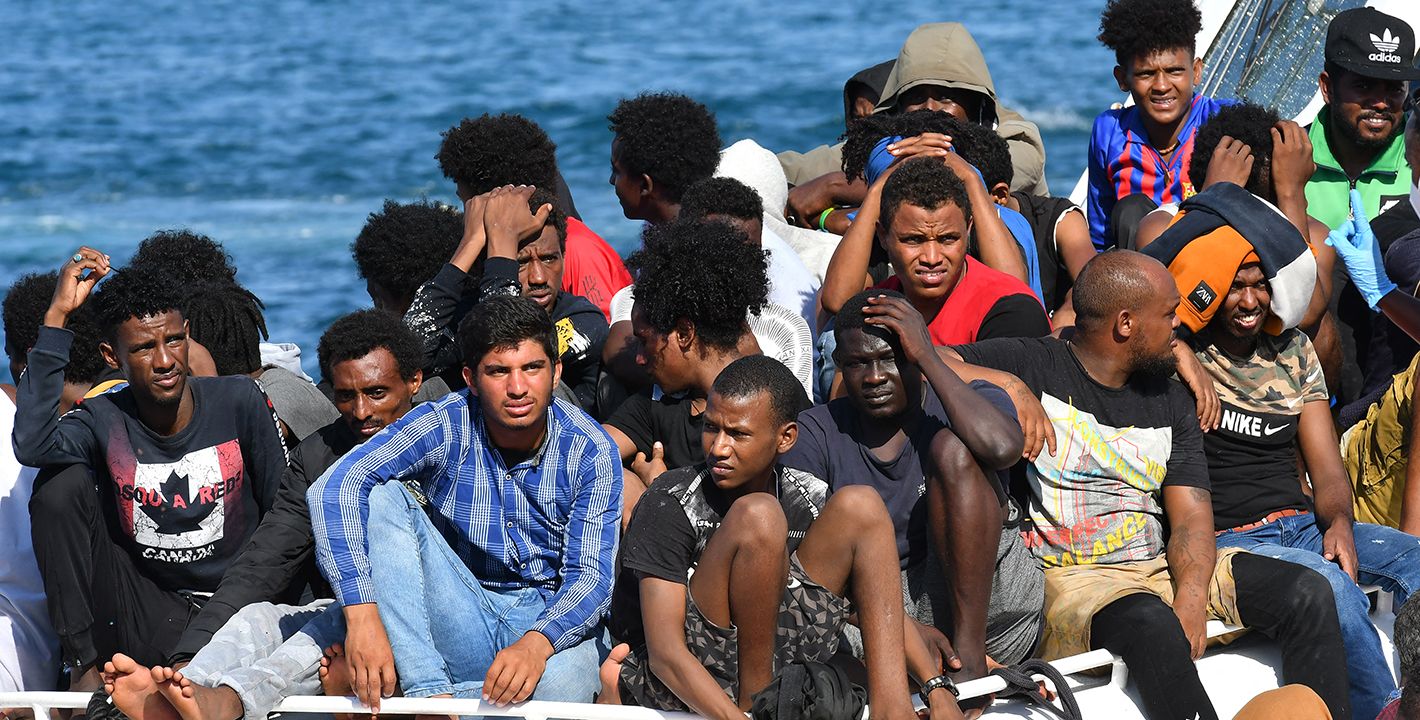
In an interview, Yasmine Zarhloule discusses irregular migration to Europe and the shortcomings of a securitization policy.
Rayyan Al-Shawaf
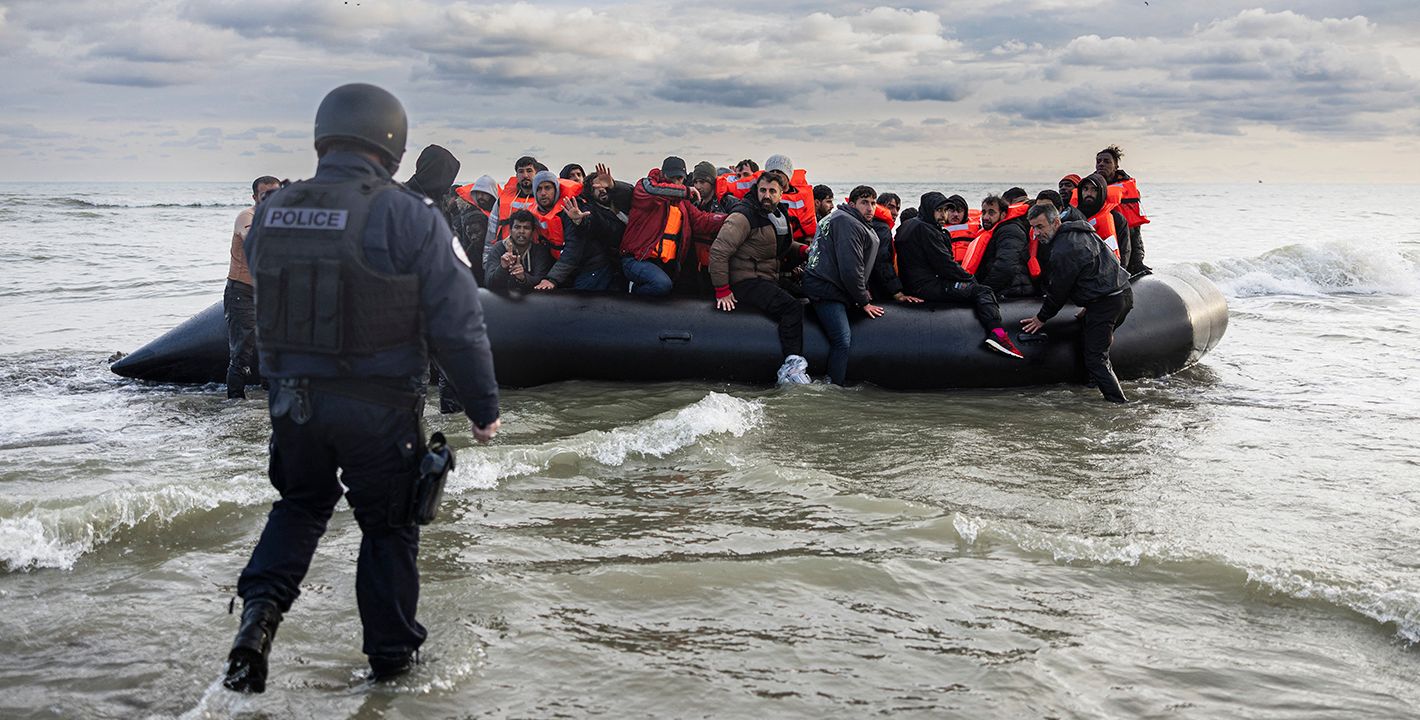
The EU has responded to unwanted arrivals with ever-stricter security measures, an approach that has both led to increased human rights violations and failed to stem the migratory tide.

Yasmine Zarhloule
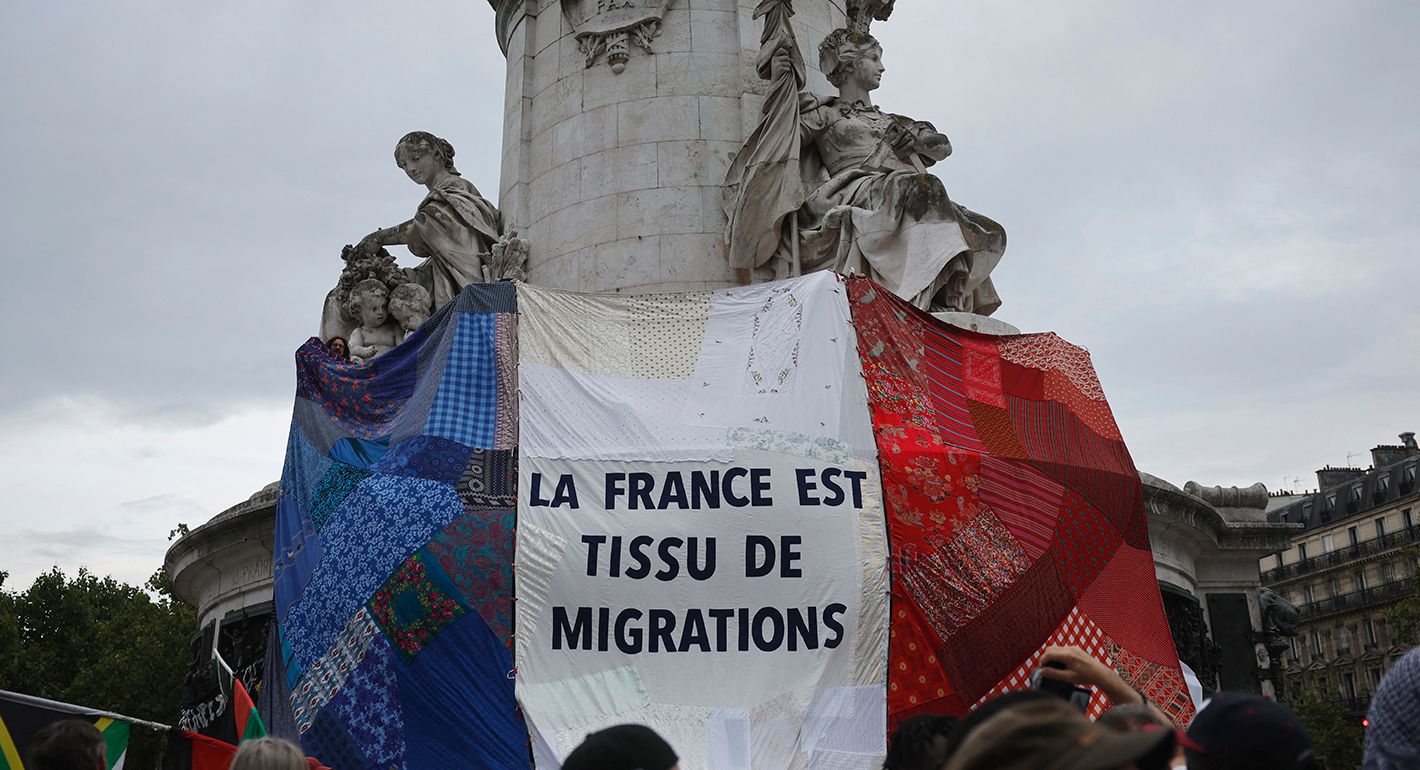
Nevertheless, recent European and parliamentary elections have fed an increasing struggle over belonging.
Yasmine Zarhloule
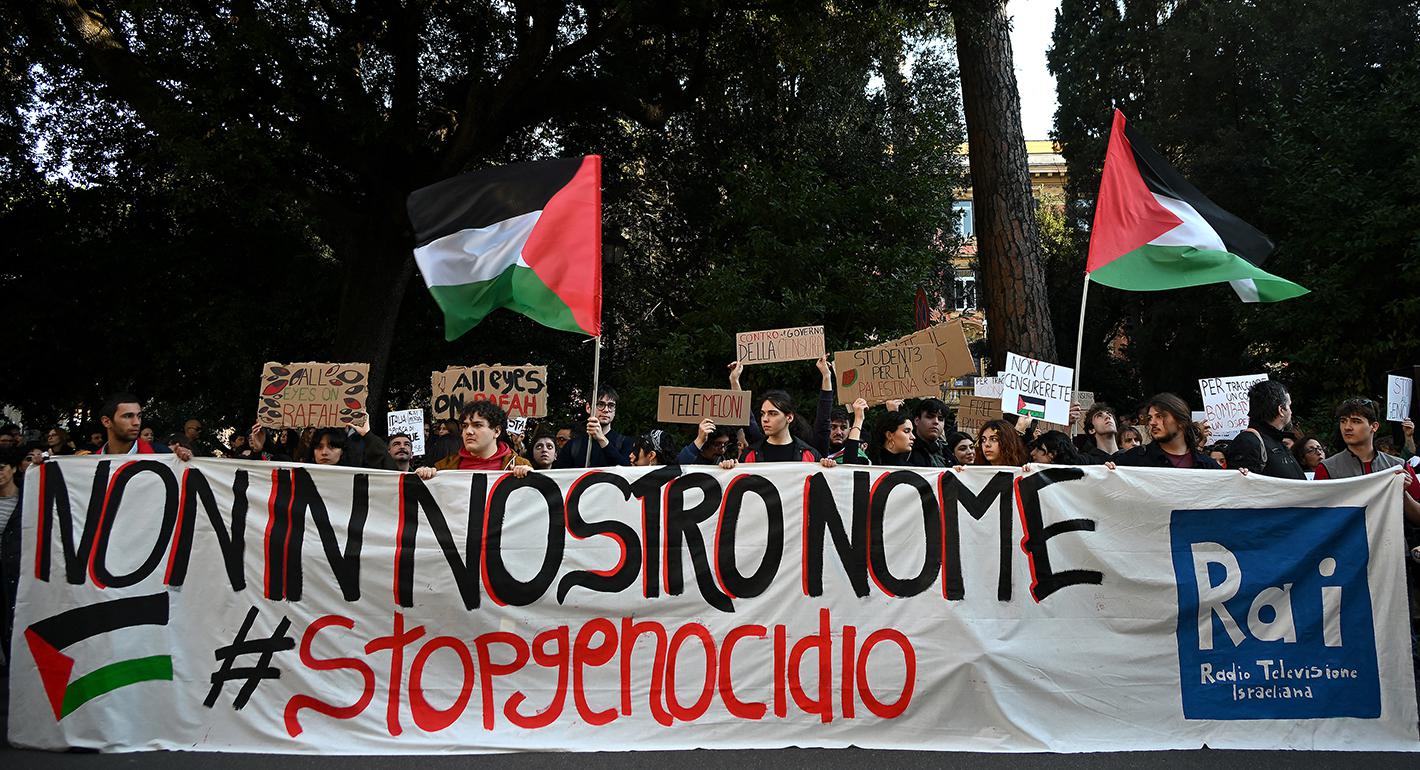
What happens in the Middle East will not be contained there, so the European Union should prepare for this by reaffirming its values.
H. A. Hellyer