

Commentary
Konstantin Skorkin
{
  "authors": [
    "Konstantin Skorkin"
  ],
  "type": "commentary",
  "centerAffiliationAll": "",
  "centers": [
    "Carnegie Endowment for International Peace",
    "Carnegie Russia Eurasia Center"
  ],
  "collections": [],
  "englishNewsletterAll": "",
  "nonEnglishNewsletterAll": "",
  "primaryCenter": "Carnegie Russia Eurasia Center",
  "programAffiliation": "",
  "programs": [],
  "projects": [
    "Eurasia in Transition"
  ],
  "regions": [],
  "topics": [
    "Economy"
  ]
}
Source: Getty
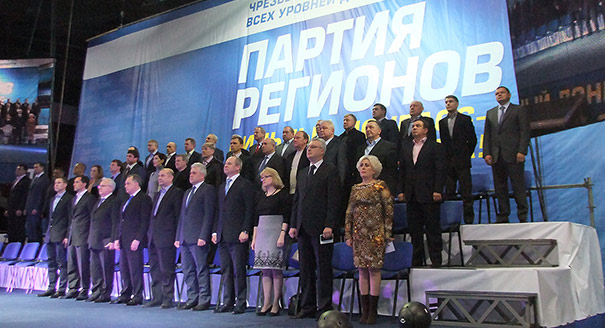
The power vacuum caused by the Maidan protests of 2014 allowed marginal political figures in the Donbas to capitalize on longtime discontent with the omnipotent Party of Regions and its local bosses. Almost none of the former regional leaders managed to find a place in the new political reality, but their authoritarian model left a useful blueprint for the new leaders of the Donetsk and Luhansk people’s republics.
Moscow’s interference in Ukraine’s domestic affairs in 2014–2015 created an unexpected vacuum in the Donbas. For over a decade, the ostensibly pro-Russian Party of Regions had monopolized Donbas politics and isolated the region from the rest of the country. But the party overestimated its authority and another group—a counter-elite—took advantage of the crisis to take power.
Before 2004, most residents of the Donbas supported the Communist Party of Ukraine, associating it with the region’s glorious past when it was a center of Soviet industrial production.
The Orange Revolution in 2004 ushered in a decade of dominance by the Party of the Regions, supported by most of the Donbas elite, an agglomeration of Soviet-era government and industry executives and successful strongmen-businessmen from the 1990s. Former Donetsk governor Viktor Yanukovych—the loser from the disputed 2004 election—consolidated the party’s authority.
The Party of Regions was considered to be pro-Russian, but that did not simply mean that it wanted to bring Ukraine closer to Russia. It was copying the same model of Putin’s Russia. In 2010, Ukrainian political scientist Vladimir Polokhalo observed, “The Party of Regions is moving along the same track as United Russia—toward complete monopoly on power. But it’s too dangerous for Ukraine because it destroys competition and introduces complete government control.”
In the same year, Yanukovych was elected president of Ukraine and the party’s dominance grew even more. By 2014, 106 out of 124 members in the Luhansk regional legislature belonged to the Party of Regions, and 168 out of 180 members represented the party in Donetsk. The remaining seats were filled by Communist Party legislators. Regional executives appointed by the central government were only approved if they were from the Party of Regions.
The party achieved its success by replicating Russia’s centralized power vertical. Party membership became the only means of social mobility in Donetsk and Luhansk and provided political protection for local businesses. Everyone from regional oligarchs to school principals belonged to the party.
In this way, the Donbas became an authoritarian enclave inside Ukraine, out of sync with the rest of the country. Demands for decentralized governance and increased state budget appropriations for the regions were interlaced with calls for the protection of the rights of Ukraine’s Russian-speakers. An isolationist ideology meant that Donbas rulers attributed their domination to the special character of the “Donbas people,” who were fundamentally different from other anarchic and chaos-loving Ukrainians. However, the real objective was to isolate the region from the rest of the country and preserve the Party of Regions’ power monopoly in the Donbas.
In fact, Donetsk and Luhansk had demonstrated an isolationist bent since the first years of Ukrainian independence. In 1991, the Donbas overwhelmingly voted for Ukrainian independence. People hoped this would improve the difficult economic situation brought on by the collapse of the command economy and the inefficiency of the region’s industries. But the first years of independence were a disappointment. The Donbas underwent painful deindustrialization. Mines and factories that had sustained local towns were shut down, turning entire industrial centers into ghost towns. People turned to subsistence farming for survival.
Local elites blamed Kiev, claiming that the Ukrainian authorities had tricked the Donbas into seceding, which led to its current destitute condition. The region had once provided high salaries and preferential living conditions for its workers. So, many looked back to the Soviet past as a paradise lost.
At the same time, the nascent Ukrainian state sought to create a unified political nation, in part by enshrining Ukrainian as the national language. The Donbas was not at ease with this process. It had attracted labor migration from all over the Soviet Union. Donbas residents saw their region as multiethnic, with Russian as the lingua franca. The cultural divide worsened with differences over history and Ukraine’s part in the Second World War.
As a result, by 2014 the Donbas had already developed a coherent ideology that justified why the region should part ways with Ukraine. All the regional elites needed was the political opening that came from the overthrow of Yanukovych and the Maidan protests.
Yet the only political activity that existed in this authoritarian enclave was limited to allies of the Party of Regions: the Communists, the Progressive-Socialist Party, and small “pro-Russian” parties that advocated for the Donbas’s secession from Ukraine.
At the same time, a public organization called “Donetsk Republic” openly functioned within this limited political spectrum. Receiving minimal public support, its objective was the revival of the Donetsk-Krivoy Rog Soviet Republic that existed from 1918 to 1919. They acted as ideological allies for the Party of Regions, and in exchange were allowed to express radical rhetoric and get access to minor positions in local governments.
These apparently marginal groups attracted a dissatisfied segment of the population, including those dissatisfied with the omnipotence of the Party of Regions. Then, a power vacuum in 2014 suddenly gave them a chance to aspire to much more. When the party bureaucracy and oligarchy started to crumble after Yanukovych fled Ukraine in February 2014 amid the Maidan protests, these radical individuals rose to prominence as “people’s governors,” anti-Maidan leaders, and militia field commanders.
Several businessmen and law enforcement officials tied to criminal economic enterprises—such as contraband traders and illegal coal mine owners—then joined this movement. Under the Party of Regions, these shadowy businessmen could only stay in the background, doing the party’s dirty work such as laundering money and acting as enforcers of their control. By joining the marginal activists of the Donbas counter-elite, these men were able to come to the fore in their own right.
Pavel Gubarev is a prime example of the rapid social mobility allowed by this period of turmoil. The “people’s governor” had been an activist for “the Donbas’s special way,” after which he became a Progressive-Socialist Party district council member in Donetsk. Then he worked as a PR specialist for the Party of Regions with connections to the corridors of power in Moscow. After the Maidan protests, while the Party of Regions was in disarray, embroiled in its own internal power struggle, Gubarev seized power with the help of a small but radical militia.
In the biographies of most of the Donbas’s separatist leaders, one sees iterations of this model. Politically insignificant individuals with an extremist reputation suddenly became the driving force behind the new political elite of the Donbas.
Capitalizing on the discontent with the Party of Regions and its local bosses, the separatists allowed for a new social mobility that attracted popular support. They harped on the narrative built by the Party of Regions, proclaiming themselves defenders of the region’s social and cultural history, once again portrayed as under attack from Kiev.
After seizing power, this counter-elite adopted the same system of patronage and authoritarian suppression of the opposition that had allowed the Party of Regions to sustain dominance in the Donbas for nearly a decade. Amazingly, almost none of the previous leaders of the region were able to keep power in the region’s newly established “people’s republics.” A new elite had been born.


An independent journalist.
Recent Work
Konstantin Skorkin
Konstantin Skorkin
Carnegie does not take institutional positions on public policy issues; the views represented herein are those of the author(s) and do not necessarily reflect the views of Carnegie, its staff, or its trustees.

The armed forces champion a form of capitalism that is generating revenue, but its reliance on rent faces diminishing returns, leaving the country with massive sunk costs and deferred returns, deepening dependency on external borrowing.

Yezid Sayigh
In an interview, Ishac Diwan looks at the merits and flaws in the draft legislation distributing losses from the financial collapse.

Michael Young
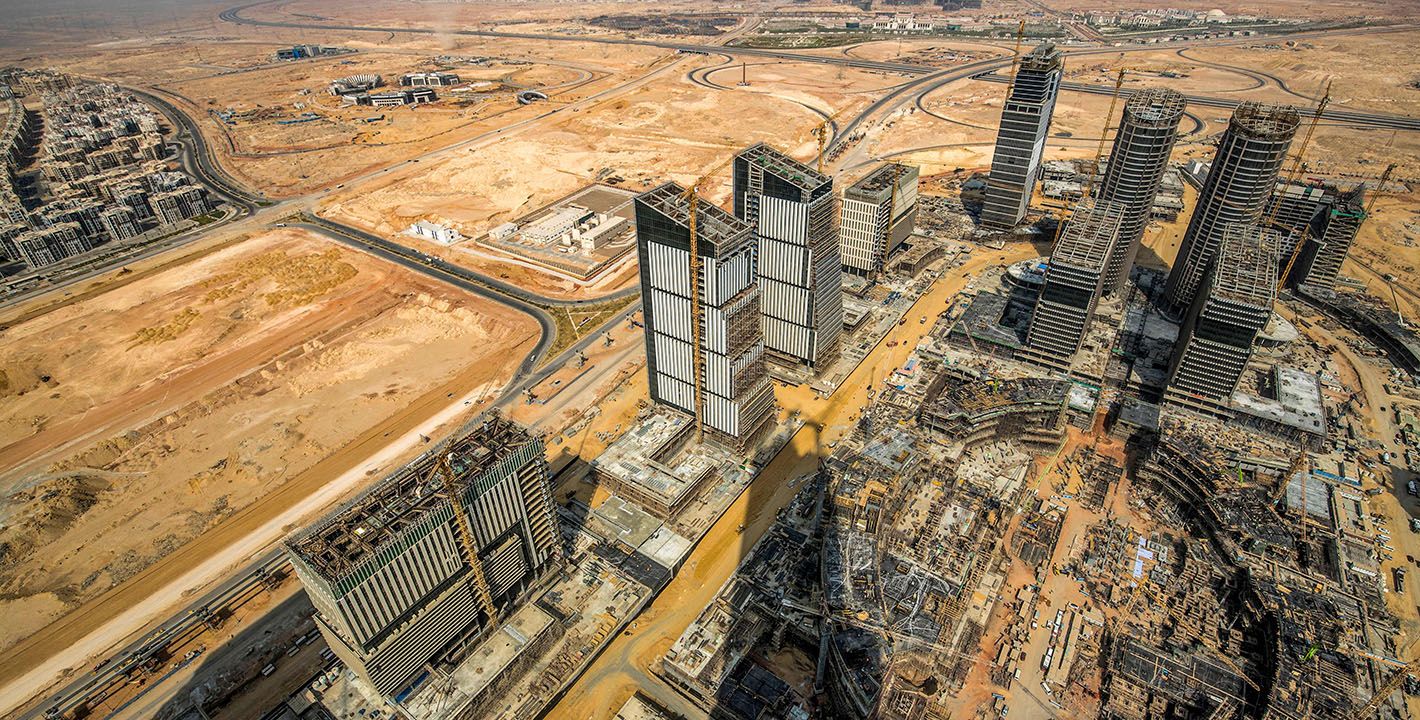
Mustaqbal Misr has expanded its portfolio with remarkable speed, but a lack of transparency remains.
Yezid Sayigh

Arab diaspora business communities in Egypt often mirror the same systemic challenges facing Egyptian businesses.

Nur Arafeh, Yezid Sayigh, Qaboul al-Absi, …
Largely characterized thus far by a single-minded focus on extractivism, Riyadh must commit to greater equitability in its approach to investment and development deals with Sudan, Ethiopia, and Eritrea.

Hesham Alghannam