

Commentary
Ulrich Kühn
{
  "authors": [
    "Ulrich Kühn"
  ],
  "type": "other",
  "centerAffiliationAll": "dc",
  "centers": [
    "Carnegie Endowment for International Peace"
  ],
  "collections": [],
  "englishNewsletterAll": "ctw",
  "nonEnglishNewsletterAll": "",
  "primaryCenter": "Carnegie Endowment for International Peace",
  "programAffiliation": "NPP",
  "programs": [
    "Nuclear Policy"
  ],
  "projects": [],
  "regions": [],
  "topics": [
    "Nuclear Policy",
    "Arms Control"
  ]
}
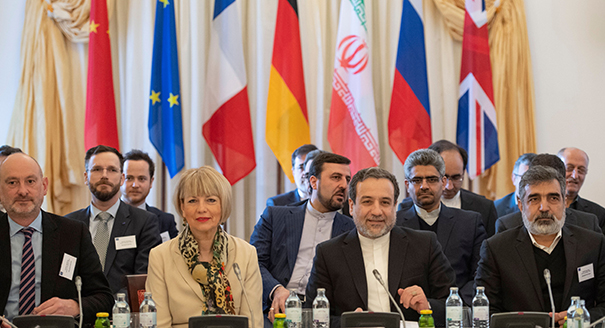
Source: Getty
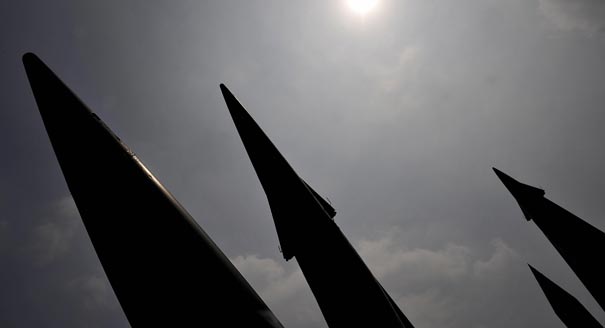
Nuclear disarmament, arms control, and nonproliferation policies are increasingly affected by declining regional security, increasing militarization of U.S. foreign policy, and changes to the global normative nuclear order.
Source: S&F Sicherheit und Frieden
Nuclear disarmament, arms control, and nonproliferation policies are increasingly affected by declining regional security, increasing militarization of U.S. foreign policy, and changes to the global normative nuclear order. In the coming years, Europe, and the European Union (EU), must take on additional responsibilities to mitigate these growing risks. In particular, EU member states should focus on preserving the Intermediate-range Nuclear Forces (INF) Treaty as well as the Iran nuclear deal, finding a diplomatic solution to the conflict in Ukraine, and bridging the divide between the Ban Treaty advocates and the nuclear-weapons possessor.
This article was originally published in S&F Sicherheit und Frieden

Former Nonresident Scholar, Nuclear Policy Program
Ulrich Kühn was a nonresident scholar at the Carnegie Endowment for International Peace, and the head of the arms control and emerging technologies program at the Institute for Peace Research and Security Policy at the University of Hamburg.
Recent Work
Ulrich Kühn
Ulrich Kühn
Carnegie does not take institutional positions on public policy issues; the views represented herein are those of the author(s) and do not necessarily reflect the views of Carnegie, its staff, or its trustees.
In an interview, Marc Lynch discusses his new book decrying the post-1990 U.S.-dominated order in the Middle East.

Michael Young
Both events also could force Washington to rethink or revive its Middle East partnerships.

Karim Sadjadpour
Disagreement between the United States and Iran over a revived nuclear accord may anchor volatile competition.

George Perkovich
A regular survey of experts on matters relating to Middle Eastern and North African politics and security.
Michael Young
The British, French, and German foreign ministers have formally accused Iran of breaking the terms of the 2015 Iran nuclear deal, a step that could lead to sanctions. Are the Europeans preparing to pull the plug?
Jarrett Blanc