

Commentary
Andrei Kolesnikov
{
  "authors": [
    "Andrei Kolesnikov"
  ],
  "type": "legacyinthemedia",
  "centerAffiliationAll": "",
  "centers": [
    "Carnegie Endowment for International Peace",
    "Carnegie Russia Eurasia Center"
  ],
  "collections": [],
  "englishNewsletterAll": "",
  "nonEnglishNewsletterAll": "",
  "primaryCenter": "Carnegie Endowment for International Peace",
  "programAffiliation": "",
  "programs": [],
  "projects": [],
  "regions": [
    "Russia"
  ],
  "topics": [
    "Political Reform"
  ]
}
Source: Getty
The Kerch Bridge is the conclusion of Crimea’s incorporation into Russia, both physically and politically. Any haggling over on what terms Russia might return Crimea to Ukraine is now definitively null and void.
Source: Moscow Times
At the opening of the Kerch Bridge this week, Vladimir Putin invoked religious terminology to describe the new construction. According to the Russian president, the 19-kilometer connection between Russia and the Crimean peninsula was “a miracle.”
Russia’s annexation of Crimea was given a historical and religious bent right from the start. In a speech in the spring of 2014 to both chambers of parliament after the disputed referendum on Crimea joining Russia, the president spoke of the peninsula as if it were a holy place for Russians.
In a way, the bridge is the culmination of Russian authoritarianism and the pinnacle of the Putin regime. It is a symbol of the historic reunification of the Russian people.
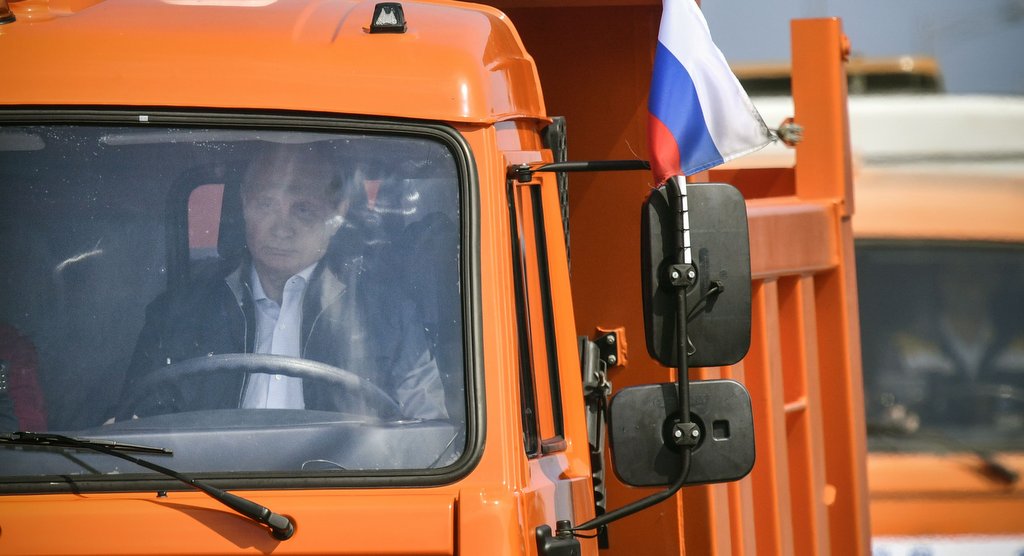
At its opening on Tuesday, Putin was presented as the common man: dressed in jeans, he hopped behind the wheel of a KAMAZ truck to make the very first crossing over the bridge. You could say he was earthly, just as people said about Lenin in Soviet times. At the same time, however, Putin was synonymous with Russia and its flag, the epicenter of all patriotic rituals.
But the bridge is also a symbol of oligarchic capitalism. It was built by a construction company owned by one of Putin’s closest cronies, his childhood judo partner Arkady Rotenberg. The truck that the president drove was made at an enterprise belonging to the empire of another oligarch crony, Sergei Chemezov.
According to the famous idiom, Russia's two eternal problems are fools and roads. With the opening of the Kerch Bridge, Putin has shown he can solve both.
In terms of infrastructure, Russia is not the most advanced country, to put it mildly. And yet here we have a marvel of engineering (though Dutch technology was used for the bridge’s supports, which may yet become the subject of an investigation under Western sanctions legislation).
And there are no fools here: The bridge solves the problem of Crimea’s isolation from Russia. It should boost the number of tourists visiting the peninsula. But, most importantly, it is proof of Russia’s capabilities to the world and its authorities' soft power at home.
Unsurprisingly, there was a lot of pomp and almost hysterical levels of patriotism surrounding the opening, ranging from advertisements for the Crimean bridge in Moscow’s historic shopping center on Red Square to images of the bridge on Moscow's metro tickets.
Of course, the miracle has come at a price: almost $4 billion was spent on the construction of the bridge itself, and that is just the beginning of the enormous investment which is being made to boost national pride.
The economically isolated peninsula has become something of a black hole for the federal budget. Its two federal subjects — the republic of Crimea and the city of Sevastopol, where Russia has a naval base — are among the subjects which receive most state funding in Russia.
Statistics analyzed by economist Natalya Zubarevich show that state investment last year more than doubled in Crimea as a whole and grew by 65 percent in Sevastopol. In all, a quarter of investment from the federal budget is connected one way or another with Crimea.
Meanwhile, real incomes fell in 65 of Russia’s 85 regions by an average of 1.1 percent. Yet Crimeans' incomes grew by 13 percent last year.
Crimea and Sevastopol received colossal financial support motivated by what is now generally referred to as “geopolitical reasons.” The bridge is both a part of that support and its symbol. It is a sign of yet another victory by Russia — that is, Putin — and one that stands out all the more for taking place so close to hostile Ukraine and its Western supporters.
Finally, it is also the conclusion of Crimea’s incorporation into Russia, both physically and politically. Any haggling over on what terms Russia might return Crimea to Ukraine is now definitively null and void.
Former Senior Fellow, Carnegie Russia Eurasia Center
Kolesnikov was a senior fellow at the Carnegie Russia Eurasia Center.
Recent Work
Andrei Kolesnikov
Andrei Kolesnikov
Carnegie does not take institutional positions on public policy issues; the views represented herein are those of the author(s) and do not necessarily reflect the views of Carnegie, its staff, or its trustees.
The country’s leadership is increasingly uneasy about multiple challenges from the Levant to the South Caucasus.

Armenak Tokmajyan
In an interview, Daniela Richterova speaks about her book on Czechoslovakia’s Cold War ties to Palestinian groups and others.

Michael Young
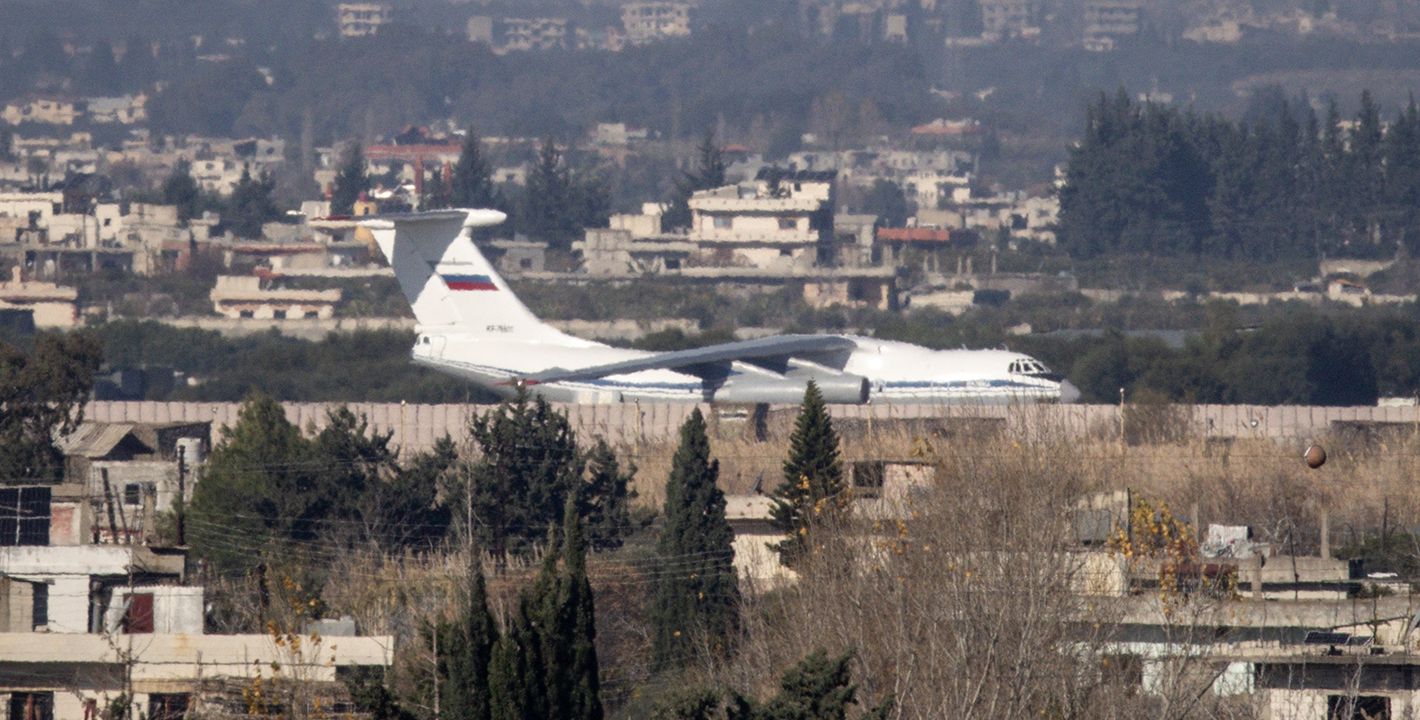
The downfall of the Assad regime represented a setback, but Russia’s primary focus remains Ukraine.
Sergei Melkonian
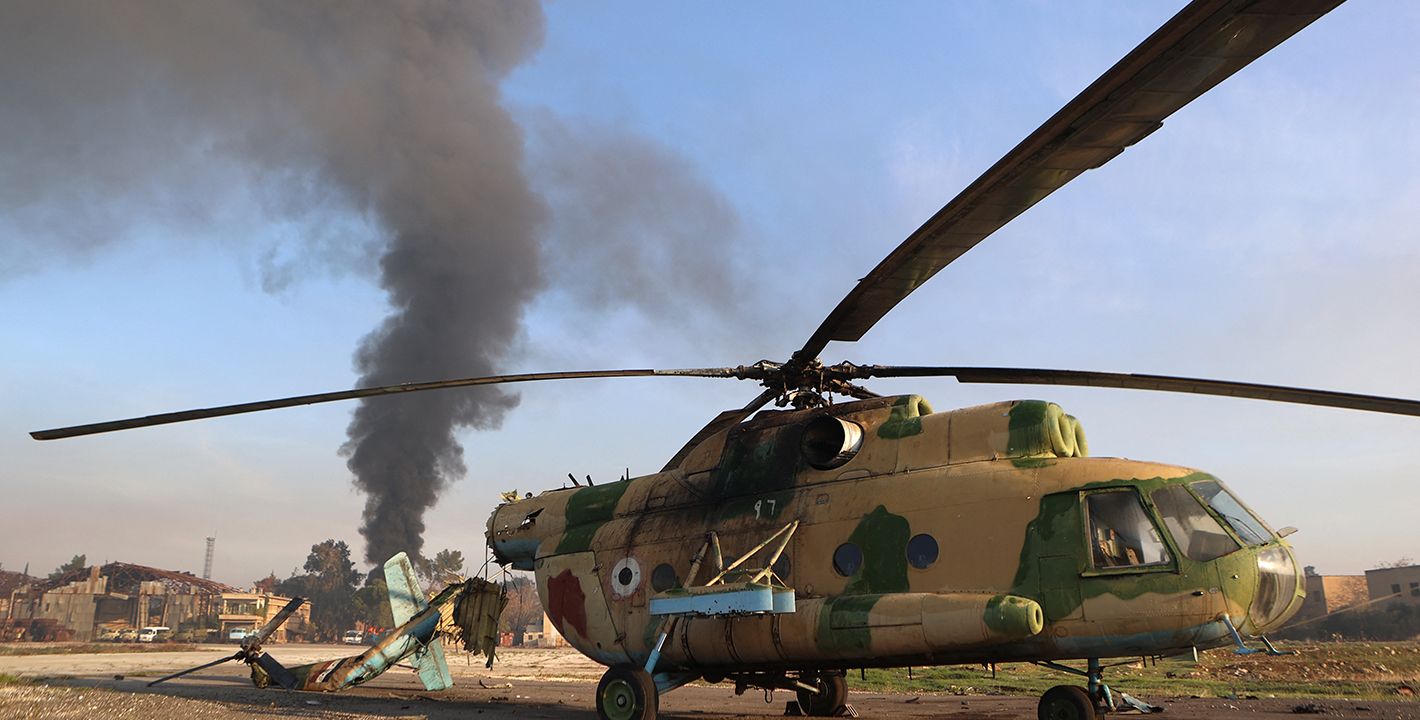
Why did Bashar al-Assad’s armed forces fail to act, unlike those in Egypt, Libya, Algeria, and Sudan?

Yezid Sayigh
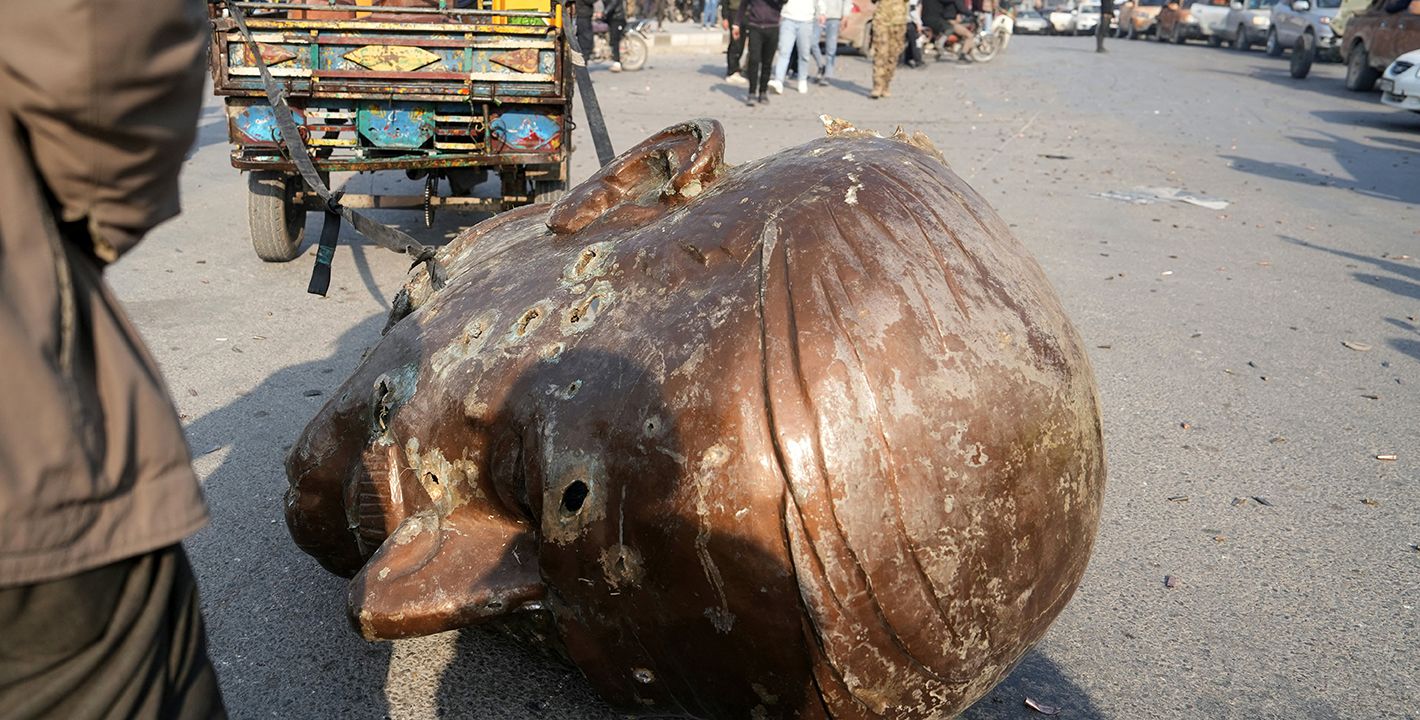
Spot analysis from Carnegie scholars on events relating to the Middle East and North Africa.
Armenak Tokmajyan