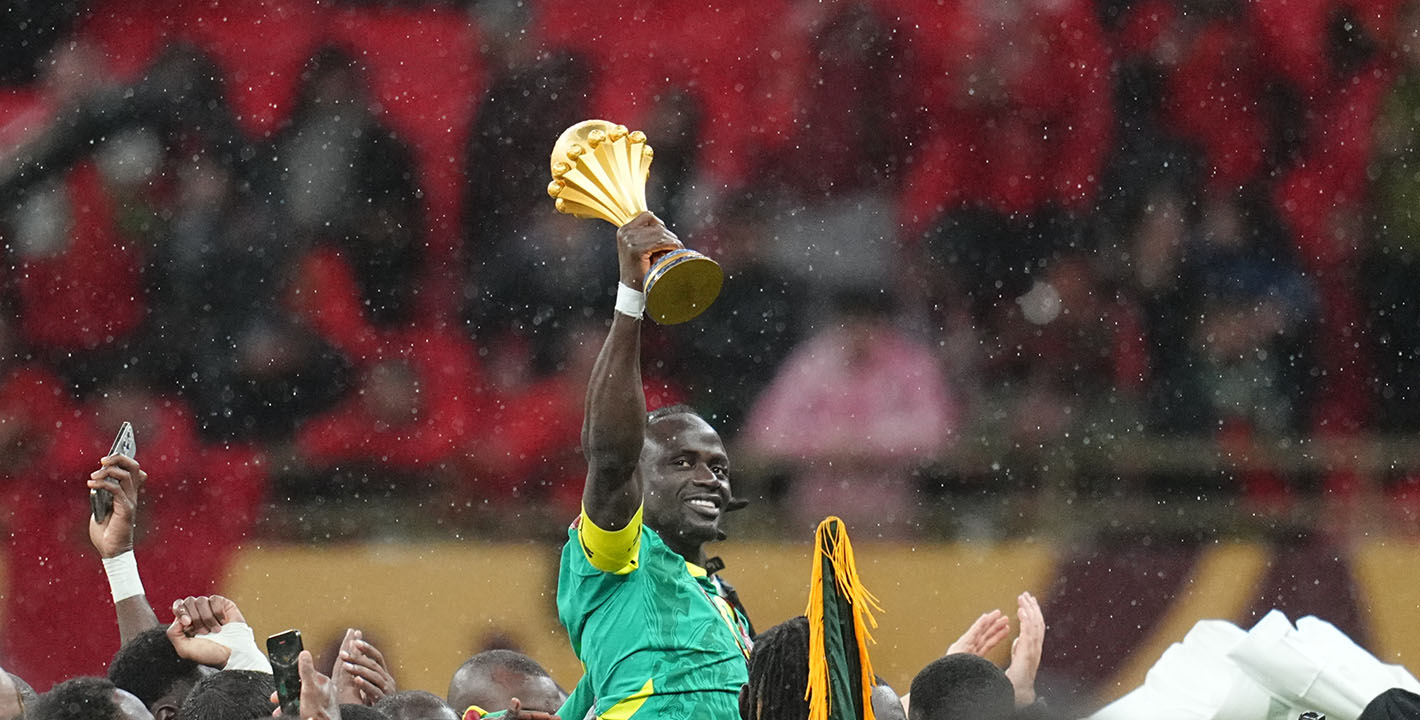

The recent African Cup of Nations tournament in Morocco touched on issues that largely transcended the sport.
Issam Kayssi, Yasmine Zarhloule
{
"authors": [
"Frederic Wehrey",
"Wolfram Lacher"
],
"type": "legacyinthemedia",
"centerAffiliationAll": "dc",
"centers": [
"Carnegie Endowment for International Peace",
"Malcolm H. Kerr Carnegie Middle East Center"
],
"collections": [],
"englishNewsletterAll": "menaTransitions",
"nonEnglishNewsletterAll": "",
"primaryCenter": "Carnegie Endowment for International Peace",
"programAffiliation": "MEP",
"programs": [
"Middle East"
],
"projects": [],
"regions": [
"North Africa",
"Libya",
"Western Europe",
"France"
],
"topics": [
"Political Reform"
]
}Source: Getty
Without a firm constitutional basis, early elections in Libya would not only produce a government whose legitimacy is contested even more widely, but also leave the door open for another strongman to rise to power.
Source: Foreign Affairs
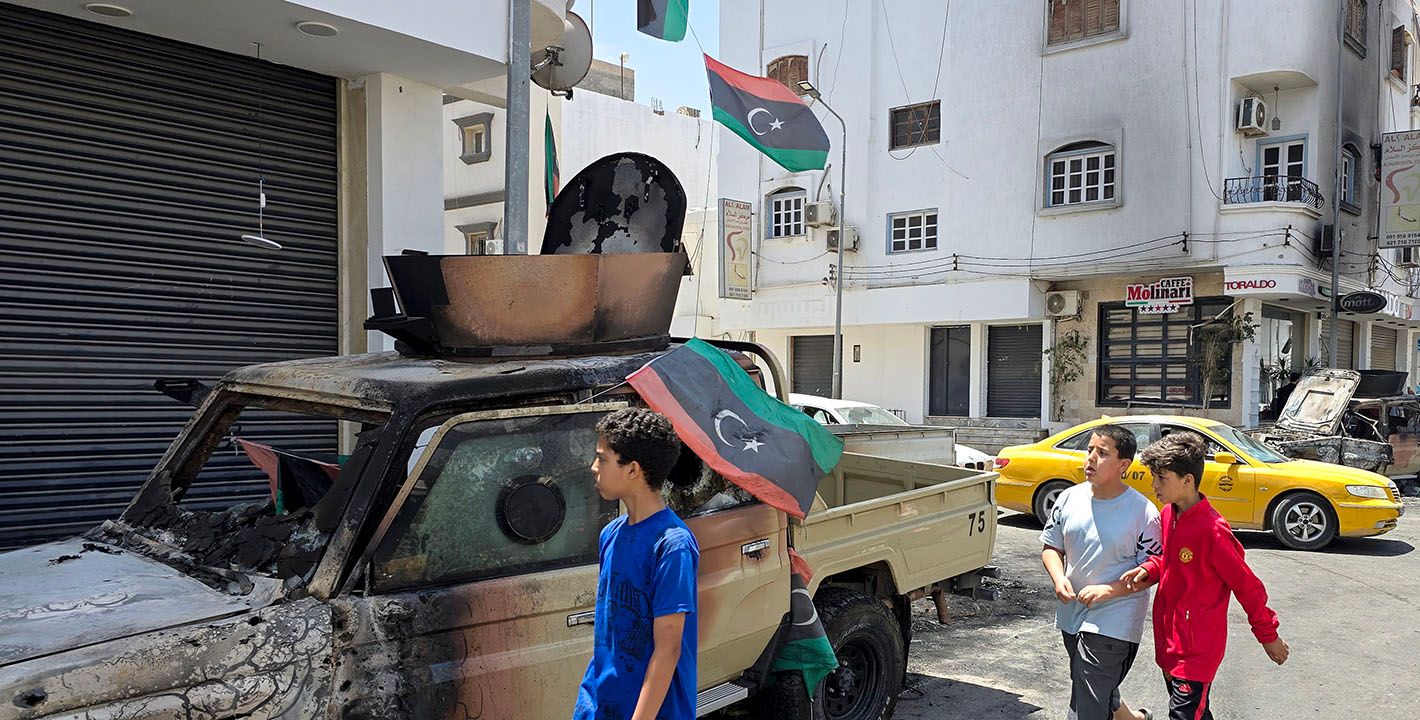
To visit Libya in recent months is to encounter a country holding its breath, caught in the throes of abeyance and a deep foreboding. It is a lawless place, riddled with criminality and flare-ups of fierce fighting in the south and east. Oil revenues have fallen due to recent factional clashes and elite plunder has everyday Libyans struggling for subsistence amid deep economic crisis. Overlaying all of this is a lingering political stalemate. Formal authority is split between a feeble, internationally recognized Government of National Accord (GNA) in the capital of Tripoli and eastern institutions dominated by Field Marshal Khalifa Hiftar, who once served under the former Libyan leader Muammar al-Qaddafi but later had a falling-out. But much of the country’s west and south escapes the control of these rival authorities.
There has been no shortage of Western proposals to break the gridlock and stave off further collapse, the most popular of which include early elections, as French President Emmanuel Macron recently advocated for in a meeting with Libyan leaders in Paris. Proponents of this approach argue that only elections can produce a new government with the popular backing needed to overcome the legal limbo affecting all of Libya’s competing legislative and executive bodies. It is a wiping of the slate, these advocates say, a chance to sideline spoilers on both sides and replace the long-suffering GNA with a more viable body.
Yet for all of these seductions, in reality, swift elections may lead to greater disorder. Without a firm constitutional basis, voting would produce a government whose legitimacy is contested even more widely. The absence of a constitution also leaves open the executive authority of the president—a particular concern for opponents of Hiftar, who see in his support for elections a thinly veiled ploy to become ruler for life. This by itself could be a major flash point. In the Hiftar-controlled east, free elections are impossible. But even outside it, in the best case, voting results would be heavily influenced by local strongmen and militias, and polling threatens to ignite violent local conflicts.
Senior Fellow, Middle East Program
Frederic Wehrey is a senior fellow in the Middle East Program at the Carnegie Endowment for International Peace, where his research focuses on governance, conflict, and security in Libya, North Africa, and the Persian Gulf.
Wolfram Lacher
Carnegie does not take institutional positions on public policy issues; the views represented herein are those of the author(s) and do not necessarily reflect the views of Carnegie, its staff, or its trustees.
The recent African Cup of Nations tournament in Morocco touched on issues that largely transcended the sport.
Issam Kayssi, Yasmine Zarhloule
The UN Support Mission in the country should reassess its approach so that consensus between the warring parties becomes the eventual goal, rather than a procedural matter that dogs the negotiating process at every turn.
Soraya Rahem
Mustaqbal Misr has expanded its portfolio with remarkable speed, but a lack of transparency remains.
Yezid Sayigh
The burden of environmental degradation is felt not only through physical labor but also emotional and social loss.
Yasmine Zarhloule, Ella Williams
For the traditionally nomadic Amazigh pastoralists in the Draa-Tafilalet region, environmental change has exacerbated long-standing inequities, forcing the community to adapt, which has laid bare the blind spots of state-centered climate policy frameworks.
Yasmine Zarhloule, Ella Williams