• Research
  • Diwan
  • About
  • Experts
Carnegie Middle East logoCarnegie lettermark logo
LebanonIran
{
  "authors": [
    "Marc Pierini"
  ],
  "type": "legacyinthemedia",
  "centerAffiliationAll": "dc",
  "centers": [
    "Carnegie Endowment for International Peace",
    "Carnegie Europe",
    "Malcolm H. Kerr Carnegie Middle East Center"
  ],
  "collections": [
    "Turkey’s Transformation"
  ],
  "englishNewsletterAll": "ctw",
  "nonEnglishNewsletterAll": "",
  "primaryCenter": "Carnegie Europe",
  "programAffiliation": "EP",
  "programs": [
    "Europe"
  ],
  "projects": [],
  "regions": [
    "Europe",
    "Türkiye",
    "Middle East",
    "Iran"
  ],
  "topics": [
    "Foreign Policy",
    "Political Reform"
  ]
}
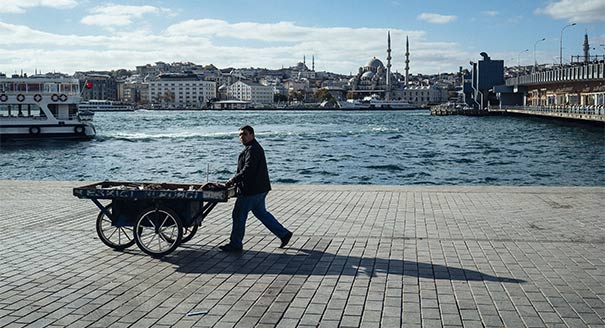
Source: Getty

In The Media
Carnegie Europe

What Turkey’s High-Stakes Elections Mean for the West

For the citizens of Turkey, the upcoming elections boil down to a choice between a one-man-rule system with no checks and balances and a possible return to a more liberal and parliamentary system of governance.

Link Copied
By Marc Pierini
Published on Jun 20, 2018

Source: Axios

Turkey is slated to hold presidential and parliamentary elections on June 24. The current leadership has moved the vote forward by 16 months in the hopes of avoiding fallout from a badly deteriorating economy.

Why it matters: For Erdoğan, the combined elections are a matter of political survival after more than 15 years in power. For the opposition, they represent the first serious opportunity to send the incumbent president into retirement. For the citizens of Turkey, this boils down to a choice between a one-man-rule system with no checks and balances and a possible return to a more liberal and parliamentary system of governance.

Turkey’s dual elections on Sunday are deeply flawed:

  • The country’s ongoing state of emergency favors the current leadership.
  • The new election law is less fraud-proof.
  • On-air reporting is massively unfair, to the benefit of the incumbent president.
  • Kurdish presidential candidate Selahattin Demirtaş — who is running his campaign from jail — has been threatened with capital punishment by President Erdoğan himself.

The possible outcomes:

  1. An Erdoğan victory would mean more Turkish hostility toward Western powers. The U.S. would face a host of grievances, including the F35 delivery schedule, the use of the İncirlik Air Base and support to Syrian Kurds. Turkey, meanwhile, would try to reap maximum concessions from the EU — on trade, visa-free travel to Europe and support for Syrian refugees — while eschewing alignment with EU governance and economic standards. More importantly, should Erdoğan emerge electorally victorious but politically weaker with a narrow electoral margin — a real possibility — tensions with the West would put him at greater risk of Russian manipulation against NATO.

  2. A victory for the strongest anti-Erdoğan contender, Muharrem İnce, backed by a united parliamentary majority, would lead to a more amicable relationship with the West, especially if Turkish politics returned to a rule-based system. But to earn credibility, this new leadership would have to quickly take a stand on restoring a strong relationship with NATO and relaunching peace talks with Turkey’s Kurds. These are no small endeavors.

The big picture: Most polls predict that Erdoğan will carry the presidency. In that event, liberties and tolerance in Turkey's diverse society would fall even further, followed by Turkey’s alliance with the West.

About the Author

Marc Pierini

Senior Fellow, Carnegie Europe

Pierini is a senior fellow at Carnegie Europe, where his research focuses on developments in the Middle East and Turkey from a European perspective.

    Recent Work

  • Commentary
    The Iran War’s Dangerous Fallout for Europe

      Marc Pierini

  • Other
    Unpacking Trump’s National Security Strategy
      • Cecily Brewer
      • +18

      James M. Acton, Saskia Brechenmacher, Cecily Brewer, …

Marc Pierini
Senior Fellow, Carnegie Europe
Marc Pierini
Foreign PolicyPolitical ReformEuropeTürkiyeMiddle EastIran

Carnegie does not take institutional positions on public policy issues; the views represented herein are those of the author(s) and do not necessarily reflect the views of Carnegie, its staff, or its trustees.

More Work from Malcolm H. Kerr Carnegie Middle East Center

  • Commentary
    Diwan
    What Does the Strait of Hormuz’s Closure Mean?

    In an interview, Roger Diwan discusses where the global economy may be going in the third week of the U.S.-Israeli war with Iran.

      Nur Arafeh

  • Commentary
    Diwan
    Tehran’s Easy Targets

    In an interview, Andrew Leber discusses the impact the U.S. and Israeli war against Iran is having on Arab Gulf states.

      Michael Young

  • Commentary
    Diwan
    The Gulf Conflict and the South Caucasus

    In an interview, Sergei Melkonian discusses Armenia’s and Azerbaijan’s careful balancing act among the United States, Israel, and Iran.

      Armenak Tokmajyan

  • Commentary
    Diwan
    Israel’s Forever Wars

    The country’s strategy is no longer focused on deterrence and diplomacy, it’s about dominance and degradation.

      Nathan J. Brown

  • Commentary
    Diwan
    Shockwaves Across the Gulf

    The countries in the region are managing the fallout from Iranian strikes in a paradoxical way.

      • Angie Omar

      Angie Omar

Get more news and analysis from
Malcolm H. Kerr Carnegie Middle East Center
Carnegie Middle East logo, white
  • Research
  • Diwan
  • About
  • Experts
  • Projects
  • Events
  • Contact
  • Careers
  • Privacy
  • For Media
Get more news and analysis from
Malcolm H. Kerr Carnegie Middle East Center
© 2026 Carnegie Endowment for International Peace. All rights reserved.







