

Article
Marc Pierini
{
  "authors": [
    "Marc Pierini"
  ],
  "type": "commentary",
  "centerAffiliationAll": "",
  "centers": [
    "Carnegie Endowment for International Peace",
    "Carnegie Europe",
    "Malcolm H. Kerr Carnegie Middle East Center"
  ],
  "collections": [
    "Turkey’s Transformation"
  ],
  "englishNewsletterAll": "",
  "nonEnglishNewsletterAll": "",
  "primaryCenter": "Carnegie Europe",
  "programAffiliation": "",
  "programs": [],
  "projects": [],
  "regions": [
    "Middle East",
    "Europe",
    "Türkiye",
    "Saudi Arabia"
  ],
  "topics": [
    "Political Reform",
    "Foreign Policy"
  ]
}
Source: Getty
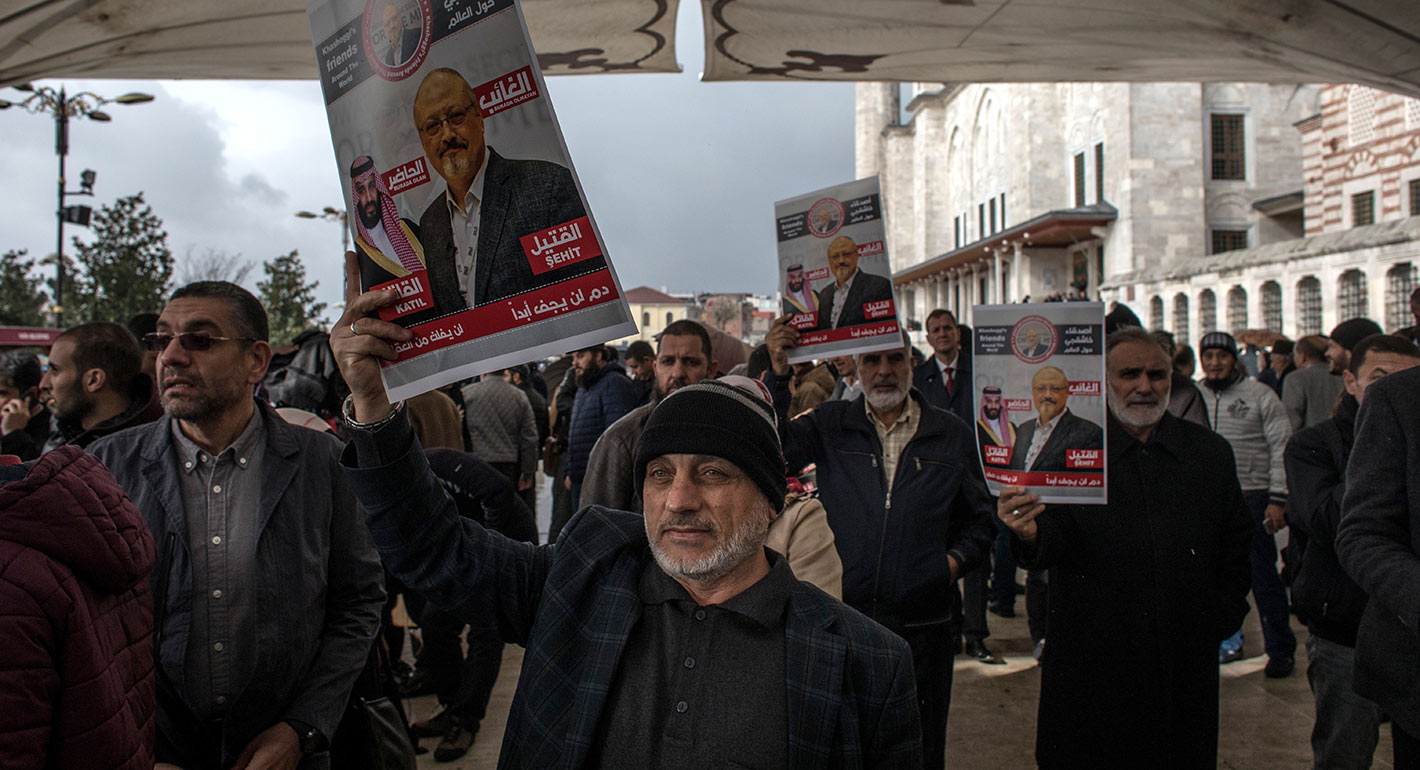
Why has Turkey responded to the murder of dissident Saudi journalist Jamal Khashoggi so vocally?
Seven weeks after Jamal Khashoggi was brutally murdered at the Saudi consulate in Istanbul, there are still major disagreements between Ankara and Riyadh on how it happened and who ordered the killing. Turkey has been drip-feeding sensitive information to the international media and allied governments, which has put pressure on the Saudi royal family to respond. But Turkey is treading carefully. While pro-government media have directly accused Saudi Crown Prince Mohammad bin Salman of orchestrating the murder, Turkish President Recep Tayyip Erdoğan has kept clear of implicating the Saudi royals in a crime.
The Turkish government’s motivations seem to be threefold. First, it is angry that Riyadh blatantly violated the Vienna Convention on Consular Relations, by sending officials to carry out the murder and clean up afterwards, and then gave successive different explanations of what happened.
Second, the Turkish leadership might find it attractive to be seen publically defending press freedom, given its own record of jailing journalists.
Finally, there might be a more remote goal of claiming ground as a genuine Sunni moral leader, as both Turkey and Saudi Arabia have majority Sunni Muslim populations.
The difference in how the Turkish and U.S. presidents have handled the Khashoggi murder presents another hurdle for the strained U.S-Turkey relationship. Erdoğan seems determined to get to the bottom of the issue, whether through a trial in Turkey (which is highly improbable) or an international investigation. U.S. President Donald Trump seems to be hoping things will blow over.
Other obstacles to U.S.-Turkish relations loom over defense issues, such as Turkey buying Russian missiles, Syrian Kurdish forces teaming up with the U.S.-led coalition against the self-proclaimed Islamic State, and a Turkish bank running an Iran sanctions–evasion scheme.
Why does Turkey want to stir up more trouble with the United States? Realistically, it is not going to persuade the United States to withdraw support for Saudi Arabia. Turkey may simply wish to introduce new cards to the complex game already being played. Erdoğan’s speech to the UN General Assembly in September defined Turkey’s general diplomatic approach: being part of the solution to an increasing number of global issues. Turkey may also be bargaining for the return of exiled Turkish cleric Fethullah Gülen, who lives in the United States.
There is little doubt that the Saudi crown prince at least knew of—and was possibly involved in—the Khashoggi murder. Any remaining uncertainty is likely to vanish if Turkey keeps revealing new elements of its own inquiry. But it will not massively change Riyadh’s fundamental relationship with Washington, or with many European capitals.
A shift in Saudi Arabia’s relationship with the West is simply not in the cards, and speculating about domestic power plays inside the kingdom is always hazardous. Yet Ankara will probably keep bringing attention to the murder in order to maximize its visibility and impress upon Western partners the notion that, whether they like it or not, Turkey matters.

Senior Fellow, Carnegie Europe
Marc Pierini is a senior fellow at Carnegie Europe, where his research focuses on developments in the Middle East and Turkey from a European perspective.
Recent Work
Marc Pierini
Marc Pierini
Carnegie does not take institutional positions on public policy issues; the views represented herein are those of the author(s) and do not necessarily reflect the views of Carnegie, its staff, or its trustees.

Huawei pushed hard to enter the Egyptian data centers market, until the Americans made a better offer.

Angie Omar

The accord represents a pivotal moment in the region to avert a security vacuum in the Gulf.


Azeema Cheema, Mohanad Hage Ali

In an interview, Jason Burke discusses his sweeping account of the “revolutionists” who so shaped the 1970s and early 1980s.

Michael Young

By failing to address Palestinian representation, the current process is bound to lead to just another temporary arrangement.

Nathan J. Brown
There is a disturbing structural parallel between the old global energy economy and the new green transition.
Angie Omar