

Paper
Erik Brattberg, Tomáš Valášek
{
  "authors": [
    "Tomáš Valášek"
  ],
  "type": "legacyinthemedia",
  "centerAffiliationAll": "dc",
  "centers": [
    "Carnegie Endowment for International Peace",
    "Carnegie Europe"
  ],
  "collections": [
    "Transatlantic Cooperation",
    "European Defense in a New Transatlantic Context"
  ],
  "englishNewsletterAll": "ctw",
  "nonEnglishNewsletterAll": "",
  "primaryCenter": "Carnegie Europe",
  "programAffiliation": "EP",
  "programs": [
    "Europe"
  ],
  "projects": [],
  "regions": [
    "Europe",
    "North America",
    "United States",
    "Western Europe",
    "Iran"
  ],
  "topics": [
    "Security"
  ]
}
Source: Getty
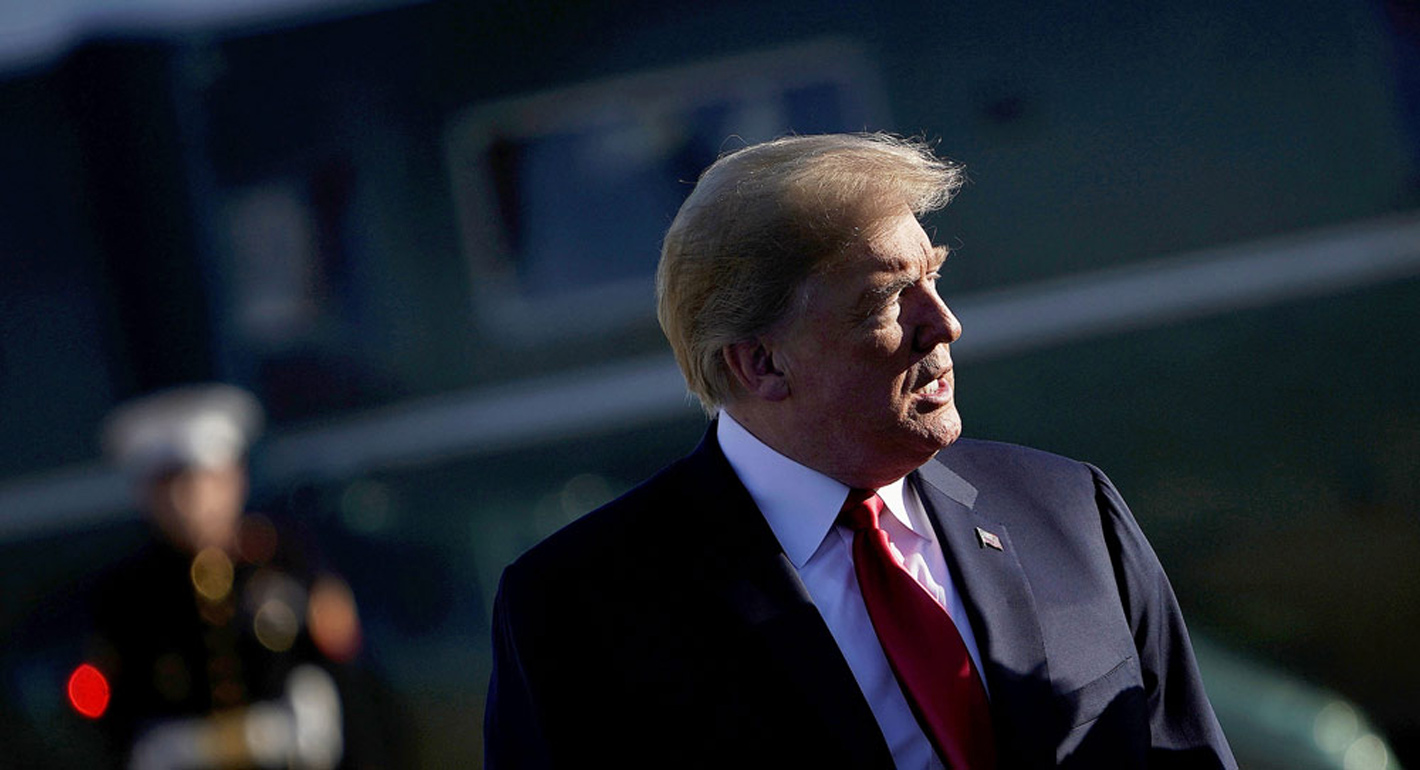
NATO countries have been relegated to fretting and hedging their bets as long as Trump stays in the Oval Office.
Source: Politico Europe
Among America’s European allies, Jim Mattis was seen as a bulwark against Donald Trump’s most destructive tendencies.
A rare source of stability to counter an unpredictable and undiplomatic White House, he reassured and smoothed ruffled feathers when the U.S. president disparaged NATO and the transatlantic alliance.
Now Europe will have to contend with an uncomfortable fact: Not even Mattis, who resigned as defense secretary in a surprise move Thursday, could contain a U.S. president who fundamentally opposes global alliances and prides himself on breaking the mold.That means that no matter who replaces Mattis, European allies’ biggest fear is here to stay: In the case of a real crisis, Trump may well fail to defend them. NATO countries have been relegated to fretting and hedging their bets as long as Trump stays in the Oval Office.
To be sure, Mattis’ presence in the Pentagon was reassuring to European allies. He put real muscle behind U.S. commitments to Europe and oversaw a doubling of the amount of money the U.S. military spends on its presence here, and not just safely out of harm’s way in Germany or the Netherlands. American troops are now deployed closer to likely trouble spots in the east than ever before, including 3,000-4,000 in Poland alone.
Europe is no longer just the place from which U.S. military stages operations in the Middle East: American forces are now positioned to fight in, and defend, Europe. The process began before Mattis, but the departing secretary of defense made the policy his own.
But Mattis was always at Trump’s mercy — and his departure reinforces the message that as long as there is a NATO skeptic in the White House, the alliance can’t rest easy.
What happens next in Europe now will depend in large part on who Trump picks to succeed him — and what he or she does.
Any cut to spending for the defense of Europe, or a reduction in U.S. troops here, would strengthen the argument for European defense autonomy floated by French President Emmanuel Macron and backed by Germany.
Relations among the rest of the allies would worsen as a result. Countries on Russia’s border in Europe’s east and north still assume that Moscow can only be deterred with U.S. help, and that a weaker U.S. commitment to NATO is still better than none at all. They regard defense autonomy as unrealistic and, worse, undesirable, putting them on a collision course with those who champion the creation of a “European army.
Europe should also keep in mind that the reasons behind Mattis’ decision to quit matter to Europe as much as the resignation itself.
In his letter of resignation, the departing secretary of defense accused the president of letting down America’s allies — a reference not to NATO but to Kurdish fighters in Syria, who were essential to the near-defeat of ISIS there, and who will now be left alone to fend off Turkish and Syrian army attacks.
The implications will be felt in Europe too. Allies will note that no goodwill accrued to the Kurds despite many of them dying alongside U.S. troops. It's true that America never pledged to remain in Syria beyond the time necessary to defeat ISIS, and has no treaty commitment to the Kurds, unlike to NATO. But the indifference with which America has treated its allies will still raise eyebrows in Europe.
If there is one silver lining, it is that on one of Mattis’ objections — to Trump’s decision to reduce U.S. troops in Afghanistan by half, from 14,000 to 7,000 — the president could, in fact, be right.
After 15 years of NATO presence in the area, the Taliban controls more territory than at any time since 2001. This is hardly the fault of NATO alone and has more to do with the unpopularity of the Afghan government. But privately more and more allies say they do not see a clear plan or a way out.
America’s troop reductions could now force a more radical rethink. Afghanistan is months away from elections, and peace talks of sorts with the Taliban are under way. The allies may be in a position next year to declare their goals accomplished and go home — although this, admittedly, presumes patience and care, not qualities the U.S. president is known for.
One thing, at least, is certain: The past two years have arguably been the most trying in NATO’s existence, and without Mattis Europe would have been in a worse position that it is now.
Whatever reservations the allies harbored about the defense secretary, they paled in comparison to the sense of gratitude many felt for his effort to preserve what few, crucial certainties he could.
At his next, and last, NATO meeting in February, the standing ovation he's likely to receive from defense ministers will mask a deep concern for what’s next.
Former Director, Carnegie Europe
Valášek was director of Carnegie Europe and a senior fellow, where his research focused on security and defense, transatlantic relations, and Europe’s Eastern neighborhood.
Recent Work
Erik Brattberg, Tomáš Valášek
Tomáš Valášek
Carnegie does not take institutional positions on public policy issues; the views represented herein are those of the author(s) and do not necessarily reflect the views of Carnegie, its staff, or its trustees.

In an interview, Hassan Mneimneh discusses the ongoing conflict and the myriad miscalculations characterizing it.

Michael Young
In an interview, Nicole Grajewski discusses the military dimension of the U.S. and Israeli attacks on Iran.
Michael Young

In an interview, Naysan Rafati assesses the first week that followed the U.S. and Israeli attack on Iran.
Michael Young
At heart, to impose unconditional surrender on Hezbollah and uproot the party among its coreligionists.

Yezid Sayigh

Just look at Iraq in 1991.

Marwan Muasher