

Paper
Christopher S. Chivvis, Rohan Mukherjee, Milan Vaishnav
{
  "authors": [
    "Milan Vaishnav"
  ],
  "type": "legacyinthemedia",
  "centerAffiliationAll": "dc",
  "centers": [
    "Carnegie Endowment for International Peace"
  ],
  "collections": [],
  "englishNewsletterAll": "ctw",
  "nonEnglishNewsletterAll": "",
  "primaryCenter": "Carnegie Endowment for International Peace",
  "programAffiliation": "SAP",
  "programs": [
    "South Asia"
  ],
  "projects": [
    "India Elects 2019"
  ],
  "regions": [
    "South Asia",
    "India"
  ],
  "topics": [
    "Political Reform",
    "Democracy"
  ]
}
Source: Getty
The Congress Party’s newest campaigner may not actually contest elections, but she will likely narrow a funding gap in a country where winning votes costs serious money.
Source: Foreign Policy
Just weeks before the start of India’s frenzied general election campaign, the country’s principal opposition party—the Indian National Congress—has unveiled its newest senior leader. In a move hailed as a “game-changer” by members of her party, Priyanka Gandhi has become the latest member of India’s most storied political dynasty—the Nehru-Gandhis—to enter public life.
For years, Gandhi has eschewed the limelight even as her immediate family has embraced it. Her grandmother, Indira Gandhi, and father, Rajiv, both served as prime minister before being assassinated. And after some initial reluctance, in 1998, Rajiv’s widow, Sonia, assumed the presidency of the Congress, a position she held until late 2017, when she formally handed over the party reins to her son, Rahul.
Despite her limited experience in partisan politics, Priyanka Gandhi is widely viewed as the more charismatic, telegenic, and politically savvy of the Gandhi siblings. Her appearance bears a striking resemblance to that of her late grandmother, her Hindi is more polished than her Italian-born mother’s, and her modest forays into public life suggest a natural comfort with the thrust and parry of Indian politics.
Priyanka Gandhi’s entry into active politics comes at a time when the Congress needs all the help it can get. The party has seen few victories since a disastrous 2014 general election performance, and Gandhi provides a much needed morale boost to the Congress rank-and-file. Just last month, the Congress was unceremoniously excluded from a pivotal opposition alliance in Uttar Pradesh, India’s most electorally consequential state. With Priyanka Gandhi heading the Congress Party’s campaign in eastern Uttar Pradesh—home to the parliamentary seats of her mother, brother, and Prime Minister Narendra Modi of the ruling Bharatiya Janata Party (BJP)—the party may gain new leverage with fellow opposition forces.
But the Priyanka Gandhi play is not only about winning allies and lifting spirits; it’s also about cash. The party is short of it, and Gandhi substitutes for the political finance that the Congress desperately needs.
In recent years, elections in India have grown exorbitantly expensive. As the size of electoral districts has ballooned, party competition has intensified, and the role of the media has risen, parties regularly engage in an arms race to raise the most campaign funds. Propelled by the uniquely charismatic Modi and the historic unpopularity of the then-incumbent Congress, the BJP wielded an impressive fundraising advantage over the opposition in India’s 2014 polls.
It is difficult to access accurate data about money in Indian politics. Most donors prefer to funnel undocumented money to parties and candidates in hopes of hedging their bets in case their preferred party falls short. In India, the government—irrespective of the party in power—wields innumerable levers to punish firms for purely political reasons. Though they capture a fraction of overall election funding, parties’ official accounts give us a small window into this opaque world. In 2014, the BJP reported collecting $82 million in donations during the election period, compared with just $49 million for the Congress. The BJP also dominated the Congress when it came to spending, doling out $100 million to the Congress’s $68 million.
Since coming to power in New Delhi in 2014, the BJP has greatly expanded its political reach. Today, the BJP and its allies control 17 of 31 state assemblies (compared with just five as recently as five years ago). Financial disclosures suggest that the BJP’s coffers have swelled as a result. As the party has come to power across key state capitals, businesses have rushed to curry favor with BJP party bosses who can offer them a leg up in navigating India’s labyrinthine government. Under India’s campaign finance laws, parties must itemize large donations of more than 20,000 rupees (roughly $280). In 2017-2018, the money the BJP garnered from large donations was 12 times that of all other national parties combined.
In 2018, the Modi government formally announced a new instrument for political giving known as electoral bonds, which allow corporate and individual donors to fund parties anonymously. In 2018, donors scooped up $148 million worth of bonds; data suggests that the lion’s share has accrued to the BJP. Indeed, the income the BJP has reaped from so-called “unknown sources” (bonds plus smaller, individual contributions) is four times the combined unknown income of all other national parties.
Headed into the 2019 general election, the Congress starts from a position of weakness. Reports suggest that Congress state units have been starved of funds from the party high command due to the fiscal crunch. In recent regional elections, cash-strapped campaigners shunned helicopters in favor of car travel. “We don’t have money,” bluntly remarked Divya Spandana, the Congress party’s social media director. With the 2019 race just weeks away, the Congress is resorting to crowdfunding—a tactic it has experimented with in the past.
This is where the Priyanka Gandhi factor will make a difference. Lacking a sizable advertising budget, the Congress can ensure wall-to-wall television coverage of any event in which Gandhi even remotely figures. In a country where dynastic politicians are often revered as deities, Rahul Gandhi has not yet attained divine status—a reflection of his uneasiness with the spotlight. Given the novelty associated with Priyanka Gandhi’s plunge into the rough-and-tumble of retail politics and her perceived superior political acumen, India’s ratings-mad news channels will gladly cut into live programming to air any speech, press conference, or casual remark she gives on the trail. In 2014, Modi and the BJP saturated the media landscape, with the star campaigner’s face and the party’s election symbol—the lotus flower—plastering billboards to bus shelters. Gandhi allows the Congress to claw some of this space back—for free. As one Congress party member put it, “Priyanka is the answer to those who said, ‘You can’t spot Congress even with binoculars.’”
The Priyanka Gandhi buzz will also challenge the BJP’s dominance on social media. Even before 2014, Modi had already mastered the social media game—using Twitter and Facebook to circumvent traditional media gatekeepers and communicate directly with his online followers. Five years ago, Rahul Gandhi did not even have a Twitter account to his name. While the Congress has invested heavily in upping its social media presence, it still lags far behind. (Modi currently has 45.4 million Twitter followers to Rahul Gandhi’s 8.45 million.) But the same fascination with Gandhi that will suck in traditional media outlets is also likely to catch eyeballs online.
At the grassroots, Priyanka Gandhi partially offsets her party’s lackluster coffers. In most of the country, the Congress machinery is a shell of its former self. Local cadres, cut off from party funds, get by on their own ingenuity. Here, too, Gandhi offers the party a lifeline; across India, hoardings and life-size cutouts of the Gandhi scion—the initiative of private well-wishers and local party offices—have started doing the rounds in far-flung locales. Last week, a cousin sent me a picture from Pune—a thousand miles away from eastern Uttar Pradesh—with a massive billboard featuring a giant Priyanka Gandhi against a backdrop of local Congress leaders.
Will the Priyanka-Gandhi-as-political-finance strategy tip the scales? The arrival of a new Gandhi family member on the political scene will not fix the organizational infirmities that ail the party overnight. But those things that money (or, in this case, Gandhi) can buy have never guaranteed victory: They earn you a seat at the table.
In 2014, citizens with greater exposure to the media were more likely to vote for the BJP, even after controlling for factors such as income and education. The Congress hopes that the media’s fascination with an enigmatic dynast can reverse this advantage. But Priyanka Gandhi, unlike Modi, is just a campaigner; there is no indication that she will contest elections herself. In 2014, the Congress faced three insurmountable deficits—of leadership, ideology, and resources. There is no short-term fix for the first two, but the third problem just got a little easier.

Director and Senior Fellow, South Asia Program
Milan Vaishnav is a senior fellow and director of the South Asia Program and the host of the Grand Tamasha podcast at the Carnegie Endowment for International Peace. His primary research focus is the political economy of India, and he examines issues such as corruption and governance, state capacity, federalism, and electoral behavior. He also conducts research on the Indian diaspora.
Recent Work


Christopher S. Chivvis, Rohan Mukherjee, Milan Vaishnav



Sophia Besch, Eric Ciaramella, Steve Feldstein, …
Carnegie does not take institutional positions on public policy issues; the views represented herein are those of the author(s) and do not necessarily reflect the views of Carnegie, its staff, or its trustees.
To address the deepening climate crisis, climate activism is employing a wider variety of tactics and aiming at a broader set of goals. In response, the movement faces stronger repression and civic backlash against climate action.

Erin Jones, Richard Youngs
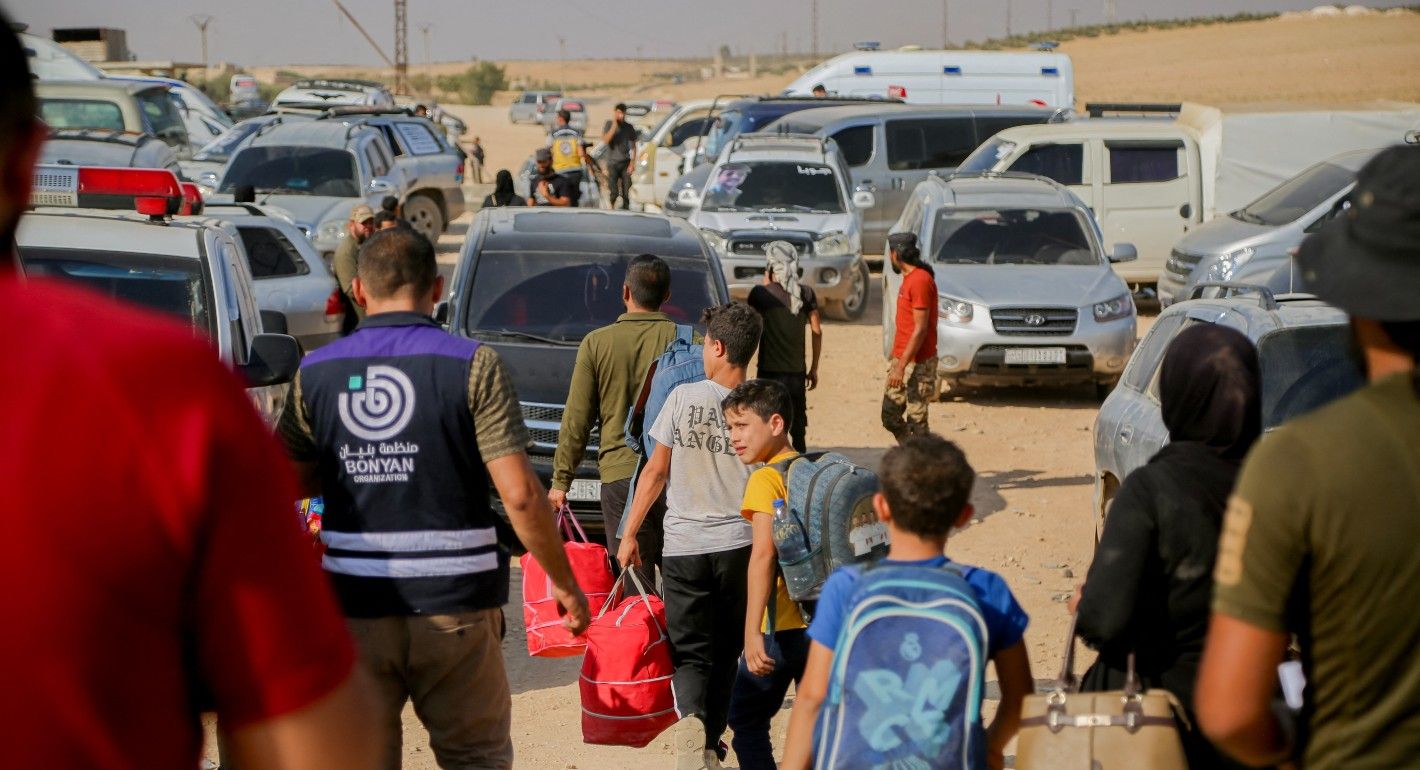
A humanitarian crisis in Lebanon deepens, and Syrian refugees face a perilous choice: remain in a war-torn environment or return to Syria where they risk encountering significant dangers and discrimination. There are significant challenges and risks to their search for safety in Syria.
Haid Haid
In an interview, Abhinav Pandya discusses the multiple facets of India’s ties with the Middle East.

Armenak Tokmajyan
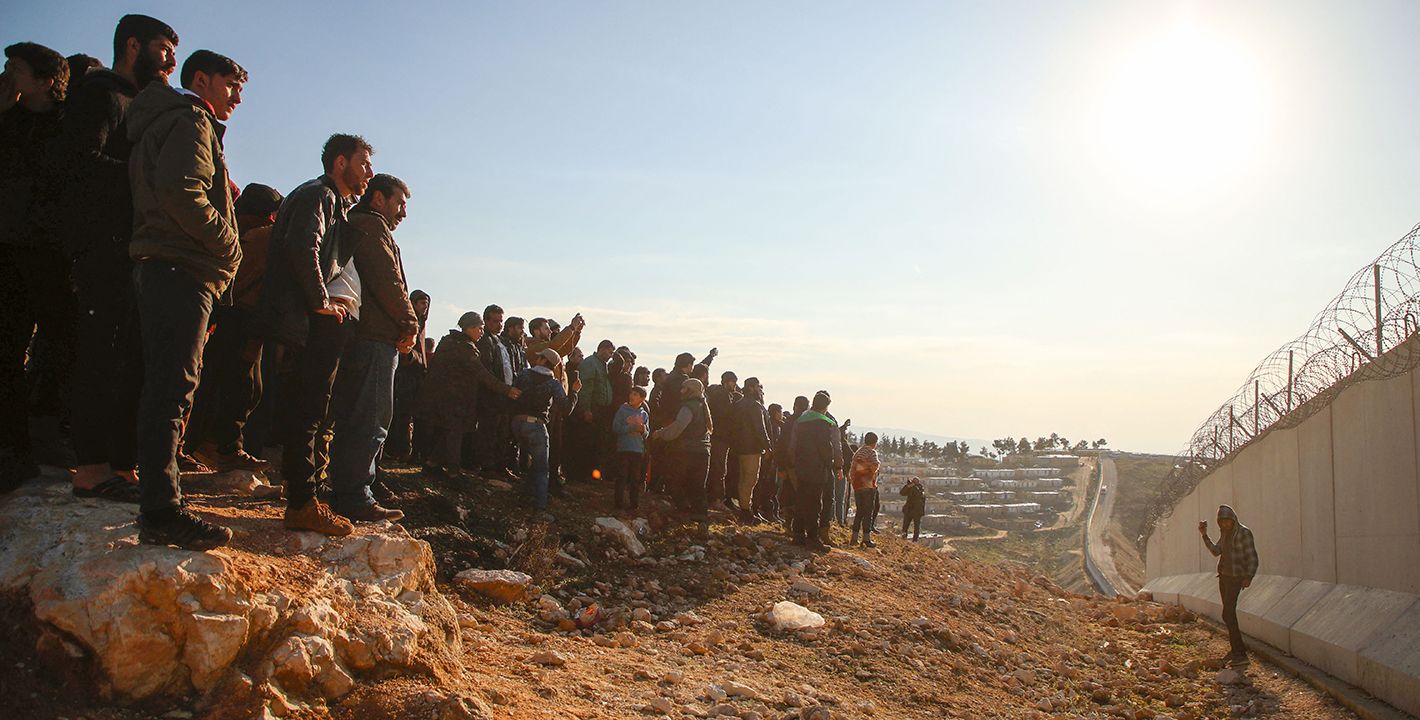
In Syria’s border regions, changes in demographics, economics, and security mean that an inter-Syrian peace process will require consensus among main regional powers that Syria must remain united, that no one side can be victorious, and that perennial instability threatens the region.

Kheder Khaddour, Armenak Tokmajyan
The interaction of national armed forces and private business sectors offers a useful lens for viewing the politics of numerous countries of the so-called Global South. A rising trend of military political activism—often accompanied by military commercial activity—underlines the importance of drivers and outcomes in these relationships.


Yezid Sayigh, Hamza Meddeb