

Q&A
Dara Massicot, Aaron David Miller, Andrew S. Weiss
{
  "authors": [
    "Aaron David Miller"
  ],
  "type": "legacyinthemedia",
  "centerAffiliationAll": "dc",
  "centers": [
    "Carnegie Endowment for International Peace"
  ],
  "collections": [],
  "englishNewsletterAll": "democracy",
  "nonEnglishNewsletterAll": "",
  "primaryCenter": "Carnegie Endowment for International Peace",
  "programAffiliation": "DCG",
  "programs": [
    "Democracy, Conflict, and Governance"
  ],
  "projects": [],
  "regions": [
    "North America",
    "United States"
  ],
  "topics": [
    "Political Reform",
    "Democracy",
    "Civil Society"
  ]
}
Source: Getty
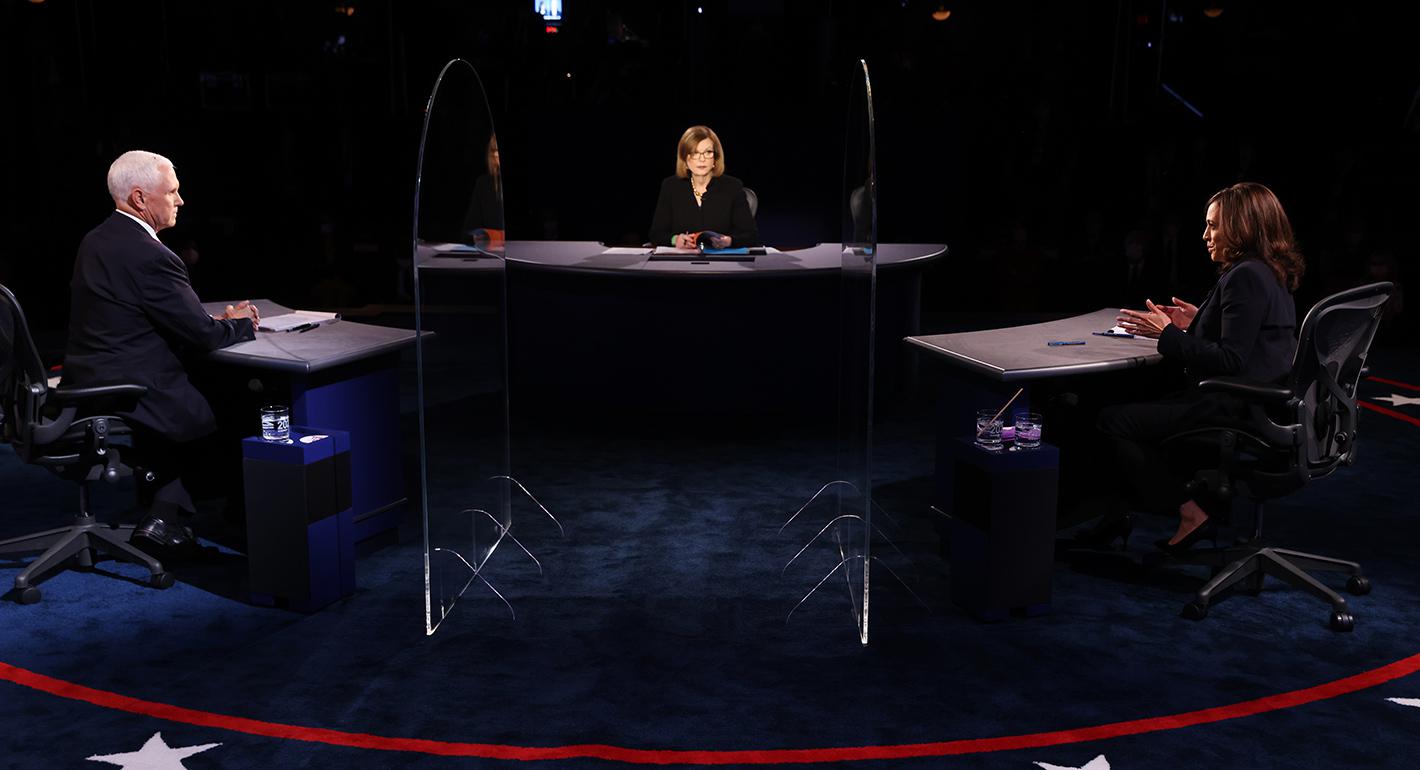
Even with two of the oldest presidential candidates in history, it’s hard to imagine that a vice-presidential pick is going to directly influence voters’ preference for president.
Source: CNN
Yes, this may have been the most important vice-presidential debate in American history. But even with two of the oldest presidential candidates in history, it's hard to imagine that a vice-presidential pick is going to directly influence voters' preference for president.
It probably won’t. But before dismissing Wednesday night's encounter as a Seinfeld show about nothing, consider a couple of takeaways.
First, had Sen. Kamala Harris melted down, committed some galactic stumble, bumble or tumble, and failed to effectively defend former Vice President Joe Biden and attack Vice President Mike Pence, she might have hurt Biden badly, raising public concern that would have reflected badly on his judgment on a vice-presidential pick. Instead Harris performed very well (in fact better on the debate stage than her putative boss) demonstrating competency, compassion on the issues and humor and toughness in standing up to Pence.
Second, the not so invisible force hanging over the debate was the coronavirus. From the plexiglass dividers to President Donald Trump’s infection and the Covid-19 cluster in the White House to the Administration's handling of the pandemic, this -- and health care in general --is perhaps a defining issue in influencing voter perceptions and the area in which the Administration is most vulnerable. Harris did well in taking apart the administration's record, helped by Pence's talking points untethered from reality that made it unmistakably clear that Democrats take seriously the gravest threat to America's public health in a century and Republicans don't.
The bottom line is: Harris held her own and then some. So did Pence. The debate won't change the numbers or many folks’ minds.

Senior Fellow, American Statecraft Program
Aaron David Miller is a senior fellow at the Carnegie Endowment for International Peace, focusing on U.S. foreign policy.
Recent Work


Dara Massicot, Aaron David Miller, Andrew S. Weiss



Sophia Besch, Eric Ciaramella, Steve Feldstein, …
Carnegie does not take institutional positions on public policy issues; the views represented herein are those of the author(s) and do not necessarily reflect the views of Carnegie, its staff, or its trustees.

In an interview, Ian Lustick and Eli Clifton discuss their new book on why a prominent ally has so much influence in America.

Michael Young

As the U.S. stumbles in its war with Iran, we are likely to see an acceleration of its disengagement from the region.
Michael Young

Huawei pushed hard to enter the Egyptian data centers market, until the Americans made a better offer.

Angie Omar

Middle Eastern states should welcome an accelerated U.S. disengagement from their region.
Michael Young

In an interview, former ambassador Charles Freeman assesses the Trump administration’s war against Iran.
Michael Young