

Paper
James M. Acton, Ankit Panda
{
  "authors": [
    "Ankit Panda"
  ],
  "type": "commentary",
  "centerAffiliationAll": "dc",
  "centers": [
    "Carnegie Endowment for International Peace"
  ],
  "collections": [
    "Korean Peninsula"
  ],
  "englishNewsletterAll": "ctw",
  "nonEnglishNewsletterAll": "",
  "primaryCenter": "Carnegie Endowment for International Peace",
  "programAffiliation": "NPP",
  "programs": [
    "Nuclear Policy"
  ],
  "projects": [],
  "regions": [
    "East Asia",
    "North Korea"
  ],
  "topics": [
    "Nuclear Policy",
    "Arms Control"
  ]
}
Source: Getty
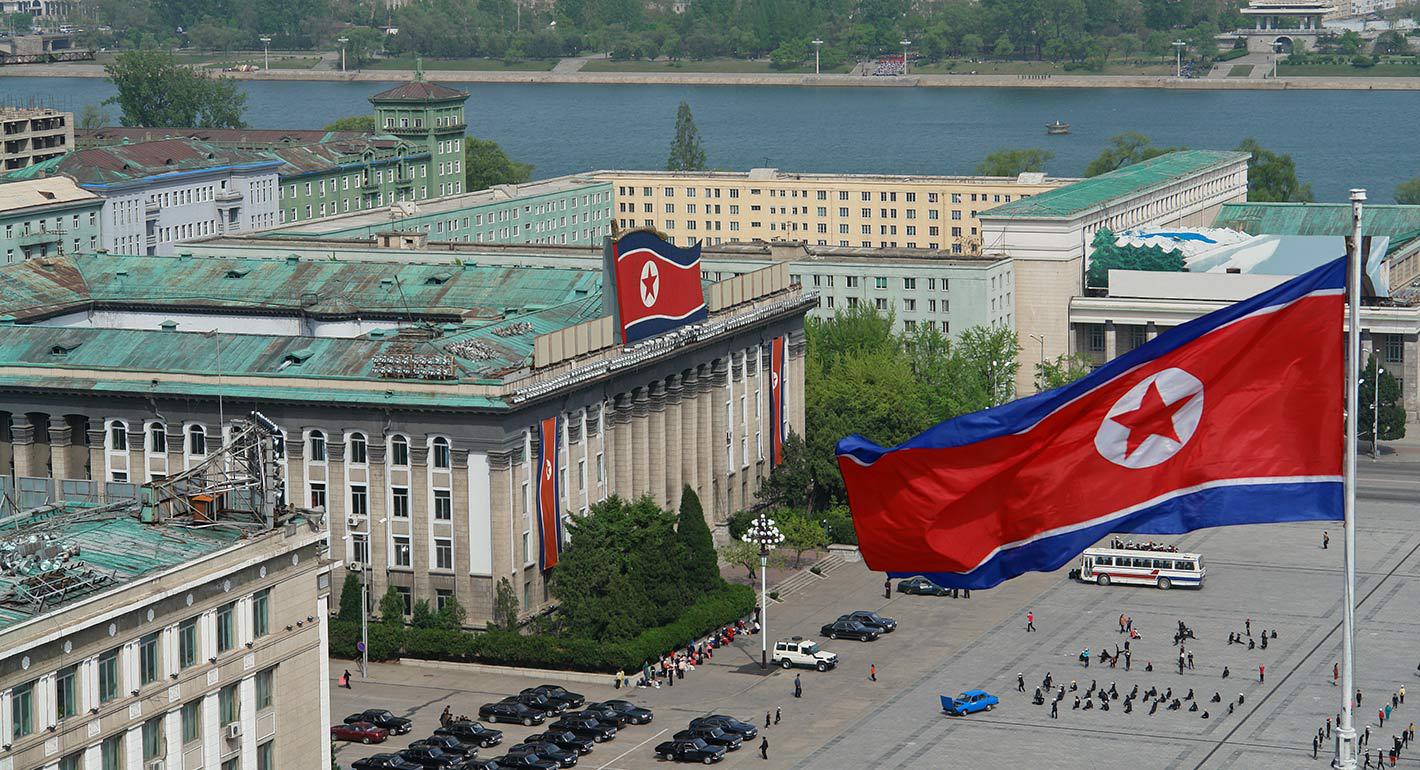
North Korea’s newest cruise missile test shows its nuclear capabilities are growing. Here’s what policymakers from the United States and elsewhere should do now to set up future negotiators for success.
North Korean state-run media has reported that the country’s Academy of National Defense Science has conducted the first full flight tests of a new long-range cruise missile. According to the report, this new cruise missile is a “strategic weapon”—a common euphemism used by North Korean state media to imply a role in delivering nuclear weapons.
At the Eighth Party Congress of North Korea’s ruling Workers’ Party of Korea in January 2021, leader Kim Jong Un noted that such a cruise missile was under development and indicated that this system could be designed to deliver tactical nuclear weapons.
Though North Korea has possessed cruise missiles for some time, it has never demonstrated the capabilities of a cruise missile of this range. This missile would also mark the first claimed nuclear-capable cruise missile in North Korea’s inventory, underscoring its nuclear arsenal’s continued advances and the country’s growing number of nuclear delivery options.
According to North Korean state-run media, the tests were successful: at least one of the test missiles stayed airborne for more than two hours and covered a distance of around 1,500 kilometers (about 930 miles). The Academy of National Defense Science suggests that a newly developed turbofan engine powers the cruise missile that was tested.
Unlike ballistic missiles, cruise missiles are designed to travel within the earth’s atmosphere and aerodynamically maneuver for most of their flight time. Most cruise missiles use a small, solid- propellant rocket booster, which allows them to gain enough altitude and speed for the onboard sustainer engine to take over.
For most of their flight trajectory, cruise missiles are functionally similar to unmanned aircraft. But they operate very differently from typical ballistic missiles. For instance, cruise missiles have a lower flight altitude than ballistic missiles, meaning missile defense operators may need to reorient sensors, including radars, for optimal detection and tracking. Many North Korean missiles that have been tested in recent years have exhibited characteristics that would make missile defense more challenging.
However, cruise missiles take considerably longer to reach their targets than ballistic missiles, meaning defenders have more time to counter an attack involving cruise missiles. For example, a ballistic missile with a comparable range to the one Pyongyang just tested could cover the same distance (1,500 kilometers) in a matter of minutes.
The introduction of a nuclear-capable cruise missile underscores that North Korea continues to improve the quality of its nuclear forces. U.S. policymakers should contend with several implications.
First, though existing UN Security Council resolutions explicitly proscribe North Korea’s development and testing of ballistic missile technologies and weapons of mass destruction (WMD), the United States and its allies should set an interpretative precedent that nuclear-capable cruise missiles also represent a violation.
Earlier this year, U.S. President Joe Biden and his administration treated North Korea’s tests of shorter-range, nonnuclear cruise missiles as a nonissue under the UN resolutions. Given that a nuclear-capable cruise missile test by North Korea is without precedent, the United States should clarify that these new tests violate the blanket proscription on North Korea’s pursuit of WMD technologies.
Second, the Biden administration should continue its efforts to diplomatically address North Korea’s advancing capabilities. While North Korea continues to rebuff overtures by the Biden administration to encourage unconditional exploratory talks, the United States should seek to clarify what inducements would be on the table if North Korea were to submit to verifiable limitations on its development and testing of new missile systems, among other concessions on Pyongyang’s part.
Third, the eventual introduction of nuclear-capable cruise missiles into North Korea’s armed forces will present new operational and deterrence challenges for the U.S.–South Korea and U.S.-Japan alliances. The United States should continue to consult with Seoul and Tokyo on the implications of Pyongyang’s new capabilities for allied military preparedness and managing escalation on the Korean Peninsula.

Stanton Senior Fellow, Nuclear Policy Program
Ankit Panda is the Stanton Senior Fellow in the Nuclear Policy Program at the Carnegie Endowment for International Peace.
Recent Work

James M. Acton, Ankit Panda
Ankit Panda
Carnegie does not take institutional positions on public policy issues; the views represented herein are those of the author(s) and do not necessarily reflect the views of Carnegie, its staff, or its trustees.
In an interview, Marc Lynch discusses his new book decrying the post-1990 U.S.-dominated order in the Middle East.

Michael Young
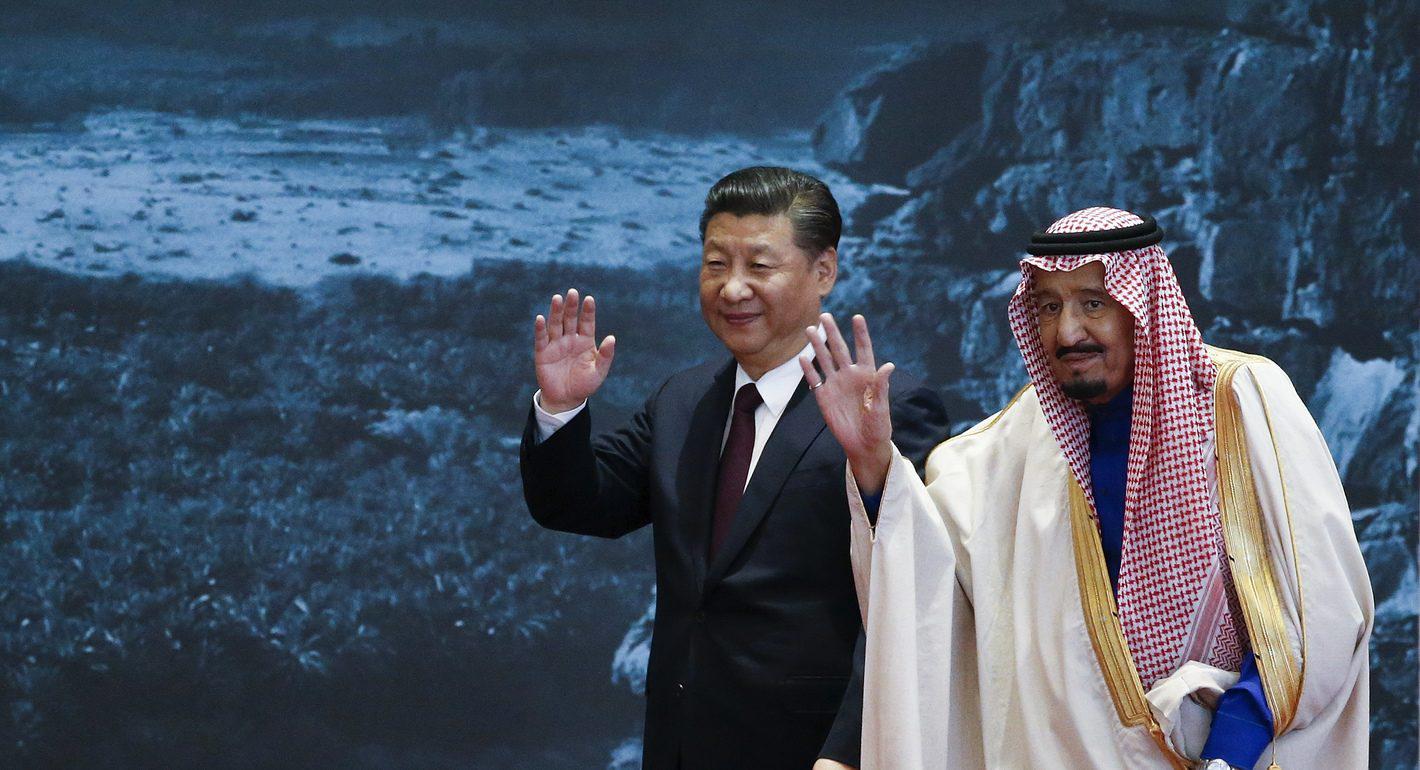
The advantage that China has over other global powers, especially America, is that its foreign policy is closely aligned with those of many of the Middle Eastern countries.


Jin Liangxiang, Maha Yahya, Hesham Alghannam
To create an environment more conducive to cooperation and development, U.S. and Chinese efforts should seek the endorsement of neighboring countries and regional organizations. Otherwise, regional and geopolitical rivalries will remain barriers.
Abdullah Baabood

Scholars from Carnegie’s global network comment on how the ongoing conflict between Israelis and Palestinians is affecting their areas of interest, and what the implications of this may be.


Maha Yahya, Rosa Balfour, Judy Dempsey, …
In an interview, Abdullah Baabood discusses Beijing’s evolving role in the Gulf region, where its priority is stability.
Michael Young