• Research
  • Diwan
  • About
  • Experts
Carnegie Middle East logoCarnegie lettermark logo
LebanonIran
What Should We Expect from India as a Strategic Partner?
Book

What Should We Expect from India as a Strategic Partner?

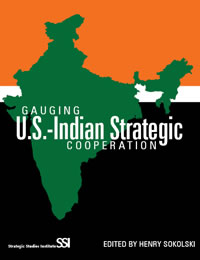
In his chapter, "What Should We Expect from India as a Strategic Partner?" Ashley J. Tellis analyzes the historical "sine wave" nature of the U.S.-India relationship and outlines the value and practical consequences of the transforming bilateral relationship.

Link Copied
By Ashley J. Tellis
Published on Mar 1, 2007

Additional Links

Chapter by Ashley J. Tellis (pdf)

Source: Strategic Studies Institute

In his chapter, "What Should We Expect from India as a Strategic Partner?" in Henry Sokolski (ed.), Gauging U.S.-Indian Strategic Cooperation (Strategic Studies Institute, March 2007), Carnegie Senior Associate Ashley J. Tellis analyzes the historical "sine wave" nature of the U.S.-India relationship and outlines the value and practical consequences of the transforming bilateral relationship. Touching on various aspects of U.S.-Indian strategic collaboration, he argues that bilateral cooperation between Washington and New Delhi is "eminently possible" on many issues vital to U.S. interests in Asia and the world.

Please click on the link to the right to read the full text of his chapter.

About the Author

Ashley J. Tellis

Former Senior Fellow

Ashley J. Tellis was a senior fellow at the Carnegie Endowment for International Peace.

    Recent Work

  • Paper
    Multipolar Dreams, Bipolar Realities: India’s Great Power Future

      Ashley J. Tellis

  • Commentary
    India Sees Opportunity in Trump’s Global Turbulence. That Could Backfire.

      Ashley J. Tellis

Ashley J. Tellis
Former Senior Fellow
North AmericaUnited StatesSouth AsiaIndiaForeign PolicyNuclear Policy

Carnegie does not take institutional positions on public policy issues; the views represented herein are those of the author(s) and do not necessarily reflect the views of Carnegie, its staff, or its trustees.

More Work from Malcolm H. Kerr Carnegie Middle East Center

  • Commentary
    Diwan
    Shockwaves Across the Gulf

    The countries in the region are managing the fallout from Iranian strikes in a paradoxical way.

      • Angie Omar

      Angie Omar

  • Commentary
    Diwan
    The U.S. Risks Much, but Gains Little, with Iran

    In an interview, Hassan Mneimneh discusses the ongoing conflict and the myriad miscalculations characterizing it.

      Michael Young

  • Commentary
    Diwan
    The Greatest Dangers May Lie Ahead

    In an interview, Nicole Grajewski discusses the military dimension of the U.S. and Israeli attacks on Iran.

      Michael Young

  • Commentary
    Diwan
    Firepower Against Willpower

    In an interview, Naysan Rafati assesses the first week that followed the U.S. and Israeli attack on Iran.

      Michael Young

  • Commentary
    Diwan
    What Is Israel’s Plan in Lebanon?

    At heart, to impose unconditional surrender on Hezbollah and uproot the party among its coreligionists.

      Yezid Sayigh

Get more news and analysis from
Malcolm H. Kerr Carnegie Middle East Center
Carnegie Middle East logo, white
  • Research
  • Diwan
  • About
  • Experts
  • Projects
  • Events
  • Contact
  • Careers
  • Privacy
  • For Media
Get more news and analysis from
Malcolm H. Kerr Carnegie Middle East Center
© 2026 Carnegie Endowment for International Peace. All rights reserved.