

Paper
Douglas H. Paal
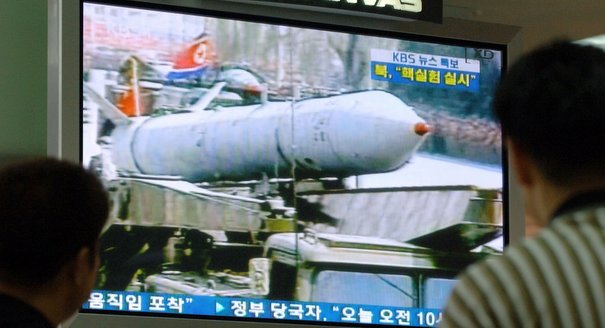
Source: Getty
In light of North Korea's recent attack on Yeonpyeong Island and rising tensions on the peninsula, the need for ratification of the Korea-U.S. Free Trade Agreement is stronger than ever.
Foreign policy professionals were left scratching their heads when Presidents Barack Obama and Lee Myung-bak failed to reach a deal on their outstanding Korea-U.S. Free Trade Agreement (KORUS) negotiations when they met in November. Observers asked how could this not have been sealed in advance and readied for the two leaders to bless it when they gathered in Seoul.
In fact, the underlying formal agreement had been concluded in 2007, during the George W. Bush administration, and the two new leaders needed only to reach a consensus on a small side letter featuring increased American access to the Korean automobile and beef markets. Implementation of the Bush agreement was delayed because during the presidential election campaign in 2008, Obama had criticized the KORUS to win votes from labor in the primaries. When Obama won, the Democratic majorities in Congress then put off a vote on the agreement until Obama would judge the moment to be right.
In Toronto in June, Obama pleased the Koreans and American advocates of greater free trade by announcing he intended to change his position and finish the job by the time he reached Seoul. He justified his shift by saying this would help restore jobs in recession-hit America. He seemed to recognize that trade diplomacy is one of the tools of being chief executive he had left unused.
One of the perennial problems of this sort of short-sighted tactical electoral maneuver by Obama is that it put bigger stakes at risk for potentially much smaller gains. Do we need to weaken the alliance to raise beef or auto quotas? What does that say to the other, economically more significant sectors that stand to gain from freer trade with Korea?
In this case, failure diminishes public support for an extremely important alliance relationship in both countries. It delays America’s entry into the current and intense global and regional competition for free trade agreements, endangering U.S. access to markets when jobs are needed at home. And it shows an American president too weak to work his will on behalf of the national interest.
Korea is not without blame. Its negotiating style is infamously inflexible. And the Koreans who passed the KORUS legislation through the National Assembly wonder what there is to negotiate after the deed was done. Imported beef is extremely sensitive in Korea, where it is viewed through a doubting lens of food safety.
But the apparent decision by Obama’s political advisors to hold back on real negotiations until after this year’s mid-term elections on November 2, for fear that leaks of deals might cost Congressional seats, was the key decision that set the train wreck in Seoul in motion. In the event, the Democrats held none of the related marginal seats.
Obama and Lee pledged on November 11 to keep working to complete the agreement, and they will fairly soon have to summon the political courage to stare down some interest groups at home in the interest of the broader benefits of the agreement.
Then along comes North Korea to remind leaders of the need to be leaders and not trade tacticians. Now that North-South relations are in military crisis, it would be unthinkable to fail to reach final agreement on KORUS. What would failure say to the South Korean population about America’s sense of priorities: trade over security? What would it say to ever-observant Chinese and North Korean leaders about the quality of the alliance? Republicans should be licking their chops over this.
If the South’s negotiators think they can hold out for even better terms because the United States has no choice but to agree to their limited offers, they will be seeking a similarly non-strategic advantage, one potentially with strategic and negative consequences. The time for Obama and Lee to act like the leaders of their countries, not sectors of their economies, has come.
Negotiators need to be ordered to reach agreement forthwith, with modest concessions to each other’s concerns, but with the larger stakes clearly in mind.
Distinguished Fellow, Asia Program
Paal previously served as vice chairman of JPMorgan Chase International and as unofficial U.S. representative to Taiwan as director of the American Institute in Taiwan.
Recent Work
Douglas H. Paal


Douglas H. Paal, Tong Zhao, Chen Qi, …
Carnegie does not take institutional positions on public policy issues; the views represented herein are those of the author(s) and do not necessarily reflect the views of Carnegie, its staff, or its trustees.

In an interview, Rozina Ali discusses her new book on the rise and manifestations of Islamophobia in the United States.

Michael Young

In an interview, Ian Lustick and Eli Clifton discuss their new book on why a prominent ally has so much influence in America.
Michael Young

As the U.S. stumbles in its war with Iran, we are likely to see an acceleration of its disengagement from the region.
Michael Young

Middle Eastern states should welcome an accelerated U.S. disengagement from their region.
Michael Young

In an interview, former ambassador Charles Freeman assesses the Trump administration’s war against Iran.
Michael Young