

Paper
Thomas Carothers
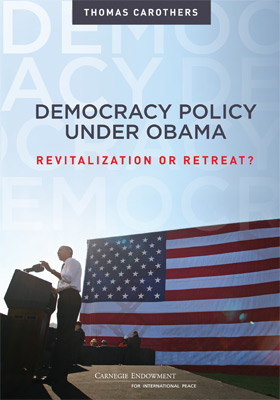
The overall record of Obama's democracy policy is mixed, combining valuable revitalization with continued troubling shortcomings.
Upon taking office in January 2009, President Barack Obama inherited a democracy promotion policy badly damaged from its prior association with the war in Iraq and with forcible regime change more generally. The Bush years had also seen a decline in America’s reputation as a global symbol of democracy and human rights as well as rising fears of a broader democratic recession in the world.
The new president and his foreign policy team responded at first by stepping back from the issue, softening U.S. rhetoric on promoting freedom abroad, and taking steps to rebuild America’s democratic standing. Contributing to this de-emphasis, President Obama undertook a broader effort to improve U.S. diplomatic engagement with a variety of nondemocratic governments, in Iran, Russia, and elsewhere. These initial moves triggered alarm and criticism from parts of the U.S. foreign policy community.
Starting in the second half of 2009, the pendulum swung toward greater U.S. engagement on democracy. Senior U.S. officials began to speak more regularly and forcefully on democracy and human rights. Like its predecessors, the administration was pulled into prodemocracy diplomacy as a result of democratic breakdowns or breakthroughs around the world, from Honduras and South Sudan to Belarus and Côte d’Ivoire. The Obama team also began to stake out its own approach to democracy policy, emphasizing multilateral engagement and various initiatives to bolster the broader normative and institutional framework for democracy support.
As popular uprisings spread across the Arab world in 2011, the administration faced its most important and high-profile democracy challenge. While the advance of political change in the Arab world could be a watershed moment for the region, it also threatens to jeopardize various American economic and security interests. The U.S. policy response has been correspondingly mixed, combining support for democratization where it appears to be occurring with a willingness to continue close ties with seemingly stable authoritarian governments.
The Obama team’s overall engagement on democracy support is multifaceted and significant, and is rooted in a set of guiding principles that have helped revitalize the U.S. profile on the topic. At the same time, the administration downplays democracy and human rights in a number of nondemocratic countries for the sake of other interests. This inconsistency represents a familiar pattern rather than a change in U.S. policy.
The difference is that today, in response to growing multipolarity, the United States has moved away from any single, overarching foreign policy narrative rooted in the idea of remaking the world in the image of the United States. Debates about whether this new narrative is appropriate will figure in the partisan debates over foreign policy in the unfolding U.S. presidential campaign. Yet it is important to remember that most U.S. democracy engagement around the world is a matter of bipartisan agreement and to stay focused on the less visible but crucial issues that will bolster the credibility and power of U.S. democracy promotion in the future.

Harvey V. Fineberg Chair for Democracy Studies; Director, Democracy, Conflict, and Governance Program
Thomas Carothers, director of the Carnegie Endowment for International Peace’s Democracy, Conflict, and Governance Program, is a leading expert on comparative democratization and international support for democracy.
Recent Work
Thomas Carothers

Richard Youngs, Thomas Carothers
Carnegie does not take institutional positions on public policy issues; the views represented herein are those of the author(s) and do not necessarily reflect the views of Carnegie, its staff, or its trustees.

By failing to address Palestinian representation, the current process is bound to lead to just another temporary arrangement.

Nathan J. Brown

Morocco and Algeria, each in its own way, are having to navigate the global economic fallout of the U.S.-Israeli military campaign against Iran.

Yasmine Zarhloule
There is a disturbing structural parallel between the old global energy economy and the new green transition.

Angie Omar
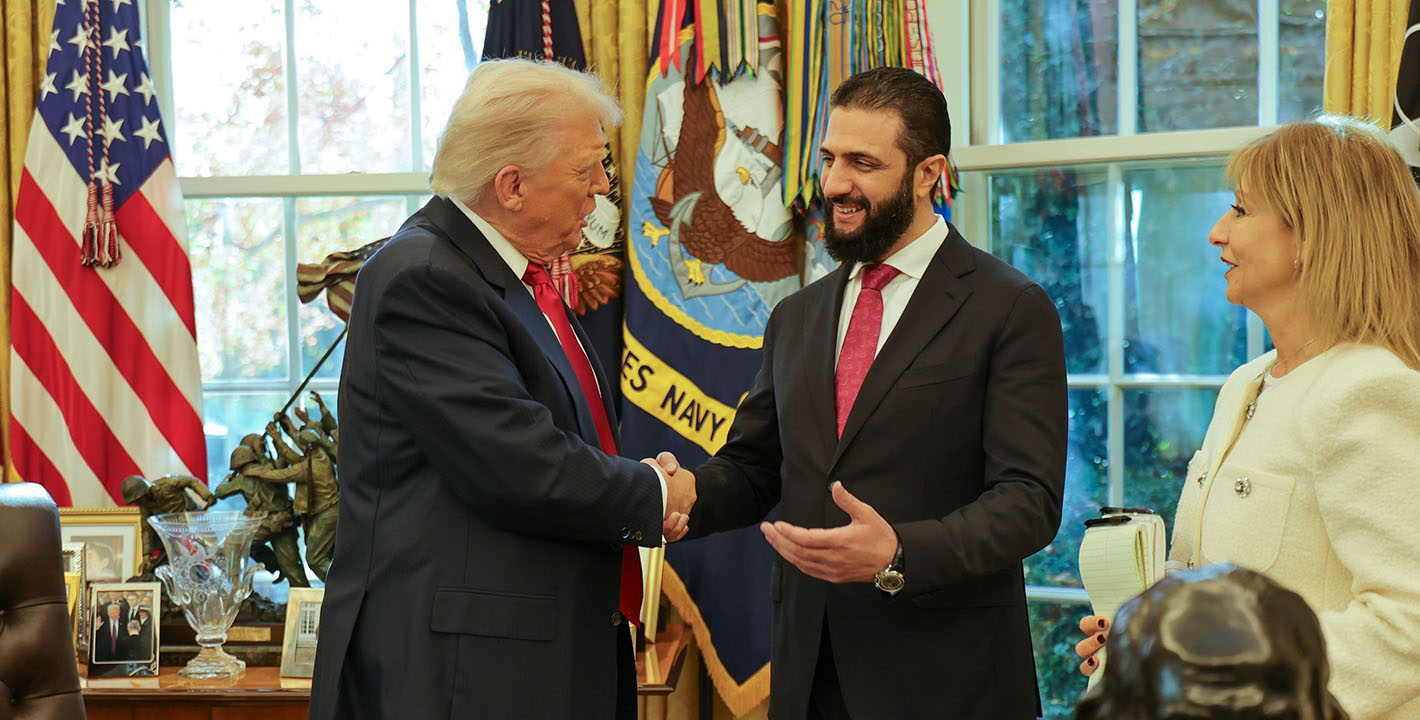
Any move by the United States to make good on Trump’s suggestion that Washington persuade Damascus to confront Hezbollah militarily would have catastrophic consequences.

Kheder Khaddour
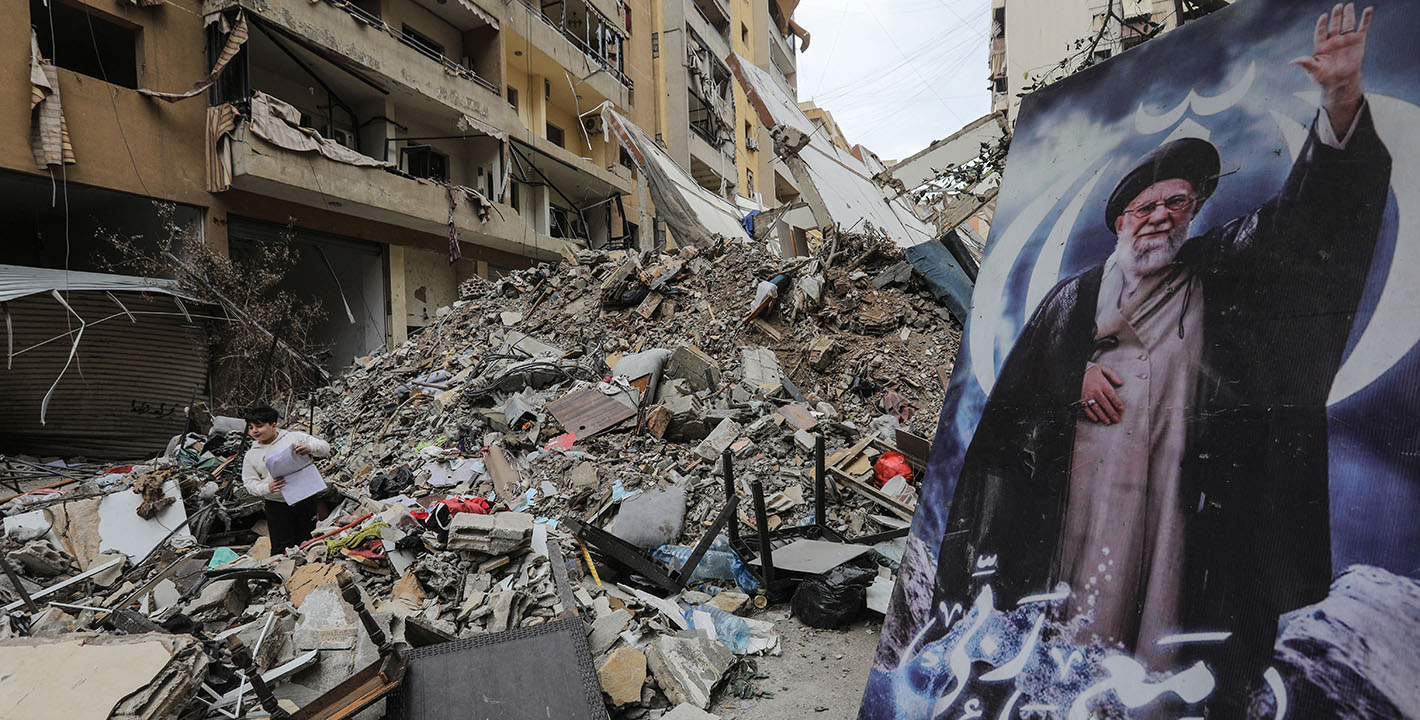
As talks begin between Washington and Tehran, Beirut has an opening to advance a regional plan for the party’s disarmament.

Michael Young