

In The Media
Vikram Nehru
Source: Getty
March 2012 saw considerable electoral activity across Asia, from Myanmar’s by-election on April 1 to Timor-Leste’s ongoing presidential elections.
Step aside Mitt Romney and Rick Santorum, there are equally (some would argue more) gripping electoral contests occurring on the other side of the world—in Southeast Asia.
Myanmar’s by-elections on April 1 were groundbreaking. Timor-Leste’s ongoing presidential elections seem to have already thrust the country in a new direction. And in Malaysia, Prime Minister Najib Razak may not have called for a vote, but election fever is in the air.
Nearby India’s elections in five states, including its most populous—Uttar Pradesh—delivered a rude shock to the incumbent state government and the national Congress Party. And in China, the events surrounding Bo Xilai, the ex-mayor of Chongqing, will undoubtedly have a bearing on the Communist Party’s internal elections later this year. The government needs to fill seven positions in the nine-member Standing Committee of the Politburo—the country’s most powerful political body.
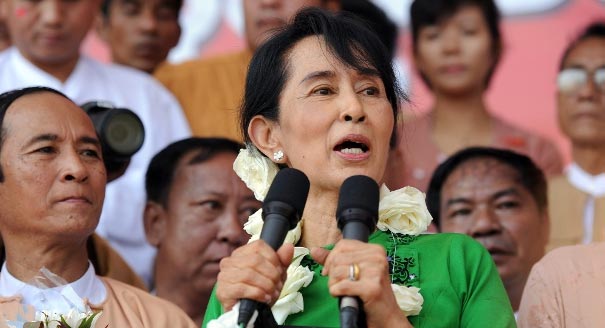
On April 1, Myanmar held by-elections for 37 seats out of a total of 440 in the lower house of the country’s bicameral legislature (the People’s Assembly), for six out of a total of 240 seats in the upper house (the Nationalities’ Assembly), and for two in regional assemblies. Elections for three lower house seats in Kachin State were postponed on account of fighting there, though overall the elections appear to have been conducted peacefully. Opposition leader Aung San Suu Kyi’s National League for Democracy (NLD) won a significant proportion of the contested seats.
The elections were certainly a watershed event and seemed broadly free and fair (judging from comments by international observers and coverage by the international media). But it would be a mistake to believe that Myanmar has turned a proverbial corner.
For one, a quarter of all seats in the legislative chambers are reserved for military officers, which is unlikely to change soon. Second, the government-sponsored Union Solidarity and Development Party already holds over three-quarters of the remaining seats, so even a full sweep by the NLD in the by-elections will do little to dislodge the current government. Third, whether Aung San Suu Kyi joins the cabinet or not, it is not clear how much influence the NLD opposition will have on government policies. Fourth, renewed fighting in Kachin State serves as a reminder of how difficult it will be to fashion a durable political and institutional framework for resolving long-simmering discontent in states with ethnic minorities.
Nevertheless, the United States responded positively to the news from Myanmar. Secretary of State Hillary Clinton immediately announced that Washington will appoint an ambassador to Myanmar, open a USAID office there, and support country operations by the United Nations Development Program. She also said that the United States will ease the ban on U.S. financial services and investment in Myanmar; allow private aid groups to help with democracy building, health, and education projects there; and relax visa bans for select officials from Myanmar.
Even so, a wide range of sanctions will remain in effect—the product of five laws and four presidential directives imposed since 1988—that the United States will only unwind gradually. The process could take years, depending on further reforms, which include the unconditional release of all political prisoners, a free and fair general election in 2015, and progress in specific areas such as drug trafficking, money laundering, and the use of child soldiers
There is reason to be optimistic that the Myanmar authorities will continue with the reform process. The current president General Thein Sein’s decision to give access to foreign observers and the international media was further evidence of the strength of reformers within the government and their desire to end the country’s isolation. Moreover, the government’s liberalization moves have not been confined to politics. If implemented well, its decision to unify the exchange rate will have far-reaching and positive effects on the economy. Given the experience of other countries that unified similarly distorted exchange rates—such as China and Vietnam—Myanmar should expect a surge in economic activity, increased domestic investment, and a sharp rise in foreign investor interest.
No doubt, this important change will now need to be complemented by other policies to reform agriculture and to remove controls over private sector activity, but it is nevertheless a very important first step. In viewing the developments in the political or economic sphere, the international community needs to be patient and supportive. Outside actors must recognize that Myanmar will need to develop policies and institutions carefully in ways that suit its unique circumstances and that are appropriate to its history, culture, and current capabilities.
Timor-Leste’s presidential race has already delivered its first result—the incumbent president, Ramos Horta, came in third with only 17 percent of the vote, trailing Francisco Guterres who received 29 percent and Jose Maria Vasconcelos—known by his assumed name, Taur Matan Ruak—who finished with 26 percent. Guterres and Ruak will now go head-to-head in a runoff election in a month’s time. Guterres is supported by Timor-Leste’s largest party, FRETILIN, while Ruak was recently chief of the country’s defense forces, having started his career as a guerilla leader.
President Horta, who worked in exile to remind the world about East Timor’s plight throughout its entire twenty-four-year occupation by Indonesia, shared the Nobel Peace Prize in 1996. He had served as the newly independent country’s foreign minister and then its prime minister, afterward assuming the largely ceremonial post of president in 2007.
During his five-year term as president, Mr. Horta used his position to argue for careful stewardship and transparent deployment of the country’s newfound (and possibly temporary) oil wealth, a refrain that became an irritant to the Parliamentary Majority Alliance government headed by Prime Minister Xanana Gusmao. It eventually led Gusmao to abandon Horta and support Ruak’s candidacy.
The two presidential candidates in next month’s runoff have different strengths. Guterres, who also fought in the resistance struggle, has a strong political background and is intensely nationalistic. Ruak, on the other hand, is running on his credentials as a resistance leader and derives his political strength from Gusmao’s political support and his own traditional power base of the defense forces and demobilized military veterans. Both candidates represent a decisive change from Ramos Horta, who tended to stay above the fray, seeking consensus and disavowing partisanship.
The candidates will also be more focused on internal issues, so international relations will likely take a backseat. This will not derail Timor-Leste’s efforts to gain membership in ASEAN, but a more nationalist stance on development issues may lead to pricklier relations with the international donor community. In particular, neither candidate is likely to act as the voice of reason and rein in Prime Minister Gusmao’s ambitious and populist development plans—as Horta did—and this could possibly drain Timor-Leste’s petroleum fund and jeopardize sustainable growth. Unlike Australia, the United Nations, and the World Bank, the United States has few direct interests in the country and is therefore in a unique position to play an intermediary role that allows for continuous communication and dialogue between the government and its key international stakeholders.
Malaysia’s general elections need to be held by April 2013, but in all likelihood they will be held earlier. One possibility is June this year, but given Prime Minister Najib’s crowded travel schedule in the next couple of months and since the ruling party Barisan Nasional is still resolving the allocation of seats within its own coalition of three parties, there is increased speculation the elections will be held in September.
A further complicating factor is that a Parliamentary Select Committee is scheduled to table recommendations on electoral reforms by April 2—and this may require the Election Commission to implement several initiatives before the polls are held. It is also important for the Election Commission take the time to ensure the electoral rolls are accurate in what could be a relatively close election.
The wind certainly seems to be behind Barisan Nasional, helped in part by a budget that included a 500 ringgit handout to households with an income less than 3000 ringgit, a 200 ringgit book voucher scheme for all students in tertiary-education institutions, and three low-income housing schemes. But the ruling party knows the old adage well—in politics, a few months can be a lifetime.
India. India held elections in five states in March—including Uttar Pradesh (UP), India’s heartland and largest state with a population the size of Brazil’s. It is an understatement to say that India’s politics are complicated, but one thing is clear: the election results were not a harbinger of good news for India’s two national parties—the Congress Party, which leads the coalition government in New Delhi, and the Bharatiya Janata Party (BJP), the main opposition force. Both were badly beaten in Uttar Pradesh.
There are two ways to interpret the Indian election results —one pessimistic, the other optimistic.
The pessimist sees the results as further hobbling the already-weak, Congress-led national government. Despite an energetic campaign in UP led by Rahul Gandhi, son of the Congress Party president, Sonia Gandhi, and grandson of Jawaharlal Nehru, India’s first prime minister, Congress won a paltry 28 seats in the 403-seat assembly. More shocking, it lost the two seats of Amethi and Rae Bareilly, two constituencies that have been traditionally loyal to the Nehru-Gandhi family since independence in 1947.
The optimist, however, sees the outcome as further confirmation that India’s electorate is finally rewarding development results and punishing corruption—two lessons the national Congress-led government should take to heart. The incumbent UP government, led by the colorful and charismatic Mayawati, leader of the regional Bahujan Samaj Party, not only had delivered a level of growth below the national average but also was seen as openly corrupt. Her party was trounced in the polls, and another regional party with a forward-looking, progressive message was given a resounding majority. Results in the other four states—Goa, Manipur, Punjab, and Uttarakhand—delivered broadly the same message.
For India’s important trading partners—the United States, Europe, China, and Japan—India’s political stasis is frustrating. Much of India’s trade and licensing liberalization occurred several years ago, and the current government has been too weak to successfully push through new reform initiatives (the last one, to liberalize multibrand retailing, came to an ignoble end when it was scuttled by relatively minor members of the ruling coalition who threatened to bring down the government). The economy continues to be heavily regulated and government measures still appear hostile to private foreign investment. The 2012 budget, for example, contained retrospective tax provisions that will be a damp squib to potential foreign investors. Unless the government is able to discard its interventionist, arbitrary, and anti-private-sector ways, the economy—which is already slowing—will rapidly lose momentum.
China. In China, the mysterious events surrounding Bo Xilai’s fall from grace could have profound implications for the seven seats that will need to be filled later this year in the Standing Committee to the Politburo, China’s most powerful political body. The Standing Committee has nine members, but Vice President Xi Jinping and Vice Premier Li Keqiang are expected to fill two of the spots when they are elevated to the positions of president and prime minister at the 18th Party Congress in October. Also changing in October will be the Central Military Commission, the Politburo, and the Central Committee of the Chinese Communist Party.
China may not be a parliamentary democracy, but that does not preclude intense debate within the Communist Party between different factions and groups representing alternative views on key political and economic issues. But it is too early to know whether Bo Xilai’s disappearance from public view has political overtones that suggest setbacks for any particular faction in this debate (as some observers have suggested).
This development almost certainly reopens the selection process for all seven positions in the Politburo Standing Committee. The leadership will seek to ensure that an appropriate balance is maintained across the key interest groups—in the best tradition of coalition government so familiar to parliamentary democracies.
Former Nonresident Senior Fellow, Asia Program
Nehru was a nonresident senior fellow in the Carnegie Asia Program. An expert on development economics, growth, poverty reduction, debt sustainability, governance, and the performance and prospects of East Asia, his research focuses on the economic, political, and strategic issues confronting Asia, particularly Southeast Asia.
Recent Work
Vikram Nehru
Vikram Nehru
Carnegie does not take institutional positions on public policy issues; the views represented herein are those of the author(s) and do not necessarily reflect the views of Carnegie, its staff, or its trustees.

China has aligned its cooperation model with Saudi Arabia’s own priorities, most notably since the kingdom unveiled its Vision 2030. Although China announced the Belt and Road Initiative in 2013, the big push in relations happened only after the ascendance of King Salman to the throne in 2015 and Riyadh’s push for Beijing to meet Saudi needs.

Hesham Alghannam
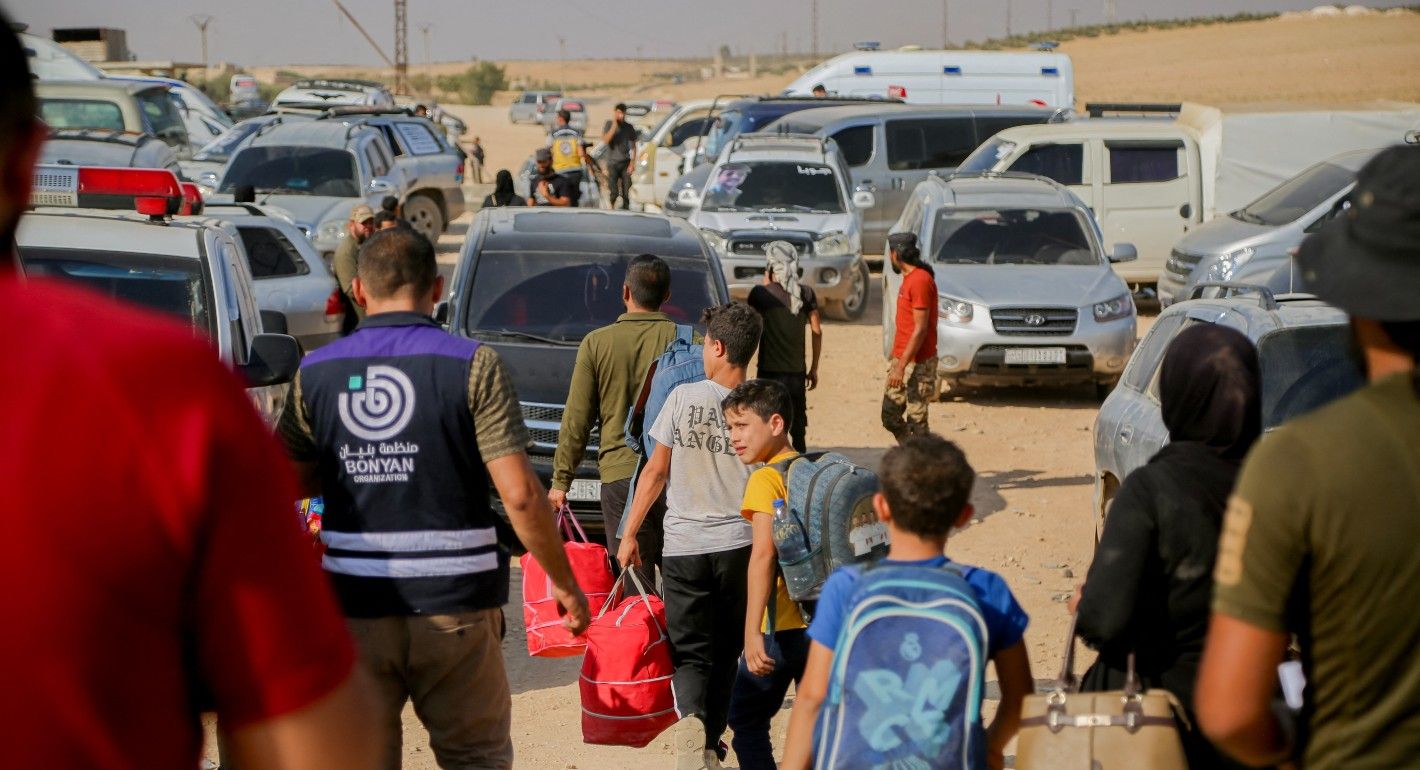
A humanitarian crisis in Lebanon deepens, and Syrian refugees face a perilous choice: remain in a war-torn environment or return to Syria where they risk encountering significant dangers and discrimination. There are significant challenges and risks to their search for safety in Syria.
Haid Haid
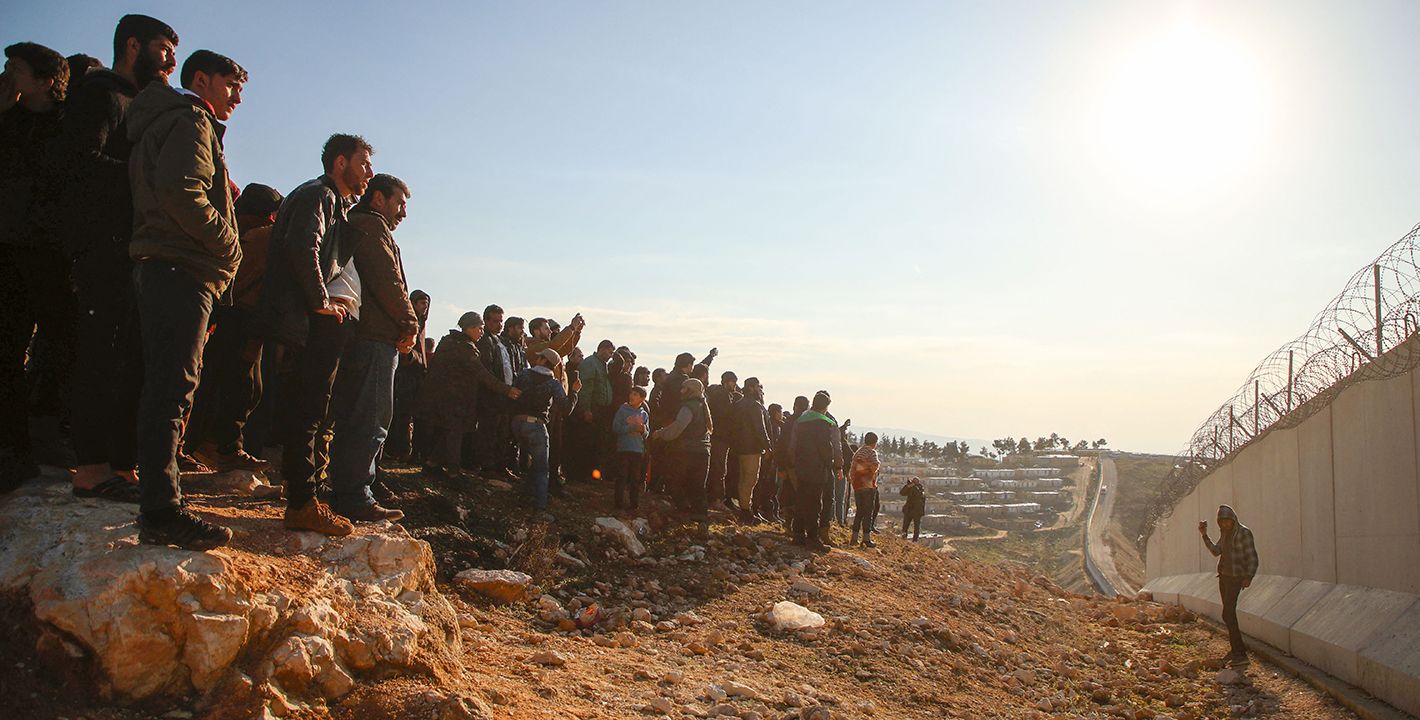
In Syria’s border regions, changes in demographics, economics, and security mean that an inter-Syrian peace process will require consensus among main regional powers that Syria must remain united, that no one side can be victorious, and that perennial instability threatens the region.

Kheder Khaddour, Armenak Tokmajyan
The interaction of national armed forces and private business sectors offers a useful lens for viewing the politics of numerous countries of the so-called Global South. A rising trend of military political activism—often accompanied by military commercial activity—underlines the importance of drivers and outcomes in these relationships.

Yezid Sayigh, Hamza Meddeb
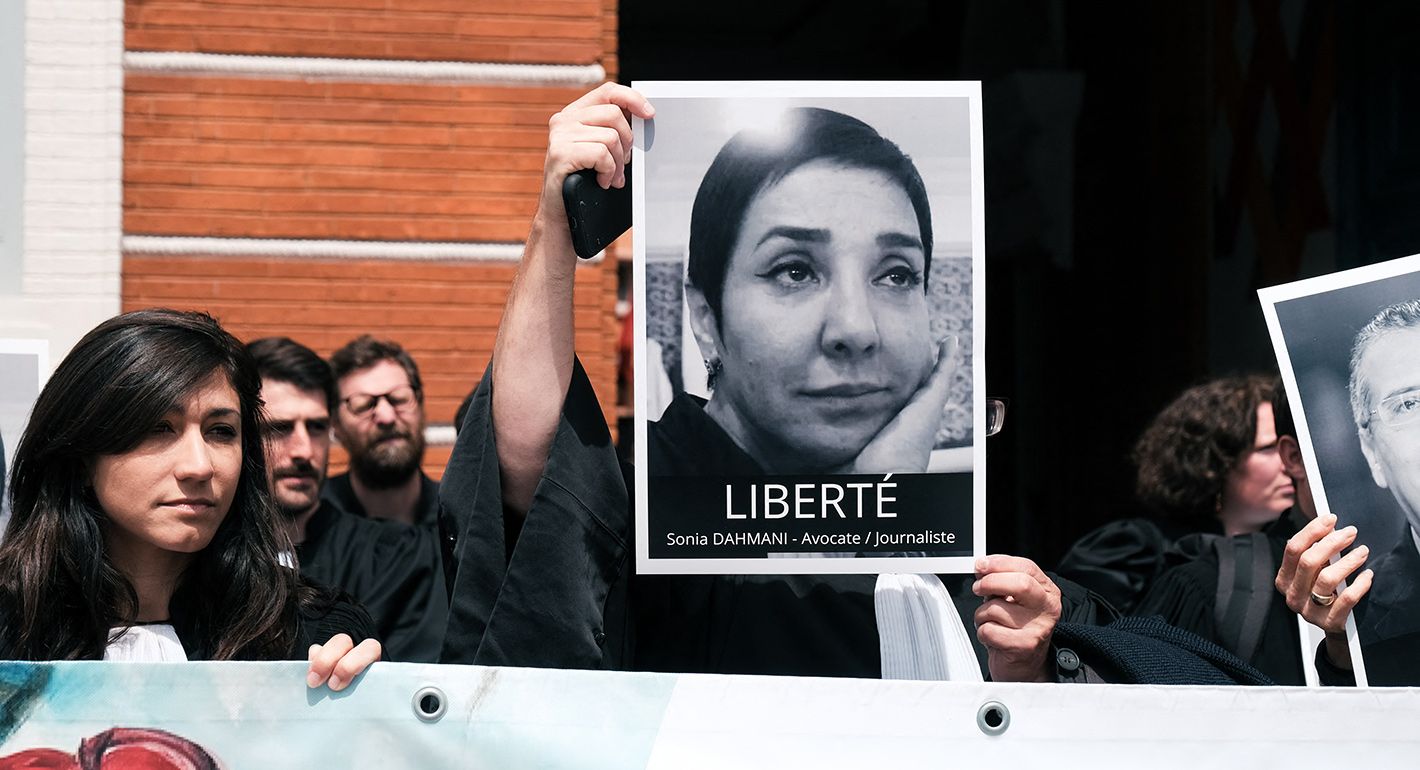
For many in the society, the post-Ben Ali years were mainly about successive economic crises and political instability.
Jasmine Khelil