

Commentary
Togzhan Kassenova
Source: Getty
Just five years ago, Brazil shined brightly on the nuclear scene. Today, a high-level corruption investigation is shaking up the sector.
“Othon was arrested today” is a phrase I never expected to hear. I landed in Rio de Janeiro on July 27, the night before his arrest. For the next two months, I would join Brazilians in observing a political and economic crisis unfold in real time.
Brazil has been struggling with a shrinking economy and political infighting. Since 2014, it has experienced the fallout from an all-encompassing high-level corruption investigation that has exacerbated structural challenges Brazil was already facing. Dubbed Operation Lava Jato in Portuguese (Operation Car Wash) after a gas station in Brasília where some of the laundered money was exchanged, the investigation led to accusations of corruption leveled at leading figures. The list of the ensnared includes top executives of Brazil’s behemoth oil company Petrobras and of the country’s largest construction companies as well as politicians at the highest levels, extending all the way to former president Luiz Inácio Lula da Silva.
Navy Admiral Othon Luiz Pinheiro da Silva was one among many high-profile heavyweights under investigation, but his arrest surprised me the most. There is no one more central to Brazil’s nuclear politics, both past and present, than he is, and Othon’s name is almost mythical among those who follow Brazil’s nuclear trajectory.
After being trained as a naval engineer in Brazil, Othon went to the Massachusetts Institute of Technology in the 1970s, where he specialized in nuclear engineering. Every achievement in the nuclear field that Brazil is proud of today has Othon’s stamp on it. Brazil is among a handful of countries that have mastered uranium enrichment. Othon established and led Brazil’s centrifuge uranium enrichment program. Brazil is the only country in the world without nuclear weapons that is building a nuclear-powered submarine. Developing naval nuclear propulsion was Othon’s idea, and it was he who persuaded the Brazilian government to fund it in the 1970s. The navy’s nuclear project has survived through highs and lows, through military and civilian governments, and remains an important driver of Brazil’s civilian nuclear program. The navy continues to control uranium enrichment technology and centrifuge production; it leases enrichment technology to a fuel fabrication company, Brazilian Nuclear Industries (INB), and produces centrifuges for it.
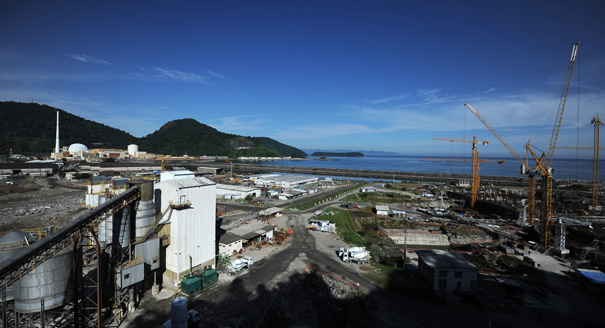
Othon was at the heart of Brazil’s nuclear program during the military government that lasted until 1985, and he remained indispensable for the decades that followed. In 2005, he became the chief executive of Eletronuclear, an operator of nuclear power plants and a subsidiary of Eletrobras, a state-controlled power company. Eletronuclear operates Brazil’s two nuclear power plants—Angra 1 and Angra 2—and is building a third plant in the picturesque region of Angra dos Reis, not far from Rio de Janeiro. Work on Angra 3 began in 1984. But after two years and the amassing of 70 percent of the equipment at the site, construction was suspended. Only after twenty-four years, in 2010, did construction resume on Angra 3.
The corruption charges against Othon stemmed from the construction of Angra 3. It was while he headed Eletronuclear that Othon was accused of receiving bribes from companies vying for Eletronuclear’s contracts. He was arrested on July 28 as part of an operation called Radioactivity, the sixteenth stage in Operation Car Wash.
Othon is currently accused of receiving 4.8 million Brazilian reais (or approximately $1.2 million) in bribes through Aratec Engenharia, a company he owned. Brazilian media report that Othon’s company accepted payments for the development of turbines that generate electricity using river flow.
Othon’s arrest is not the only nuclear dimension of Brazil’s corruption scandal. Marcelo Odebrecht, whose eponymous company is Brazil’s largest construction conglomerate, was arrested on corruption charges in June. His company is accused of paying bribes to Petrobras executives to gain lucrative contracts, overcharging Petrobras for construction projects, and siphoning off illegal profits to politicians who, in turn, facilitated the conglomerate’s operations.
Odebrecht is one of the largest companies in South America. With operations in 21 countries and a workforce of 168,000, the equivalent of the population of a medium-sized U.S. city, it has been involved in major infrastructure projects in places as diverse as Saudi Arabia and Angola.
Odebrecht is the main contractor for Brazil’s nuclear submarine program. In 2009, when Brazil and France signed a cooperation agreement to build five submarines—four conventional and one nuclear—together, Odebrecht received a contract worth $1.9 billion to construct a new naval shipyard in Itaguaí. In 2013, Brazil’s then president Dilma Rousseff attended the shipyard’s inauguration ceremony. With Odebrecht’s CEO under arrest, the immediate future of the company is uncertain.
Just five years ago, Brazil shined brightly on the nuclear scene. Outsiders, myself included, observed Brazil’s ambitious strides with interest and a certain degree of awe. The country projected confidence: active nuclear diplomacy, plans for nuclear energy expansion, a large-scale nuclear submarine project.
In May 2010, Brazil inserted itself in the midst of a major international standoff between Iran and the West over Iran’s nuclear program. In a miscalculated but daring attempt, Brasília and Ankara brokered a deal with Tehran. The Brazilian government hoped that its initiative, known as the Tehran Declaration, would avert new sanctions and potential military action against Iran, and lead to a more peaceful Middle East. The deal did not go far, as the UN Security Council voted to impose a new round of sanctions. Still, the nuclear policy community took notice of Brazil’s ambitions in the global nuclear arena.
Funding was pouring steadily into the nuclear submarine program. Since 2009, Brazil has spent $3.2 billion to build a submarine shipyard and a naval base. Brazil’s leaders promoted the program as one that would once again prove Brazil’s technological might—just as Embraer planes did decades earlier.
In 2010, construction of the Angra 3 nuclear power plant resumed, and while the government never touted nuclear energy as its priority, commitments were made to build up to four to eight new nuclear power plants.
Five years later, a very different Brazil has emerged. Foreign policy, let alone nuclear diplomacy, has decreased significantly on the ladder of Brazilian government priorities. Unlike Lula, President Dilma from the very beginning was less inclined to invest in an active foreign policy. Now she is too preoccupied with domestic problems to spend time on diplomacy. With her approval ratings hovering at 8 percent, foreign policy is unlikely to become a priority for the current government in the near future. The possibility that the government will actively pay attention to matters of global nuclear politics is even less likely.
National fiscal limitations and now the problems with Odebrecht will potentially slow down the nuclear submarine program. The broader challenges in Brazil’s energy sector, economic problems, and the investigation of Angra 3 contractors means that nuclear power plant construction might be further delayed. As a result of an ongoing corruption investigation, Eletronuclear suspended contracts with two Brazilian consortiums slated to work on certain parts of the construction process.
Brazil faces at least two to three years of serious turbulence. Yet positive outcomes might emerge eventually. The massive shake-up that is currently taking place will likely bring more transparency, accountability, and efficiency to the nuclear sector.

Former Nonresident Fellow, Nuclear Policy Program
Kassenova was a nonresident fellow in the Nuclear Policy Program at the Carnegie Endowment.
Recent Work
Togzhan Kassenova

Toby Dalton, Togzhan Kassenova, Lauryn Williams
Carnegie does not take institutional positions on public policy issues; the views represented herein are those of the author(s) and do not necessarily reflect the views of Carnegie, its staff, or its trustees.
In an interview, Marc Lynch discusses his new book decrying the post-1990 U.S.-dominated order in the Middle East.

Michael Young

A humanitarian crisis in Lebanon deepens, and Syrian refugees face a perilous choice: remain in a war-torn environment or return to Syria where they risk encountering significant dangers and discrimination. There are significant challenges and risks to their search for safety in Syria.
Haid Haid
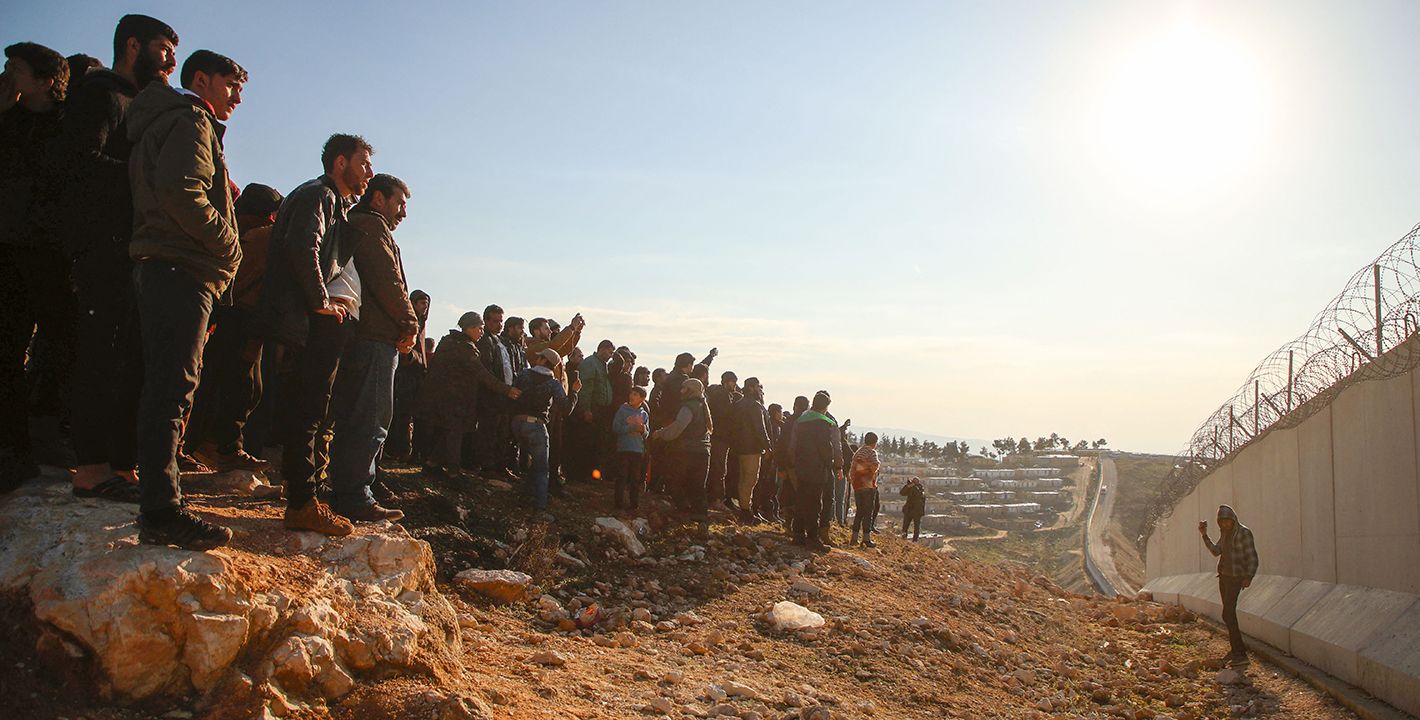
In Syria’s border regions, changes in demographics, economics, and security mean that an inter-Syrian peace process will require consensus among main regional powers that Syria must remain united, that no one side can be victorious, and that perennial instability threatens the region.

Kheder Khaddour, Armenak Tokmajyan
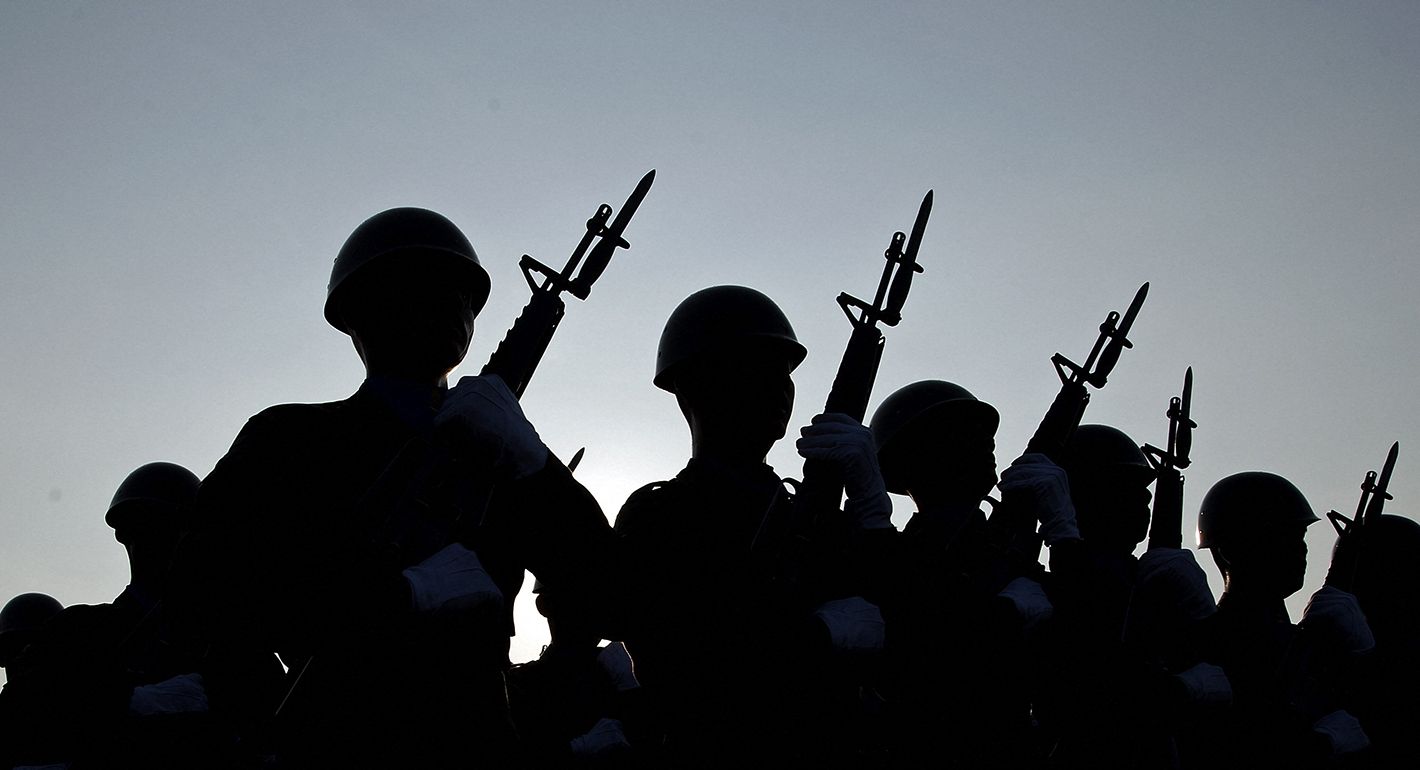
The interaction of national armed forces and private business sectors offers a useful lens for viewing the politics of numerous countries of the so-called Global South. A rising trend of military political activism—often accompanied by military commercial activity—underlines the importance of drivers and outcomes in these relationships.

Yezid Sayigh, Hamza Meddeb
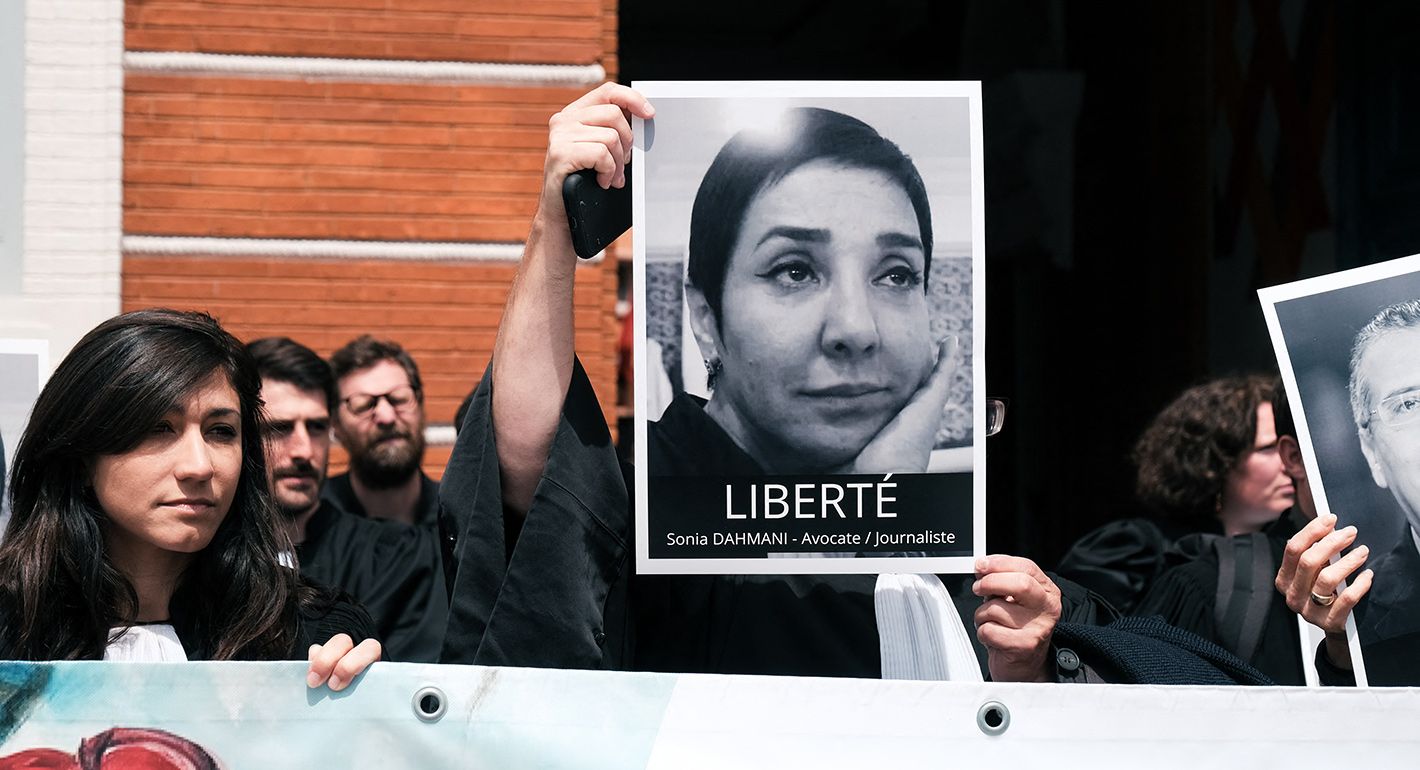
For many in the society, the post-Ben Ali years were mainly about successive economic crises and political instability.
Jasmine Khelil