

Commentary
The GCC states’ use of Artificial Intelligence will generate much leverage over the global digital infrastructure and climate talks.
Camille Ammoun
Source: Getty
This article outlines the combination of policies, frameworks, and principles that resulted in a successful and sustainable implementation of digital public infrastructure (DPI) in India. It is hoped that this could inform G20 deliberations and consultations.
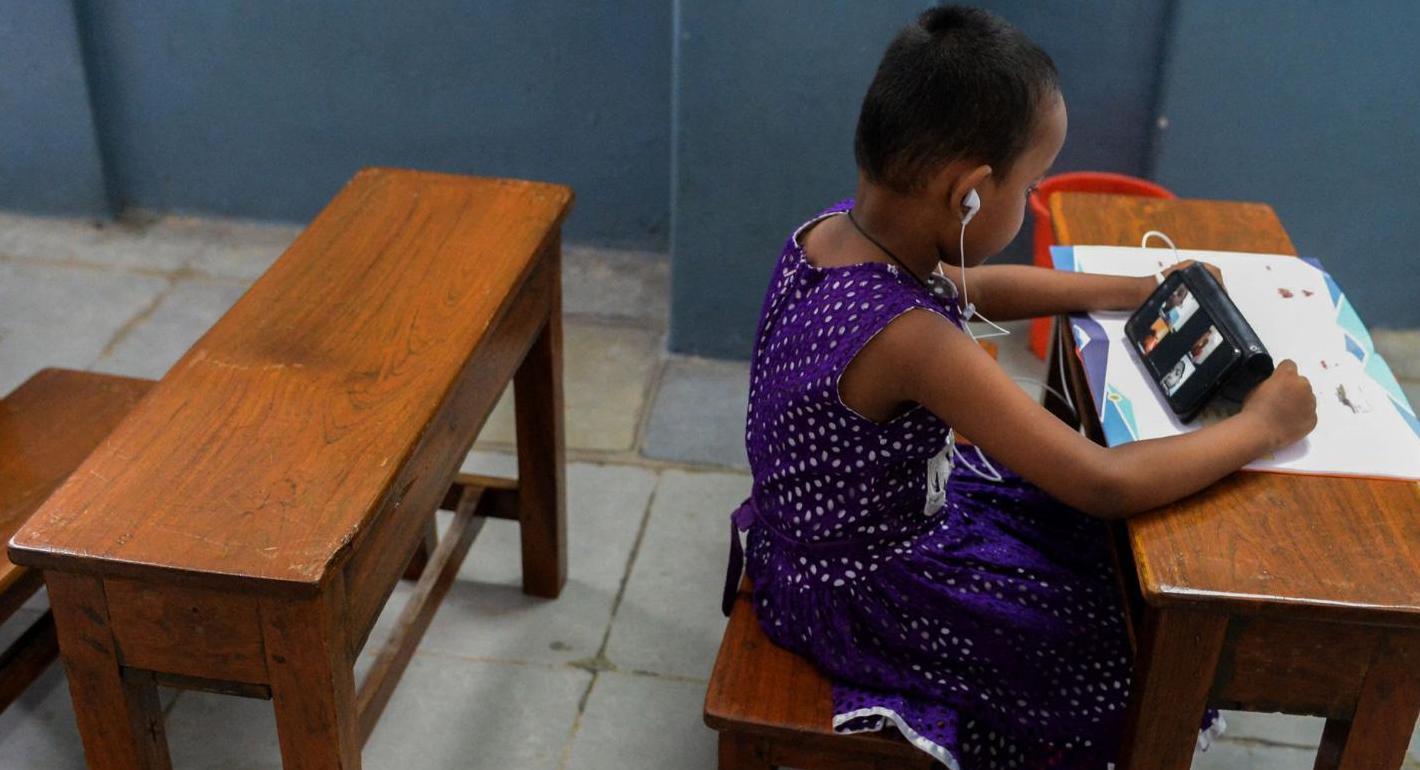
The coronavirus pandemic drastically accelerated the adoption of technology in school education. Governments worldwide reacted to pandemic-related school closures by urgently implementing digital solutions and platforms. According to a UNICEF data sheet, more than 90 percent of countries have implemented some form of remote learning policy. The retreat of coronavirus has uncovered structural problems in these hastily implemented solutions. Some of these problems include siloed solutions, lack of evolvability, vendor lock-ins that compromise sovereign control, and proprietary solutions that are not customizable. As a result, many pandemic solutions either have been abandoned or have not found any further investment. A UNICEF report revealed that “stagnation in access to digital learning made during the COVID-19 pandemic, as one-third of nationally developed platforms have entirely shutdown, are outdated, or no longer fully functional, limiting learning approaches to help schoolchildren recover their education.”
Despite this, India has stood out as an exception. This article outlines the combination of policies, frameworks, and principles that resulted in a successful and sustainable implementation of digital public infrastructure (DPI) in India. It is hoped that this could inform G20 deliberations and consultations.
DPI is made up of solutions and systems that enable the effective provision of essential society-wide functions and services. DPI should be seen as a public good that enables private-sector growth, prevents digital monopolies, and safeguards the rights and freedoms of all.
India’s school education system is incredibly diverse, with over twenty regional languages as the medium of instruction and over sixty educational boards across the country. There are over 1.48 million schools, 9.5 million teachers, 265 million students (pre-primary to higher secondary level), out of which over 167 million students are in government and aided schools and 88 million students are in private and other schools. In this context, India has taken a number of steps toward adopting and implementing a DPI for education, including implementing enabling technologies like Digital Infrastructure for Knowledge Sharing (DIKSHA), which can be leveraged for the country’s multiple use cases for school education. Launched in 2017, it has been adopted by almost all the states, union territories, and central autonomous bodies and boards.
DIKSHA is a versatile, free-to-use school platform with multiple solutions for students, teachers, and administrators, which include “energized” textbooks that link QR codes to relevant digital content, online courses with digital credentials, assessments, quizzes, chatbots, and so on. It is available to the various states and educational boards of the country for use in their respective contexts, as part of the federal structure of education in India. It is designed as a shared infrastructure and a common public good, wherein states have the autonomy and choice to use the platform to suit their own needs. Additionally, it is interoperable, evolvable, and built using open-source technology. It also hosts open educational resources. States use the varied capabilities and solutions of the platform to design and run programs for teachers, learners, and administrators. DIKSHA’s policies and tools make it possible for the various stakeholders who make up the education ecosystem to participate, contribute, and leverage a common platform to achieve learning goals at scale for the country.
DIKSHA currently offers over 8,900 courses and 200,000 diverse pieces of content across thirty Indian languages from 11,500 contributors, catering to India’s diversity of over twenty regional languages as the medium of instruction and over sixty educational boards across the country. Over the last five years and as of January 24, 2023, DIKSHA has clocked over sixty billion learning minutes in usage and seen over 135 million course completions, with a reach of around 180 million students and seven million teachers. It is one of the world’s most diverse school education platforms and has seen unparalleled and rapid adoption.
In addition to DIKSHA’s policies and design, the existing policies and frameworks being adopted in India keep the interests of the teachers and the students at their core, including the National Education Policy (NEP) 2020 and more recently the National Curriculum Framework for the Foundational Stage (NCF-FS), National Digital Education Architecture (NDEAR), and India Enterprise Architecture (InDEA) 2.0.
NEP 2020 states that “there is a need to invest in creation of open, interoperable, evolvable, public digital infrastructure in the education sector that can be used by multiple platforms and point solutions, to solve for India’s scale, diversity, complexity and device penetration.” The Ministry of Education’s Department of School Education and Literacy reiterated that what is needed is “a plug and play digital infrastructure that could work for all of India and not just a specific solution.”
Per NDEAR, “the core idea of NDEAR is to facilitate achieving the goals laid out by NEP 2020, through a digital infrastructure for innovations by, through and in the education ecosystem.” It is notable that the vision of NDEAR is to “give the education ecosystem the opportunity to innovate, amplify good innovations and solutions and address the needs of all learners and teachers including special, atypical and marginalized learners and teachers, and enhance the capability of existing applications.” One of the declared principles of NDEAR relates to diversity and inclusion—linguistic, geographic, across device types, offline and online access, across the spectrum of special needs, learning difficulties, accessibility compliance, and so on.
It is critical to highlight the twelve technology architecture principles that are set out in NDEAR to speed up the evolution of the national digital education ecosystem.
More recently, the National Curriculum Framework for the Foundational Stage recommended that technology should be used at the foundational stage (i.e., ages three to eight years) for:
The India Report: Digital Education of 2021 reinforces the government’s commitment to ensure equitable learning for all and to cover all students at all levels of education and in all geographical locations, even in the remotest parts of the country, so that the convenience of any service is available to all students at the click of a button. The Government of India also launched a comprehensive initiative called PM eVidya, which unifies all efforts related to digital, online, and on-air education to enable coherent multi-mode access to education. DIKSHA was recognized under the slogan “One nation: one digital platform” for school education in India.
In addition to the provisions that aim to bridge the digital divide as set out above, the policy framework also safeguards the privacy, security, and digital rights of the users of technology platforms, including the special category of children. The NCF-FS states, “Equity requires that every child have the right to and access to participation and use of technology. A balanced approach between protection and participation must be ensured. Children have the right to information, freedom, and privacy, and the right to be protected from abuse and harm.” It is noteworthy that both NDEAR and NCF-FS recognize the rights of children in the digital world as recommended by UNICEF and that the duty to protect children belongs to governments, private organizations, and civil society.
DIKSHA was based on the core principles of open architecture, open access, open licensing, diversity, choice, and autonomy as outlined in the National Teacher Platform's paper on strategy and approach. The adoption of DIKSHA is also supported by the NEP, which has multiple provisions for incorporating and promoting digital infrastructure, including initiatives for:
DIKSHA comprises a number of technology building blocks and is recognized as a reference solution freely available for the education ecosystem to use per the NDEAR framework. It is the choice of building blocks and this alignment of DIKSHA with existing policies and frameworks that will facilitate legacy system integration, improved interoperability, and flexibility in the creation of new systems and applications.
To a large extent, owing to building-block thinking and federated architecture, the possibilities of DIKSHA are multifold. Due to this, it has not only witnessed unparalleled adoption in a short span of time but has also played a key role in the digital transformation of India’s education ecosystem.
Presently, India’s G20 presidency has put a spotlight on, among other issues, technological transformation and DPI across multiple sectors, including education. Prime Minister Narendra Modi’s vision statement for the G20 says that “India has leveraged technology to create digital public goods that are open, inclusive, and inter-operable” and can cater to India’s diversity, experiences, learnings, and models. Modi also suggested that these digital public goods could be “possible templates for others, especially the developing world.” Particularly, India’s experience with DIKSHA—its coherence with existing policies and frameworks, its interoperability with other existing systems, its evolvability and resilience to handle unexpected disruptions, its enabling (by virtue of being developed from open-source building blocks) of digital sovereignty that would allow India to adopt, adapt, and scale technology in ways that maintain the country’s flexibility in decisionmaking—are all reasons for DIKSHA’s success and can provide insights as well as technology building blocks for other countries to adopt and implement.
There are three key takeaways that have held DIKSHA in good stead, despite large disruptions like coronavirus-related school closures and post-pandemic slowdown in edtech solutions globally.
For instance, DIKSHA has been offered as a digital public good (including its software code, programs’ open data, and content), and is available for the rest of the world to use as a part of the Indiastack.global repository of digital public goods offered by the Government of India. The NDEAR policy framework, which maps and explains every building block and is leveraged by DIKSHA, is also available on the NDEAR website. Taken together, these approaches can resolve the issues spawned by hastily implemented pandemic solutions.
Shankar Maruwada
EkStep Foundation
Shankar Maruwada is co-founder and CEO of EkStep Foundation, a member of the National Steering Committee for the National Curriculum Framework, and a member of the NDEAR and DIKSHA committees. The views expressed in this publication do not reflect the views of those organizations.
Carnegie does not take institutional positions on public policy issues; the views represented herein are those of the author(s) and do not necessarily reflect the views of Carnegie, its staff, or its trustees.

The GCC states’ use of Artificial Intelligence will generate much leverage over the global digital infrastructure and climate talks.

Camille Ammoun
Uneven investment in the technology will widen regional inequalities in the Middle East and North Africa.

Nur Arafeh
The GCC states are, to varying degrees, opening up to digital finance. This is part of an effort to diversify their economies and wean themselves off U.S.-dominated monetary systems.
Ala’a Kolkaila
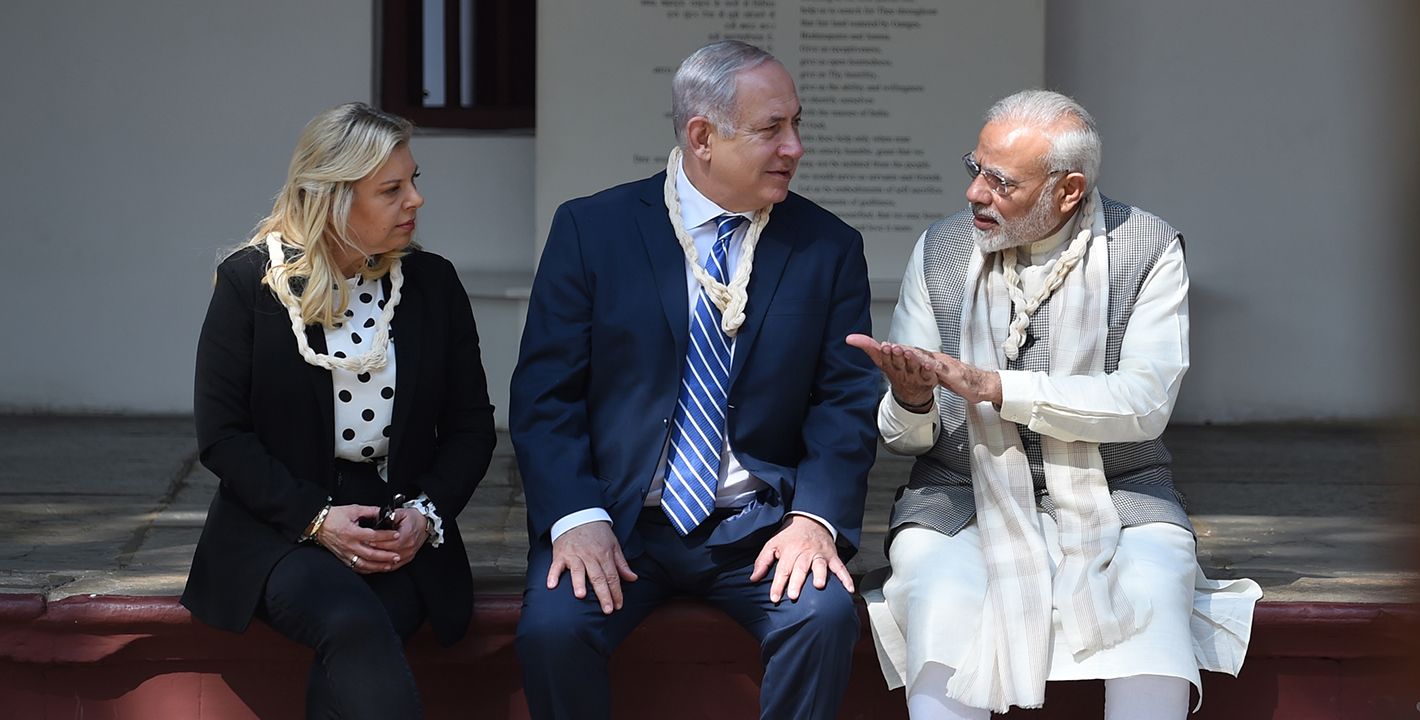
In an interview, Abhinav Pandya discusses the multiple facets of India’s ties with the Middle East.

Armenak Tokmajyan

The interaction of national armed forces and private business sectors offers a useful lens for viewing the politics of numerous countries of the so-called Global South. A rising trend of military political activism—often accompanied by military commercial activity—underlines the importance of drivers and outcomes in these relationships.

Yezid Sayigh, Hamza Meddeb