

In The Media
Vikram Nehru
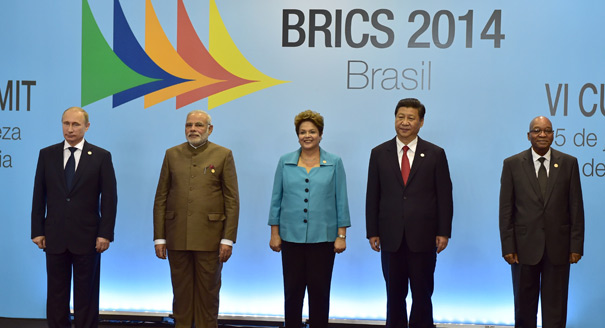
Source: Getty
The BRICS bank is good news for developing countries. If done right, it could change the landscape for multilateral development financing.
No sooner had the dust settled from the World Cup than Brazil played host to the five leaders of the BRICS countries—Brazil, Russia, India, China, and South Africa. An immediate outcome of the Fortaleza summit was the formation of the New Development Bank, a development finance institution to rival the World Bank. The group also announced a currency reserve pool as an alternative to the IMF. Done right, both initiatives could change the institutional landscape for multilateral development financing.
The two institutions are the direct result of the obduracy of the advanced countries, which have steadfastly refused to alter the governance structures in the World Bank and the IMF to reflect the growing role of the BRICS in the global economy.
The BRICS initiatives meet three other useful strategic objectives as well. They strengthen South-South engagement. They provide another avenue to advance the regional and global strategic interests of the bank’s five founders. And they offer a new investment vehicle to raise the rate of return on the member states’ burgeoning foreign exchange reserves.Another big step, the BRICS summit marked a breakthrough on a number of difficult questions that had stymied earlier meetings: the location of the new bank’s headquarters (now to be Shanghai), its first president (who will be Indian), and the chair of its board of governors (Russian).
In addition, the founders agreed that the BRICS bank will have an initial authorized capital of $100 billion, of which $50 billion would be subscribed. This means that even if it borrows conservatively from capital markets, the bank could eventually outstrip the World Bank’s current size. Its annual lending could reach $34 billion a year, which, with co-financing, could potentially fund investment projects worth much more. The currency reserve pool would be worth another $100 billion.
The five BRICS will be not only the founders of these two institutions but also their initial members. Membership will be open to other emerging market economies as well.
This is all good news for the developing world. The formation of the BRICS bank in particular is a welcome step because developing countries’ needs far exceed the availability of investment finance. They require long-term finance to fund public investment and fuel their development. But only twenty developing countries have access to private capital, and in any case, such funds are usually used to finance private investment. Most of these states rely on development assistance, which has been shrinking rapidly as a share of total financial inflows.
The bulk of the investment need in developing countries is for infrastructure. The growth potential of these countries is estimated to be 5–7 percent a year. Because of that, along with rapid urbanization and rising shares of manufacturing and services in GDP in the developing world, transport and energy infrastructure has become a growth bottleneck. Increased infrastructure is not only expected to unleash growth. It will also help promote inclusive, sustainable, and resilient development.
Total infrastructure investment demand in developing countries has been estimated at somewhere north of $2 trillion a year. Of this, only about $1 trillion is currently available, most of it from national budgets. That leaves a substantial chunk unfinanced.
Indeed, the unmet investment needs in the developing world are so large, the establishment of the New Development Bank will not affect the operations of the World Bank or any other multilateral development bank. There is more than enough room for all of them.
But if the new institution is to make a significant difference in filling the gap, it will need to attract substantial additional funds. The good news is that there are large pools of capital looking for investment opportunities to improve returns. OECD countries alone have over $75 trillion—yes, that’s trillion—held by investment funds, insurance companies, and pension funds that are earning low returns. The bad news is that they demand high-quality projects in countries with strong governance and legal standards—which developing countries still need to develop.
These global realities make it imperative for the BRICS bank to establish the highest operational, prudential, and corporate governance standards. Otherwise its impact will remain marginal.
Most importantly, the new bank will need to work closely with other multilateral development banks to promote a new asset class that will attract financing from private sources in advanced countries. Among other things, this will mean working upstream with its developing country clients to design high-quality infrastructure projects and supportive regulatory frameworks that will encourage public-private partnerships.
That does not mean the BRICS bank must start slowly. It could begin lending quickly through co-financing with established multilateral development banks that already have a pipeline of high-quality projects. It could then gradually develop its own pipeline.
To keep costs low, it will need to maintain a good credit rating, use cost-effective approaches to apply social and environmental safeguards, and establish its own research and knowledge management capabilities. It should also recognize that, ultimately, rapid, inclusive, and sustainable development in its client states will depend on their own reforms.
The BRICS countries should be congratulated for forging ahead to establish their own multilateral bank. But they will soon realize the hard part is yet to come.
Former Nonresident Senior Fellow, Asia Program
Nehru was a nonresident senior fellow in the Carnegie Asia Program. An expert on development economics, growth, poverty reduction, debt sustainability, governance, and the performance and prospects of East Asia, his research focuses on the economic, political, and strategic issues confronting Asia, particularly Southeast Asia.
Recent Work
Vikram Nehru
Vikram Nehru
Carnegie does not take institutional positions on public policy issues; the views represented herein are those of the author(s) and do not necessarily reflect the views of Carnegie, its staff, or its trustees.

Though Orban is gone, Putin can still count on some like-minded individuals in Central and Eastern Europe. However, they will seek to avoid open confrontation with EU institutions over Ukraine and their ties with Moscow.

Dimitar Bechev

Beijing’s AI diplomacy is pivoting from infrastructure and associated technical standards toward a more comprehensive effort aimed at recrafting global norms and institutions of AI governance.

Arindrajit Basu

The truth is that Japan’s government is seeking a degree of reengagement but at a vastly reduced level than under Abe. Most significantly, Japan has shown no willingness to ease sanctions.

James D.J. Brown

A partnership between India, a country of subcontinental size, and Africa, a continent of fifty-four countries, may seem asymmetric until one notes that both are home to nearly the same number of people—1.4 billion. This essay spells out the existing challenges to the partnership, its optimal potential, and the possible pathways to realize it over the next quarter-century.

Rajiv Bhatia
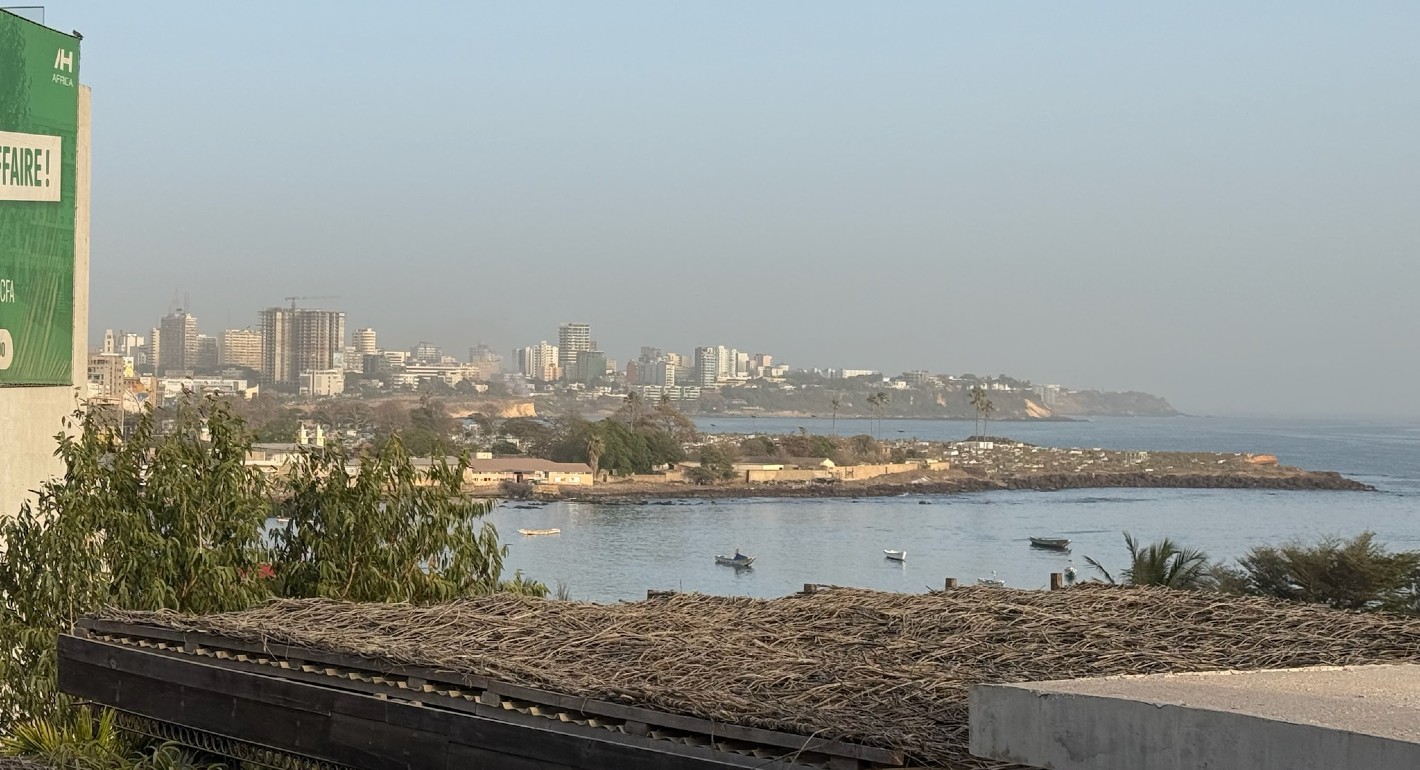
During our visit, we observed a democracy that has learned from its difficult past and is working toward an even more dynamic future.

Sarah Yerkes, Natalie Triche