

{
  "authors": [
    "Wang Tao",
    "Matt Ferchen",
    "Yan Jiantao",
    "Chen Weidong",
    "Liu Qian"
  ],
  "type": "event",
  "centerAffiliationAll": "",
  "centers": [
    "Carnegie Endowment for International Peace",
    "Carnegie China"
  ],
  "collections": [],
  "englishNewsletterAll": "",
  "nonEnglishNewsletterAll": "",
  "primaryCenter": "Carnegie Endowment for International Peace",
  "programAffiliation": "",
  "programs": [],
  "projects": [
    "Carnegie Oil Initiative"
  ],
  "regions": [
    "East Asia",
    "China",
    "Russia"
  ],
  "topics": [
    "Climate Change"
  ]
}
Chinese Energy Security and Geopolitics: The China-Russia Gas Deal and Beyond
Sun, July 6th, 2014
Beijing
In May, China’s National Petroleum Corporation and Russia’s OAO Gazprom signed a $400 billion dollar gas deal with far-reaching implications for geopolitics and global energy markets. Starting in 2018, the agreement for the delivery of 38 billion cubic meters of Natural Gas to China includes the construction of a pipeline that will enhance connectivity in Asia. But given the showdown in Ukraine and China’s aspiration for greater regional influence, politics appeared to be an even more significant factor.
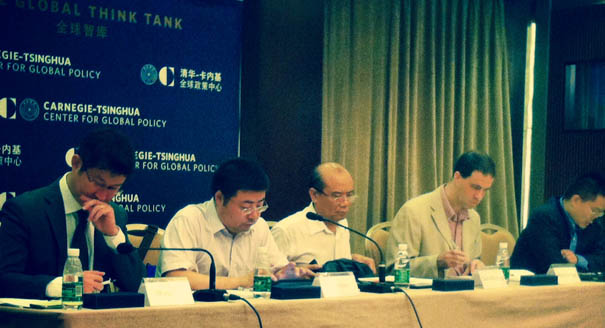
Carnegie–Tsinghua’s Wang Tao hosted a panel of experts from the private sector and academia to discuss the China-Russia gas deal. The panelists discussed the implications for China’s energy security.
Discussion Highlights
- Diversity of Supply and Demand: The strength of the gas deal lies in the diversification of supply and demand trends in the region, panelists explained. On the demand side, China’s long-term energy security is best served by having a variety of sources for imports, which are now primarily limited to the Middle East and Russia. Panelists agreed that China must embrace domestic sources, overseas sources, and, most importantly, land channels. For Russia, the benefit comes on the supply side, panelists continued. China provides variety and stability to Russia’s energy-focused economy. With sanctions looming and Europe looking to diversify their own supply, Russia benefits from solidifying an energy partner in the East, they concluded.
- Role of Energy in South America: China’s engagement with South America on energy has a lot of potential and promise, panelists said. In particular, domestic and international observers are paying close attention to China’s relations with Venezuela. Beyond the fact that Venezuela’s political instability could pose a significant challenge for Chinese investment, there is also concern that Venezuelan oil is of a very low grade. China should consider this in terms of its own climate challenges, and the costs of investing in Venezuela’s oil infrastructure, panelists concluded.
- War on Pollution: In early March of this year, Premier Li Keqiang declared a “war on pollution.” Panelists commented that China is the world’s largest emitter of carbon dioxide and, as a consequence, China’s energy security is not necessarily focused on dependency, but instead on the environmental challenges the country now faces. The push for more natural gas coincides with the current trend of moving from high-carbon to low-carbon options. The first priority is clean and efficient energy that can ensure China’s energy needs, and curb pollution over the long term, panelists said.
- The Ukraine Crisis: The crisis in Ukraine highlights that geography and energy are closely related, panelists said. Ukraine imports half of their gas from Russia and would face severe difficulties importing gas from a different source. Due to Western sanctions, Russia will continue to leverage their gas exports as a means to compensate for industries in other sectors that have been hit by sanctions, panelists added.
- Political Clout: As the United States and the European Union threaten further sanctions against Russia. China’s gas deal provides Russia with a powerful friend and further connection to Asia. Moreover, panelists said, the gas deal is yet another indicator of China’s growing economic and political presence on the world stage.
Carnegie does not take institutional positions on public policy issues; the views represented herein are those of the author(s) and do not necessarily reflect the views of Carnegie, its staff, or its trustees.
Event Speakers
Former Nonresident Scholar, Carnegie-Tsinghua Center for Global Policy
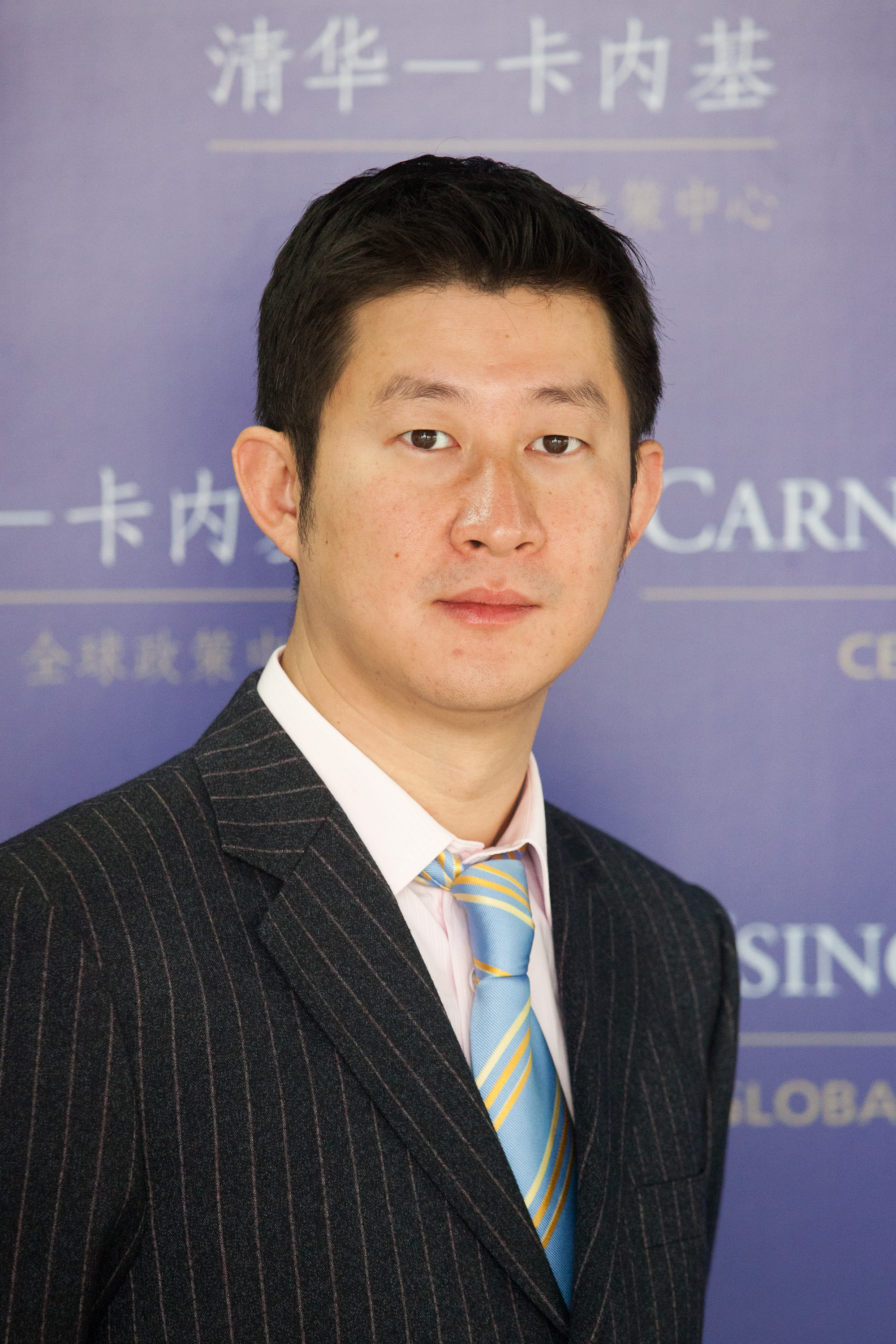
Wang Tao was a nonresident scholar in the Energy and Climate Program based at the Carnegie–Tsinghua Center for Global Policy.
Former Nonresident Scholar, Carnegie-Tsinghua Center for Global Policy

Ferchen specializes in China’s political-economic relations with emerging economies. At the Carnegie–Tsinghua Center for Global Policy, he ran a program on China’s economic and political relations with the developing world, including Latin America.
Yan Jiantao
Chen Weidong
Liu Qian