

{
  "authors": [
    "Liza Lin",
    "Steve Feldstein",
    "Damir Gainutdinov",
    "Maya Wang"
  ],
  "type": "event",
  "centerAffiliationAll": "dc",
  "centers": [
    "Carnegie Endowment for International Peace"
  ],
  "collections": [],
  "englishNewsletterAll": "democracy",
  "nonEnglishNewsletterAll": "",
  "primaryCenter": "Carnegie Endowment for International Peace",
  "programAffiliation": "DCG",
  "programs": [
    "Democracy, Conflict, and Governance",
    "Technology and International Affairs"
  ],
  "projects": [],
  "regions": [
    "North America",
    "United States",
    "Middle East",
    "Iran",
    "East Asia",
    "China",
    "Russia",
    "Eastern Europe",
    "Ukraine"
  ],
  "topics": [
    "Political Reform",
    "Democracy",
    "Security",
    "Global Governance",
    "Technology"
  ]
}
How Citizens Fight Back When Governments Shut Down the Internet
Tue, April 5th, 2022
Live Online
Listen to the conversation
Governments around the world increasingly use internet controls to quell dissent, control political narratives, and cut off access to the outside world. In Russia, President Putin has blocked access to the global internet, forcing citizens into digital isolation. Meanwhile in China, the government maintains control over access to information through its Great Firewall—a complex censorship tool that cuts off access to certain information from the outside world. But even as shutdowns last longer and become harder to detect, citizens are fighting back—identifying new strategies and collaborating with outside actors to get back online.
Join Carnegie for a timely discussion about what these trends mean for the current geopolitical landscape and what citizens can do to evade authoritarian controls and regain access to the World Wide Web.
This event is hosted live on Twitter Spaces and then uploaded as an audio recording to the event page on the Carnegie website. A Twitter account is not required to attend the event live, but is required to participate in live Q&A.
Carnegie does not take institutional positions on public policy issues; the views represented herein are those of the author(s) and do not necessarily reflect the views of Carnegie, its staff, or its trustees.
Event Speakers
Liza Lin
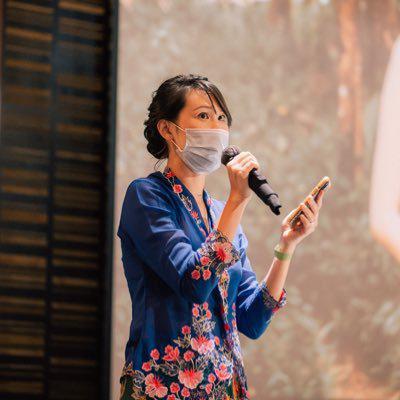
Liza Lin covers Asia technology news for the Wall Street Journal, focusing mostly on China and the internet. Liza was part of a team at the Journal to be named Pulitzer finalists for the International Reporting category in 2021 for their coverage of Chinese leader Xi Jinping, and together with other Journal reporters, won the Gerald Loeb Award for International Reporting in 2018 for a series of stories on China's Surveillance state.
Senior Fellow, Democracy, Conflict, and Governance Program

Steve Feldstein is a senior fellow at the Carnegie Endowment for International Peace in the Democracy, Conflict, and Governance Program. His research focuses on technology, national security, the global context for democracy, and U.S. foreign policy.
Damir Gainutdinov
Damir Gainutdinov is a lawyer specializing in internet issues with the Agora Human Rights Association.
Maya Wang
Maya Wang is the senior China researcher in the Asia division at Human Rights Watch. In recent years, her original research on China’s use of technology for mass surveillance, including the use of biometrics, artificial intelligence, and big data, has helped galvanize international attention on these developments in China and globally.