

Commentary
Depleted financial reserves and a shrinking tax base mean it is no longer possible to simultaneously deliver high defense spending, price stability, and economic growth.
Alexandra Prokopenko
{
  "authors": [
    "Gaziz Abishev"
  ],
  "type": "commentary",
  "blog": "Carnegie Politika",
  "centerAffiliationAll": "dc",
  "centers": [
    "Carnegie Endowment for International Peace",
    "Carnegie Russia Eurasia Center"
  ],
  "collections": [
    "Aso Tavitian Initiative"
  ],
  "englishNewsletterAll": "ctw",
  "nonEnglishNewsletterAll": "",
  "primaryCenter": "Carnegie Russia Eurasia Center",
  "programAffiliation": "russia",
  "programs": [
    "Russia and Eurasia"
  ],
  "projects": [],
  "regions": [
    "Central Asia",
    "Kazakhstan"
  ],
  "topics": [
    "Economy"
  ]
}
Source: Getty
The Kazakh leadership has achieved its main aim of easing up a little and making space for others while maintaining complete control of parliament.
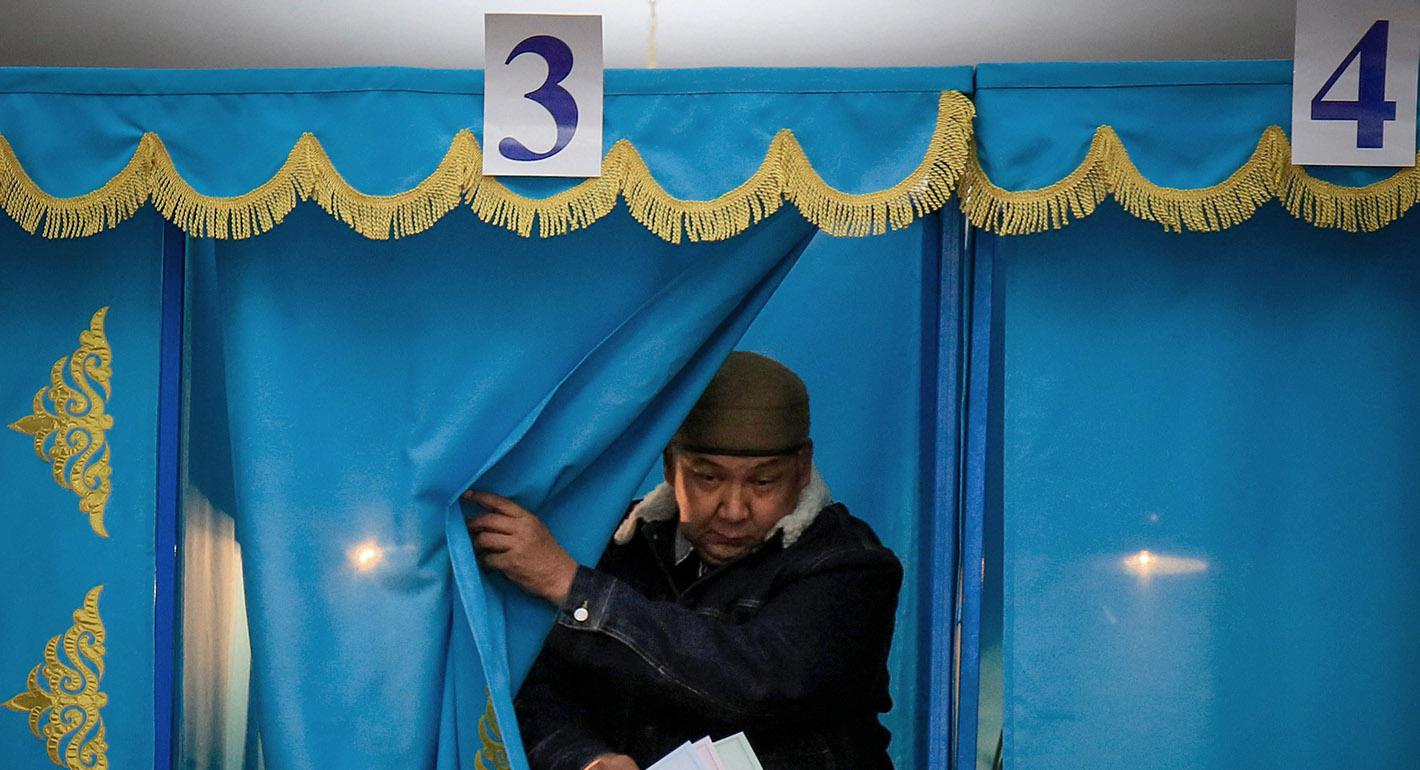
The results of Kazakhstan’s parliamentary elections in March have cemented President Kassym-Jomart Tokayev’s political system. The country remains far from a liberal democracy, and the division of powers is significantly slanted in the president’s favor, but the role of parliament has changed to embody Tokayev’s principle of “different opinions—a unified nation.” The legislative body, previously little more than a rubber stamp, is becoming an arena for discussion and even sometimes criticism of the authorities—albeit, controlled criticism.
Parliamentary elections had already been held under Tokayev, as recently as 2021. The decision to hold snap elections was linked to the protests of January 2022, which not only shook Kazakhstan’s political regime, but also opened a window of opportunity for Tokayev: demand for change arose in society, and it had to be satisfied. The president set about this task and, in the process, tailored the system to his needs.
First, broad constitutional reforms were carried out, providing a framework for the changes to come. Then a snap presidential election was held, shoring up Tokayev’s legitimacy. All that remained was for parliament to be revamped.
Ahead of the parliamentary elections, electoral legislation was loosened. For the first time since 2004, a mixed system was used, with sixty-nine deputies elected from party lists, and the remaining twenty-nine elected in single-mandate districts. The threshold for the registration of new parties was reduced from 20,000 to 5,000 members. For the first time, independent candidates were allowed to participate, resulting in unprecedented competition: about 250 candidates applied to stand in just five seats in the two capitals, Astana and Almaty.
About a third of those who applied for registration were rejected. Nevertheless, some independent politicians made it onto the ballot, including those from unregistered parties, as well as pro-Ukrainian activists, “national patriots” calling for all education to be in Kazakh, feminist activists, and vehement opponents of former president Nursultan Nazarbayev and his supporters.
New political parties were also formed ahead of the elections, including the Respublica party of young entrepreneurs and the Baytaq (Abundance) party of environmentalists. The main party underwent a rebranding from its previous name Nur-Otan (Radiant Fatherland) to Amanat (Commitment). The original name, chosen to rhyme with Nazarbayev’s first name, had become toxic following last year’s protests, which were held under the slogan “Shal, ket” (Old man, get out). Now, in the new political system, the president remains above the fray and is not a member of any of the parties.
Well-known representatives of the “in-system” opposition also took part in the elections, including Aq Jol (Bright Path); the People’s Party of Kazakhstan (formerly the Communist party); the Auyl party, which represents the interests of rural regions; and the Nationwide Social Democratic Party.
At the height of the election campaign, this buzz of activity made it seem like the political regime was indeed becoming democratic. Independent and pro-government candidates met with voters, developed programs and PR strategies, and took part in televised debates with other candidates.
For the most part, candidates discussed domestic political and social issues, though foreign policy also came up, primarily the fallout from Russia’s invasion of Ukraine and future relations with Moscow. Some politicians took a hit to their reputation over their pro-Russian positions. An interview with the deputy chairman of the Aq Jol party, Azamat Abildayev, sparked a scandal when he expressed full support for Russia’s “special military operation” and for President Vladimir Putin personally.
This impression of unprecedented freedom was enhanced by the fact that even sensitive issues were up for discussion. Auyl built its campaign around language policy and national identity, as well as raising living standards in rural villages. Some of the party’s candidates called for fines for those who don’t speak Kazakh, and for tax hikes for women married to foreigners. While previously all candidates had always spoken both Kazakh and Russian in their appearances, Auyl’s front man Jiguli Dairabaev spoke Kazakh at all of his public appearances.
During the campaign, the parties that looked set to have the most success were those not associated with former president Nazarbayev: the Social Democrats and two new parties, Respublica and Baytaq. The course of the voting and its results, however, show that the speed of the shift to democratization should not be exaggerated. In keeping with tradition, the vote did not pass without electoral fraud (observers identified ballot-stuffing at various sites) or the use of administrative resources.
Neither did the campaign generate a great deal of public interest. A week before the election, 62.5 percent of voters said that none of the parties represented their interests, according to Demoscope polls. People were also tired of elections following the constitutional referendum in June 2022 and presidential elections in November. In addition, the election coincided with a long weekend to mark the Nowruz new year holiday (celebrated on March 21–23 in Kazakhstan), further lowering the turnout, which, at 52.8 percent, was the lowest of all nationwide votes in the history of independent Kazakhstan.
In the end, despite all the innovations and loosening of the screws, the parliament didn’t undergo any major transformation. The 5 percent threshold was passed by six parties—twice as many as under Nazarbayev—but little has really changed.
The ruling party Amanat retained its majority with 53.9 percent of the vote, or forty seats (compared with 71 percent in 2021). In the single-mandate districts, none of the independent candidates were victorious, and Amanat won twenty-three of the twenty-nine districts. The other six winners will either join the majority party or be loyal to it.
The ruling party therefore has at least sixty-three seats out of ninety-eight, which will allow it to independently take key decisions and override vetoes by the Senate (if that were ever to occur). Amanat needs just three more seats in order to adopt constitutional laws, and they can be easily found among the remaining single-mandate seats or deputies from the five other parliamentary parties, which are in many ways dependent on the presidential administration.
The remaining seats in parliament are shared among the pseudo-opposition parties that in fact support the authorities. These political dinosaurs had to share their seats with the new parties, so Aq Jol got only 8.4 percent of the vote (down from 10.95 percent in 2021), and the People’s Party of Kazakhstan got 6.8 percent (down from 9.1 percent in 2021). Auyl received 10.9 percent, or eight seats; Respublica got 8.6 percent, or six seats; and the Social Democrats took 5.1 percent, or four seats.
The Kazakh leadership achieved its main goal: easing up a little and making space for others while maintaining complete control of parliament. Formally, there is cause to speak of democratization: the parliament now has six parties instead of three; a third of the deputies come from single-mandate districts; and gender quotas are being observed. In effect, however, the balance of power remains unchanged.
Theoretically, the election results could add to society’s growing disappointment in political reform. It’s possible, however, that having tired of changes in recent years, the Kazakh public will take a time-out in the fight for their rights, particularly if the elections are followed by economic reforms.
The political reforms announced by Tokayev last year are complete. There is no pressing need to carry on this process at the same pace, and that means that the authorities will now work to preserve the political system—and their place in it—in its current form.
Gaziz Abishev
Carnegie does not take institutional positions on public policy issues; the views represented herein are those of the author(s) and do not necessarily reflect the views of Carnegie, its staff, or its trustees.

Depleted financial reserves and a shrinking tax base mean it is no longer possible to simultaneously deliver high defense spending, price stability, and economic growth.

Alexandra Prokopenko

In the tenth year of his presidency, President Mirziyoyev’s system is becoming even more personalized than that of his predecessor Karimov.

Galiya Ibragimova

With the growth in points of friction between the great powers, organizations like the SCO will continue to play a role in the strategic adaptation of the smaller powers caught between them.

Temur Umarov

When faced with fuel shortages in the past, Central Asian governments could always count on additional supplies from Moscow. That safety net no longer exists.
Galiya Ibragimova
Tokayev’s predecessor, Nursultan Nazarbayev, outlined arrangements for a power transition too soon and in too much detail, ultimately losing control over the process. Tokayev is determined not to meet the same fate.
Temur Umarov