

Commentary
Russian strikes are weakening the economy sustaining Ukraine’s war effort. Closing the growing funding gap will require more European support and politically contentious reforms in Kyiv.
Balázs Jarábik
{
  "authors": [
    "Ekaterina Kurbangaleeva"
  ],
  "type": "commentary",
  "blog": "Carnegie Politika",
  "centerAffiliationAll": "",
  "centers": [
    "Carnegie Endowment for International Peace",
    "Carnegie Russia Eurasia Center"
  ],
  "collections": [],
  "englishNewsletterAll": "",
  "nonEnglishNewsletterAll": "",
  "primaryCenter": "Carnegie Russia Eurasia Center",
  "programAffiliation": "",
  "programs": [],
  "projects": [],
  "regions": [
    "Russia",
    "Caucasus"
  ],
  "topics": [
    "Political Reform",
    "Economy",
    "Domestic Politics"
  ]
}
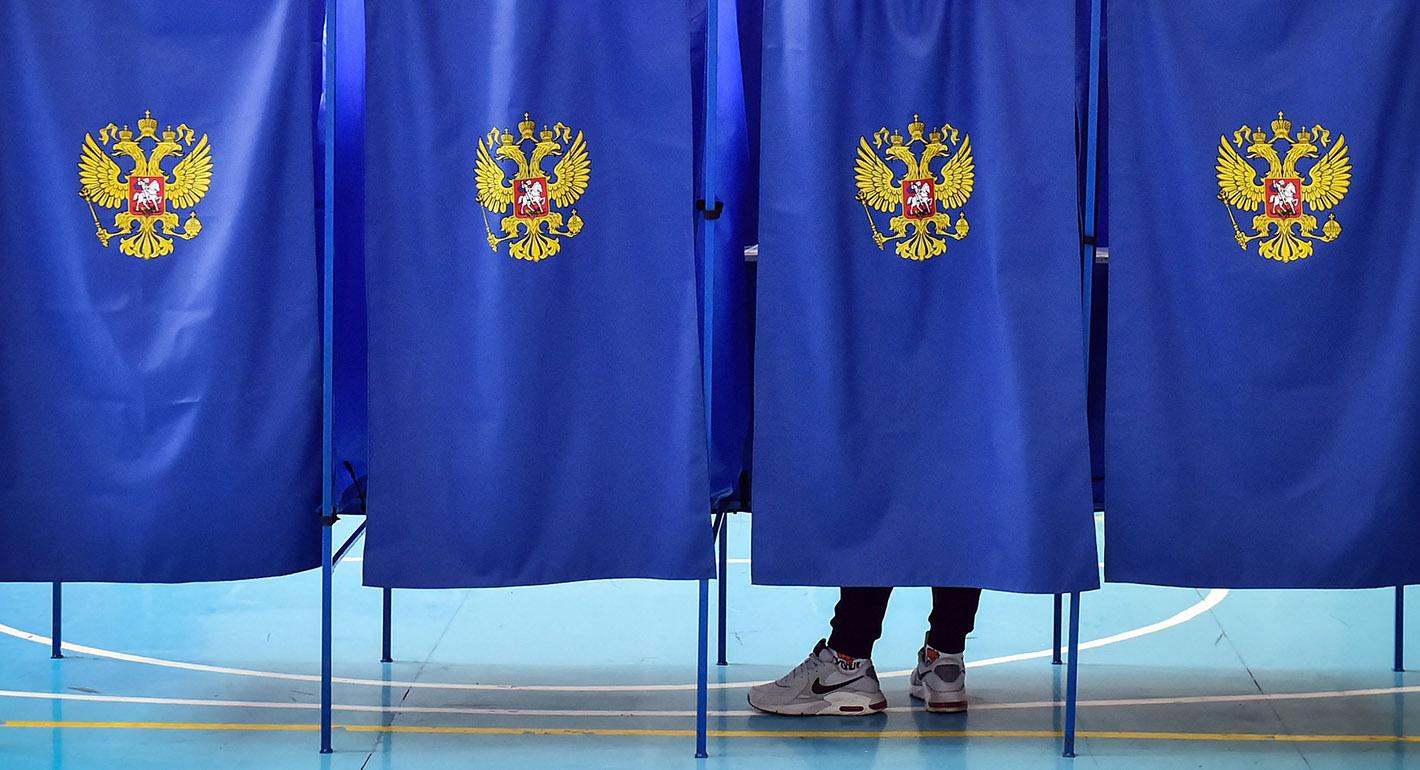
Source: Getty
The Russian political system needs elections. Especially at the regional level, they serve to cultivate loyalty and as an initiation ritual for governors, their aides, and local power brokers.
It is news to no one that elections in Russia are a simulacrum, their results decided in advance by the authorities. Following the invasion of Ukraine, and the resulting rupture in relations between Russia and the West, one might wonder why they are still held at all. With war raging, why not just stop playing at democracy?
Yet Russia continues conducting elections. It has just held votes in most of its regions, and is already preparing for next year’s presidential contest. What drives the government to keep at this is not a desire to pay lip service to Western values. Rather, elections are a crucial ritual without which the country’s modern political system could not function.
As a student in Russia twenty years ago, I was amused to hear it said at a political science conference that voters were “the overlooked factor in elections.” Since then, the Russian government has indeed learned to always take account of the electorate—although this consideration manifests itself in how to get people to the polls and help the regime achieve its desired turnout.
At first glance, this is the essence of elections around the world: to get citizens to vote. But the devil is in the details: namely, in the distinction between convincing and compelling people to take part.
There is no substance to attempts to boost turnout in Russian elections: there are no competing ideas or proposals for how to develop the country. There is no politics, just photo ops and social handouts. This year, only six of the twenty-one governors running for election took part in televised debates, while in Primorye and Kemerovo regions, there were no debates at all.
Indeed, there is not even any electioneering. In Moscow, Mayor Sergey Sobyanin won reelection without campaigning, while in the Siberian city of Irkutsk, the local branch of the ruling United Russia party announced it would donate the funds it would have spent on campaign ads to help those mobilized to fight in Ukraine.
All in all, no one is trying to persuade the electorate of the rightness of this or that idea. Turnout is of far more interest to those involved in Russia’s elections. From giving voters three days to cast their ballots to busing them to the polls, asking employers to ensure staff take part, and even handing out prizes, the authorities spare no expense in their pursuit of the desired turnout.
Critical in this respect is electronic voting. If fewer than 31 percent of Muscovites voted in their city’s mayoral election in 2018, before electronic voting was introduced, today that figure stands at over 40 percent. In the Moscow region, turnout has increased from nearly 40 percent to over 60 percent.
Which voters actually come to the polls—loyalists or dissenters—matters not so much as whether they turn out in sufficient numbers. Once that is achieved, it is easy enough to ensure the right candidates are elected.
To this end, the regime has developed quite the toolkit. In addition to classic tactics of ballot stuffing and carousel voting, it has restricted the number of election monitors, ended the practice of livestreaming vote counts, stopped giving opposition campaigns nonvoting seats on election commissions, and pushed citizens to vote electronically.
All this begs the question: Who needs elections like these? As it happens, the Russian political system does. Especially at the regional level, elections serve an important function: they are an initiation ritual for governors, their aides, and local power brokers.
For governors in particular, elections are an opportunity to demonstrate to the Kremlin that they are in total control of their regions. Any disruption, including opposition from rival elite groups, is taken as a sign of weakness, and as evidence of a governor’s unfitness to rule.
Elections also serve as a reminder to governors that they are beholden to the president, without whom they would not be nominated, supported, or elected. Indeed, President Vladimir Putin was a visible presence in the recent regional elections, attending the unveiling of a highway in the Nizhny Novgorod region and a commuter rail line in Moscow. It is to him that governors appeal in the run-up to elections, seeking financial and other support for major local projects.
At all levels, elections in Russia are an initiation ritual and a test of belonging. One must demonstrate total loyalty to the president and preparedness to play by his rules. Notably, this year, all but two of the acting governors who ran for election did so as United Russia candidates—even Sobyanin, who had in previous election cycles campaigned as an independent.
In addition, all but three acting governors headed United Russia’s candidate lists in their local legislative races: they have learned over the years that part of the job is securing convincing wins for the ruling party’s candidates.
It is not just governors whose loyalty is tested during election season. Under scrutiny, too, are other elites and even some public servants: from federal ministers, CEOs of large companies, and lawmakers to hospital directors, election workers, and those running pro-regime civic groups.
Municipal heads also face immense pressure. Rather than being more independent political actors, they are increasingly zealous in their enforcement of the regional authorities’ demands, aware that a job well done means greater freedom of action after the vote.
With every election won using such dubious procedures, Russian officials and politicians better understand the mechanisms by which the “right” results are delivered. At the same time, loyalty, a cornerstone of Russia’s informal system of administrative power, is consolidated and reproduced. The regime has every reason to keep holding elections, year in, year out.
Ekaterina Kurbangaleeva
Political analyst
Carnegie does not take institutional positions on public policy issues; the views represented herein are those of the author(s) and do not necessarily reflect the views of Carnegie, its staff, or its trustees.

Russian strikes are weakening the economy sustaining Ukraine’s war effort. Closing the growing funding gap will require more European support and politically contentious reforms in Kyiv.

Balázs Jarábik

Ex-president Gurbanguly Berdimuhamedov remains interested in politics, but his son Serdar, Turkmenistan’s current president, is becoming increasingly independent and willing to break with his father’s legacy. If their covert rivalry goes too far, both risk losing power.

Galiya Ibragimova

Despite a new textbook, an influx of Russian teachers and managers, and an end to the teaching of Ukrainian, the Kremlin is unlikely to have “reprogrammed” locals.

Konstantin Skorkin

For every ruble allocated to social policy, health, and education in 2027, double that amount is earmarked for the army, the police, and the security services.

Alexandra Prokopenko

Cargo traffic through Russia’s Northern Sea Route has increased because of the disruption caused by the conflict in the Middle East, the Ukraine war, and U.S.-China tensions.

Mikhail Korostikov