

Commentary
Vladimir Solovyov
{
  "authors": [
    "Vladimir Solovyov"
  ],
  "type": "commentary",
  "blog": "Carnegie Politika",
  "centerAffiliationAll": "",
  "centers": [
    "Carnegie Endowment for International Peace",
    "Carnegie Russia Eurasia Center"
  ],
  "collections": [],
  "englishNewsletterAll": "",
  "nonEnglishNewsletterAll": "",
  "primaryCenter": "Carnegie Russia Eurasia Center",
  "programAffiliation": "",
  "programs": [],
  "projects": [],
  "regions": [
    "Eastern Europe",
    "Moldova"
  ],
  "topics": [
    "Foreign Policy"
  ]
}
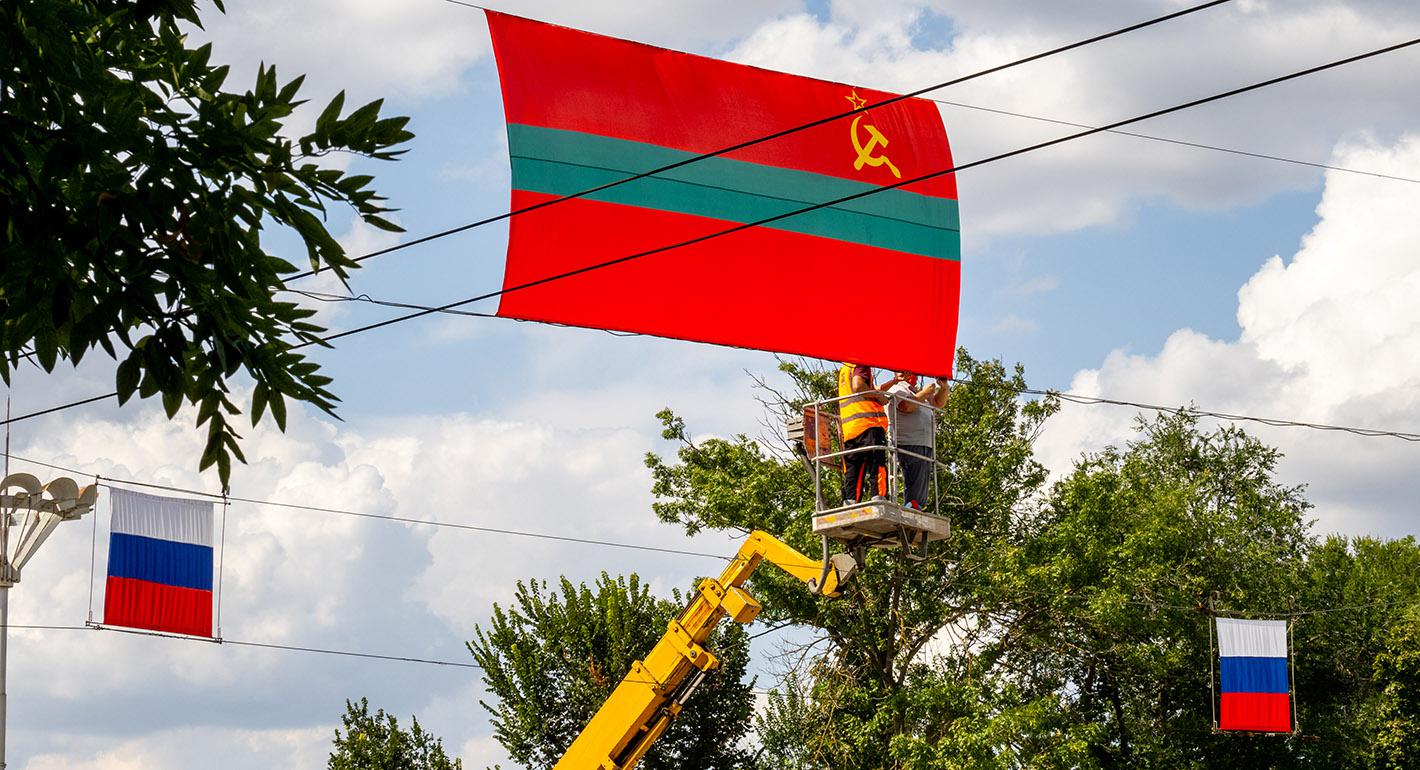
Source: Getty
An extraordinary parliamentary session in Transnistria was a bid to attract international attention and a signal that the de facto state is ready to escalate.
The longer the war in Ukraine continues, the more confident neighboring Moldova’s authorities feel in their long-running conflict with the breakaway state of Transnistria. Moldova is gradually ramping up economic and legal pressure on the unrecognized state, letting it be known it believes this could be the path to a resolution. Of course, there is no guarantee that reunification is achievable, but Chisinau seems to be pushing for this outcome. In response, Tiraspol is shouting from the rooftops—although it’s unclear what resistance it can mount when its main backer, Russia, is bogged down in Ukraine.
An announcement earlier this month by the leader of Transnistria, Vadim Krasnoselsky, that deputies of all levels would meet for an extraordinary Congress session because of “pressure from the Republic of Moldova that is violating the rights and worsening the socio-economic situation of Transnistrians” immediately prompted speculation that Transnistria might seek to become part of the Russian Federation. This was only heightened by the date set for the session: February 28, the day before Russian President Vladimir Putin’s annual state of the nation address.
Such extraordinary sessions are rare: this was the seventh in thirty-four years of Transnistria’s existence. In almost every case, they have resulted in major decisions, including a declaration of independence in 1990, approving the de facto state’s constitution and state symbols in 1991, and appealing to Moscow to recognize their independence in 2006.
In the end, however, lawmakers simply passed a resolution asking Russia’s parliament to “protect” Transnistria against mounting pressure from Moldova.
There had been other indications that the Congress was bound to prove anticlimactic. Previously, when Russia has recognized separatist republics, the political decision has always been made against the backdrop of active fighting and a major propaganda campaign. Nothing like that has been seen in the case of Transnistria, which was always viewed by the Kremlin (and perhaps still is) as a more useful asset without recognition.
Most of the population of Transnistria is considered to be pro-Russian, and if the region were absorbed back into Moldova, it could turn out to be a Russian trojan horse capable of shifting the balance of power in this strategic state on the European Union’s eastern border. But what the people of Transnistria want for themselves is an enigma. Nothing is known about their views because there are no reliable opinion polls. We do know, however, that at the beginning of 2023, over 350,000 Transnistrians were also citizens of Moldova. That is a majority: the population of the unrecognized state is just 475,000.
Why, then, was an extraordinary Congress of Deputies assembled now? Part of the answer was contained in Krasnoselsky’s reference to “pressure from the Republic of Moldova.” What he means is that, for the first time in decades, Chisinau is changing the rules of the game.
The Moldovan parliament passed a law in 2023 that makes “separatism” a criminal offense: potentially applicable to almost any Transnistrian official. No one is known to have been charged, but it has meant that Transnistrian officials, particularly senior ones, have avoided traveling to Moldova proper. Even more importantly, Moldova has changed customs rules so that Transnistrian companies must now pay import and export duties to both Chisinau and Tiraspol.
The Moldovan government’s legislative agenda for 2024 includes plans likely to upset Tiraspol even further, such as banning cars with Transnistrian license plates. In other words, Transnistrian drivers will have to either get Moldovan plates, or some sort of neutral replacement.
Chisinau is often criticized for not having a roadmap for resolving the conflict with Transnistria. But as time goes by, its intentions are becoming clearer. Without making any major public announcements, Chisinau seems determined to show that things can be concluded without negotiations.
Until 2019, negotiations took place in the so-called 5+2 format in which Moldova, Transnistria, Russia, Ukraine, and the Organization for Security and Cooperation in Europe were direct participants, and the United States and the EU had observer status. After Russia’s full-scale invasion of Ukraine, however, all hopes of ever resuming talks in that format evaporated. Kyiv maintains that Moscow no longer has the right to take part. Russia and Transnistria state that there is no alternative to 5+2, and that talks must continue.
Chisinau’s actions are not only causing alarm in Tiraspol, but in Moscow too. “We will do everything to reverse this trend and restart the political process,” Russian Foreign Minister Sergey Lavrov said when asked about the Transnistria situation in February.
Tiraspol, meanwhile, sees Moldova’s actions as nothing less than an attempt to fully absorb the breakaway region. For local officials, such an outcome would mean losing money, power, and—as of last year—possibly their freedom.
Yet there’s not much they can do. Before the war in Ukraine, Tiraspol was able to play Chisinau, Kyiv, and Moscow off against one another. But now, Kyiv and Chisinau are on the same side. The Transnistrian section of the Moldova–Ukraine border has been closed since the start of the war, which means almost all of Transnistria’s imports and exports have to go via Moldova—giving Chisinau and the EU control over its economic flows.
For these reasons, any extreme steps by Tiraspol—such as appealing to Moscow to allow it to join the Russian Federation—could have serious consequences, up to and including a full blockade. It’s also likely that Kyiv would respond to any major change in the status quo (Transnistria is believed to host up to 1,500 Russian troops). If it came to a military confrontation, there is little doubt that Moscow would be unable to come to Tiraspol’s aid. Nor is there any doubt that Tiraspol would be unable to withstand the Ukrainian army.
While Tiraspol likely understands the risks, it cannot sit back and do nothing. There are concerns there that after changing the customs system, Chisinau will start to levy VAT on goods sold in Transnistria and introduce excise duties on tobacco, alcohol, and fuel. After all, the real power in the land lies with whoever collects taxes.
Staging an extraordinary session of the Congress of Deputies that loudly criticized Chisinau and sought support from Moscow might in fact simply be a ploy by Tiraspol to draw international attention to its situation. Equally, Transnistria is trying to demonstrate to Chisinau that, if necessary, it is prepared to escalate. Presidential elections in Moldova are due in the fall, and Moldova’s ruling party would likely prefer to avoid any serious unrest.
Journalist
Recent Work
Vladimir Solovyov
Vladimir Solovyov
Carnegie does not take institutional positions on public policy issues; the views represented herein are those of the author(s) and do not necessarily reflect the views of Carnegie, its staff, or its trustees.

Japan’s long-term security policy is driven by concerns about China, and there is little appetite for (or interest in) pursuing a confrontation with Moscow.

James D.J. Brown

Without a ceasefire with Ukraine on attacking each other’s energy infrastructure—to which the Kremlin is unlikely to agree—the diesel agreement between Putin and Trump is largely for show, rather than representing a genuine increase in the volumes of Russian diesel on the global market.

Sergey Vakulenko

Despite a new textbook, an influx of Russian teachers and managers, and an end to the teaching of Ukrainian, the Kremlin is unlikely to have “reprogrammed” locals.

Konstantin Skorkin

Cargo traffic through Russia’s Northern Sea Route has increased because of the disruption caused by the conflict in the Middle East, the Ukraine war, and U.S.-China tensions.

Mikhail Korostikov

Minsk clearly expected the dialogue with Washington to yield more results, in particular the lifting of EU sanctions and permission to export potash.

Artyom Shraibman