

Commentary
Olesya Vartanyan
{
  "authors": [
    "Olesya Vartanyan"
  ],
  "type": "commentary",
  "blog": "Carnegie Politika",
  "centerAffiliationAll": "",
  "centers": [
    "Carnegie Endowment for International Peace",
    "Carnegie Russia Eurasia Center"
  ],
  "collections": [
    "Aso Tavitian Initiative"
  ],
  "englishNewsletterAll": "",
  "nonEnglishNewsletterAll": "",
  "primaryCenter": "Carnegie Russia Eurasia Center",
  "programAffiliation": "",
  "programs": [],
  "projects": [],
  "regions": [
    "Armenia",
    "Caucasus",
    "Russia",
    "Western Europe"
  ],
  "topics": [
    "EU",
    "EU Foreign Policy",
    "Global Governance",
    "Civil Society"
  ]
}
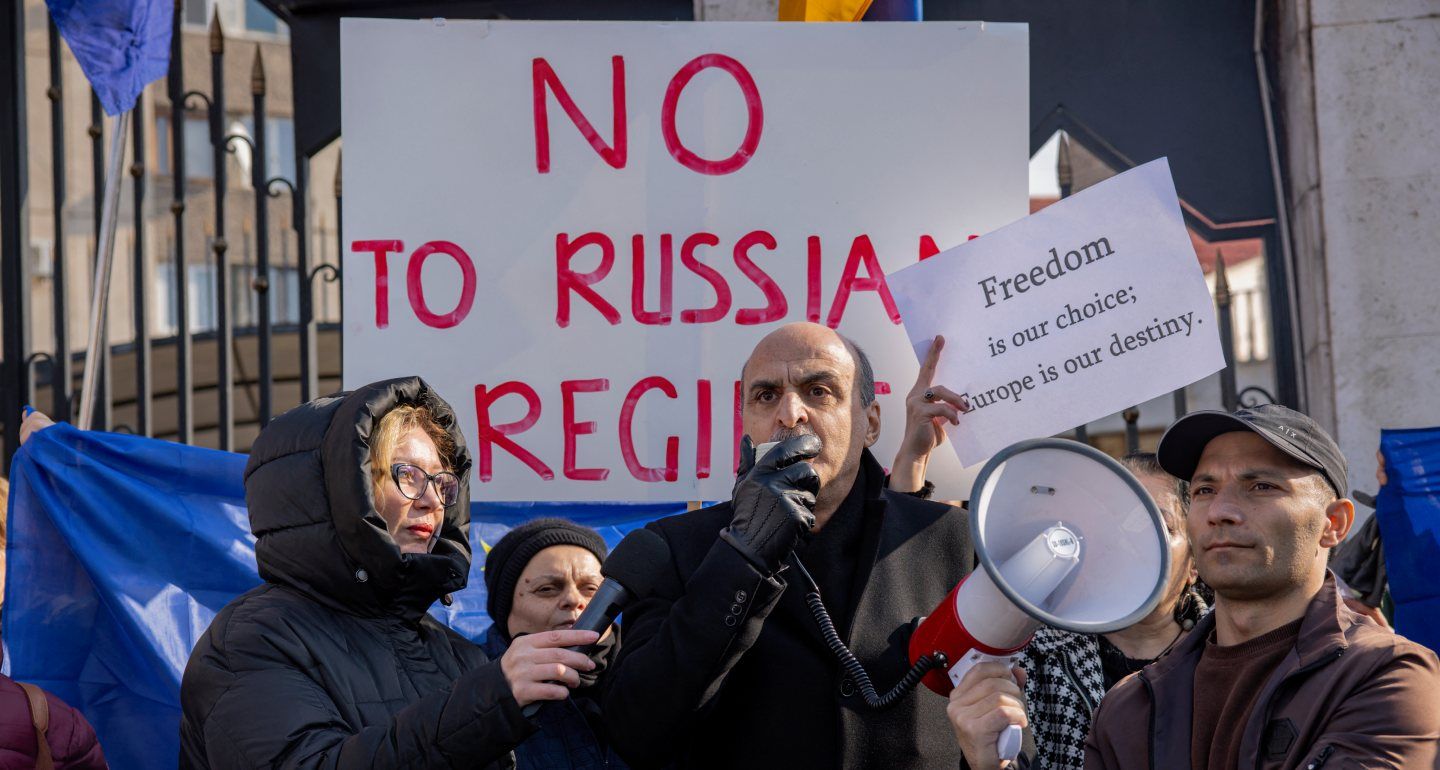
Source: Getty
While Armenia remains formally aligned with Russia, its shift toward the West is becoming increasingly evident.
The deployment of EU observers in 2022 to patrol Armenian regions bordering Azerbaijan, with which it has been in conflict for over three decades, marked a turning point for Armenia and possibly the entire South Caucasus. The Ukraine war, combined with Armenia’s readiness to reassess its foreign policy, has spurred changes to long-standing approaches. Despite Armenia’s ongoing ties to key Russian-led alliances, the West has become open to cooperating on sensitive issues like security and defense. As a result, Armenia has been gradually distancing itself from Moscow, moving closer to the West than at any time since the Soviet Union’s collapse.
Two recent events underscore this shift. In early 2025, Armenia announced the development of a new EU membership law and signed a strategic partnership charter with the United States. While these steps do not sever ties with Moscow, they lay the groundwork for a future where such a break becomes possible.
This reorientation began with Russia’s invasion of Ukraine. In 2022, Armenia grew wary of discussions in Moscow about forming a new political alliance likened to a “new Soviet Union.” Reliant on Russia for both military and economic support, Armenia started seeking connections with the West to safeguard its sovereignty.
Surprisingly, the United States and the EU initially cautioned against abrupt moves. They feared that cutting ties with Moscow could collapse Armenia’s economy, disrupt its access to cheap natural gas, and even provoke war with Azerbaijan. Instead, Western partners provided gradual support to strengthen Armenia’s independence, making any future separation from Russia less disruptive.
Armenia’s growing ties with the West have drawn close scrutiny from its neighbors. Armenian officials frequently visited Tehran to address potential concerns before embarking on any significant steps toward the West, but attempts to engage Moscow similarly have largely failed, provoking hostile statements and inflammatory talk shows on Russian propaganda channels.
Over time, however, Moscow’s tone has softened. After Yerevan announced its new EU law, Russian Deputy Prime Minister Alexei Overchuk dismissed the prospect of Armenia joining the EU as “hypothetical,” emphasizing the economic losses the country would face by leaving the Russia-led Eurasian Economic Union. Following the U.S.-Armenia strategic charter, Russian Foreign Minister Sergey Lavrov urged patience, stating that actions speak louder than titles.
Russia’s subdued response reflects its preoccupation with the war in Ukraine, which has diverted its attention from its other neighbors. Where Moscow once dictated terms, it now finds itself negotiating. “If only we could have imagined such things were possible [in relations with Russia],” remarked one former Armenian leader in a private conversation.
Armenia has capitalized on Russia’s state of distraction, refusing to support its invasion of Ukraine and calling for the partial withdrawal of Russian troops from Armenian territory. Over the past year, Russian flags have been lowered at border guard positions near Azerbaijan, Iran, and Yerevan’s main airport. Last year, Armenian Prime Minister Nikol Pashinyan said his country had frozen its participation in the Russian-led Collective Security Treaty Organization (CSTO), jeopardizing Moscow’s centuries-old military foothold in the region.
Remarkably, Armenia has even begun dictating terms in some areas. Over the past three years, it has become a vital hub for reexporting goods and technology to sanctioned Russia. Armenian officials report that their Russian counterparts have sought Yerevan’s cooperation in maintaining these supply routes. “Maybe this can help us reconnect with the world,” an Armenian deputy minister quoted a Russian official as saying in a private conversation.
Armenia’s attempts to strengthen Western ties have already yielded significant results. Over the past three years, it has secured affordable loans for infrastructure projects, initiatives for energy independence, and even defense support. In addition to its mission of observers, the EU has launched a visa liberalization process and allocated funds through its Peace Facility to enhance Armenia’s security. Such achievements were unimaginable just a few years ago.
But Armenian leaders are aiming higher, with their ultimate goal being EU integration. In 2023, Pashinyan pledged to align Armenia with Europe as closely as Europe would allow. Yet Brussels has not responded with concrete political commitments, citing its existing enlargement priorities with Ukraine and Moldova.
Armenian officials remain persistent and appear to be willing to wait. Inspired by Moldova’s announcement of a referendum to enshrine its EU bid in its constitution, they began gathering signatures for a similar initiative. The process stalled due to Azerbaijan’s demand to remove references to Nagorno-Karabakh from Armenia’s constitution: a step Yerevan is not yet prepared to take.
The proposed EU membership law could help Armenia mobilize its bureaucracy for genuine reforms. Lessons from other post-Soviet states reveal that successful engagement with the EU depends on aligning domestic legislation with European standards. For Armenia, this poses a considerable challenge, given its inefficient bureaucracy, which has hampered many reform initiatives and contributed to declining government popularity.
To address these issues, Pashinyan has taken a proactive approach. He frequently inspects construction projects, publicly reprimands ministers for minor infractions, and has adopted a more approachable persona: riding a bike, joining TikTok, and launching a video blog with his wife. In November, he shaved the beard he had worn since the 2018 Velvet Revolution that propelled him to power, and dismissed several ministers, signaling a new phase in his leadership.
While the prospect of EU membership remains a distant goal, the proposed law could still drive significant institutional reform in Armenia. Aligning domestic laws with European standards may enhance critical sectors and promote a more stable and efficient governance framework. If locally developed reforms have often fallen short, perhaps following the EU-led path could finally help Armenia achieve results.

Conflict analyst in the South Caucasus, specializing in security, peace processes, and foreign policy.
Recent Work
Olesya Vartanyan
Olesya Vartanyan
Carnegie does not take institutional positions on public policy issues; the views represented herein are those of the author(s) and do not necessarily reflect the views of Carnegie, its staff, or its trustees.

Russia’s ruling party would have benefited from Putin appearing as its distant patron, but as an active frontman imposing his views on the public, he has done nothing but harm both the party’s election campaign and the ruling system overall.

Andrey Pertsev

Depleted financial reserves and a shrinking tax base mean it is no longer possible to simultaneously deliver high defense spending, price stability, and economic growth.

Alexandra Prokopenko
Blurring the line between humans and animals is a long-standing tradition in social utopian prose. In his latest novel, Leonid Bershidsky reminds us that in social experiments, people are often treated no differently than animals.

Alexander Baunov
While France and Australia are seeking to establish the legal obligations of messaging apps like Telegram, Russia wants total subordination.

Maria Kolomychenko
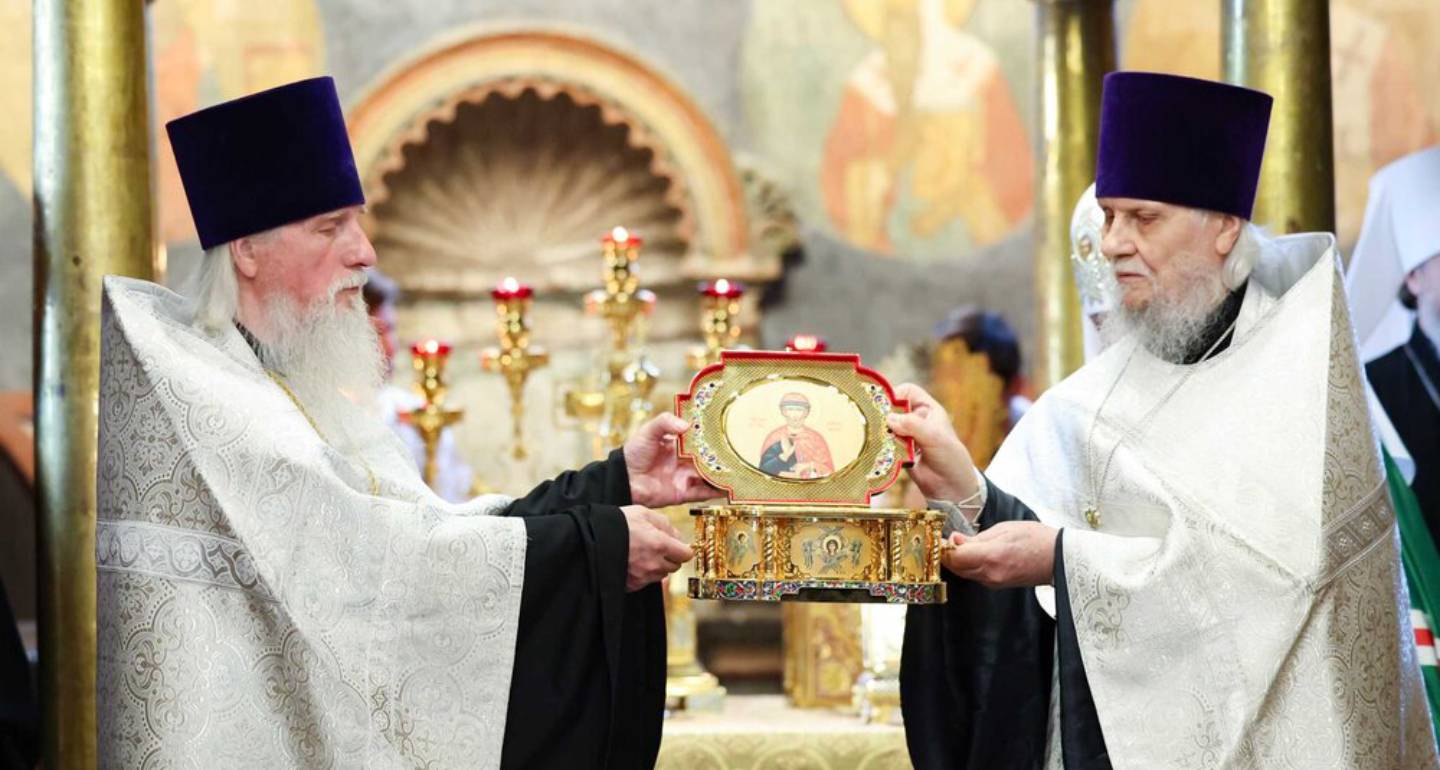
The recent uncovering of Dmitry Donskoy’s relics in the Cathedral of the Archangel is yet another attempt by the Russian Orthodox Church to help the state solve its problems. However, parroting the state’s version of Russian history leaves the Church with no message except “patriotism.”
Alexander Zanemonets