

Commentary
Nikita Smagin
{
  "authors": [
    "Nikita Smagin"
  ],
  "type": "commentary",
  "blog": "Carnegie Politika",
  "centerAffiliationAll": "",
  "centers": [
    "Carnegie Endowment for International Peace",
    "Carnegie Russia Eurasia Center"
  ],
  "englishNewsletterAll": "",
  "nonEnglishNewsletterAll": "",
  "primaryCenter": "Carnegie Russia Eurasia Center",
  "programAffiliation": "",
  "regions": [
    "Russia",
    "Iran",
    "United States"
  ],
  "topics": [
    "Security",
    "Foreign Policy",
    "Defense",
    "Military"
  ]
}
Source: Getty
Arms supplies from Russia to Iran will not only continue, but could grow significantly if Russia gets the opportunity.
While the United States and Israel are starting another military intervention against Iran, Russia is increasing arms supplies to the isolated Islamic nation—despite its own ongoing war with Ukraine. Tehran is already in possession of Russian trainer jets, attack helicopters, armored vehicles, and small arms. Now the two countries have signed another major deal, according to the Financial Times, under which Russia will supply Iran with Verba man-portable air defense systems (MANPADS) worth 500 million euros.
Despite the growing scale of the cooperation in military technology, these arms shipments are still unlikely to be able to protect Iran from U.S. or Israeli air strikes. What’s far more likely is that Russian weapons will continue to be used by Iran to suppress protests.
Despite all the interest in the new deal to purchase Russian MANPADS, its impact on the current tensions surrounding Iran should not be overstated. These are weapons with limited functionality. The Verba shoulder-fired missiles can hit low-altitude aircraft: airplanes, helicopters, and cruise missiles. In other words, they will only come in useful for targets that are located directly over Iranian territory and are not very high above the ground—meaning they are unlikely to be used to counter U.S. or Israeli strikes.
During their previous strikes against Iranian targets, including the twelve-day war last June, nearly all the missiles were launched not from over Iran, but from over neighboring Iraq, to reduce the likelihood of a retaliatory strike. The American B-2 bombers that hit nuclear facilities at that time flew at altitudes beyond the reach of even more advanced missile defense systems. The United States and Israel will likely repeat this approach in order to minimize potential damage.
In other words, the Russian systems are designed for a completely different type of combat. At most, they could be used by Iranian proxies in other parts of the Middle East, where they can get closer to U.S. military bases. Even then, however, the drones Iran already has at its disposal pose a more serious threat.
In all likelihood, Russia decided to furnish the Iranians with the Verba MANPADS precisely because they are not particularly in demand in modern warfare. Alongside all the other limitations, they are unsuitable for repelling drone attacks, meaning their sale will have no impact on Moscow’s combat operations in Ukraine.
The MANPADS deal also looks fairly modest compared with other contracts for military technology signed between Iran and Russia in recent years. Agreements to purchase Russian Su-35 fighter jets and Mi-28 attack helicopters signed in 2022 and 2023 were far more significant, both in terms of cost and actual impact.
Still, the supply of a new type of weapon is nonetheless important as a sign of the growing military rapprochement between Russia and Iran. Iran is seeking to acquire a diverse range of as many weapons as possible that could in any way strengthen its air defenses. Russia is prepared to assist it in this endeavor—to the best of its current capabilities.
The Verba MANPADS are not scheduled to be delivered to Iran until 2027–2029. There is plenty of evidence, however, that Moscow is already supplying Tehran with new weapons, some of which are already in use.
In 2023, for example, Tehran received its first Yak-130 trainer jets from Moscow, which Iranian pilots have been using for the past two years. It would appear that more of these aircraft were delivered in 2025: an An-124 military transport aircraft made at least four flights last year to Tehran from Irkutsk, where the Yak-130 is produced. In addition, new details emerged last fall about the contract to supply Su-35 fighter jets: forty-eight aircraft are to be delivered by Russia in 2026–2028.
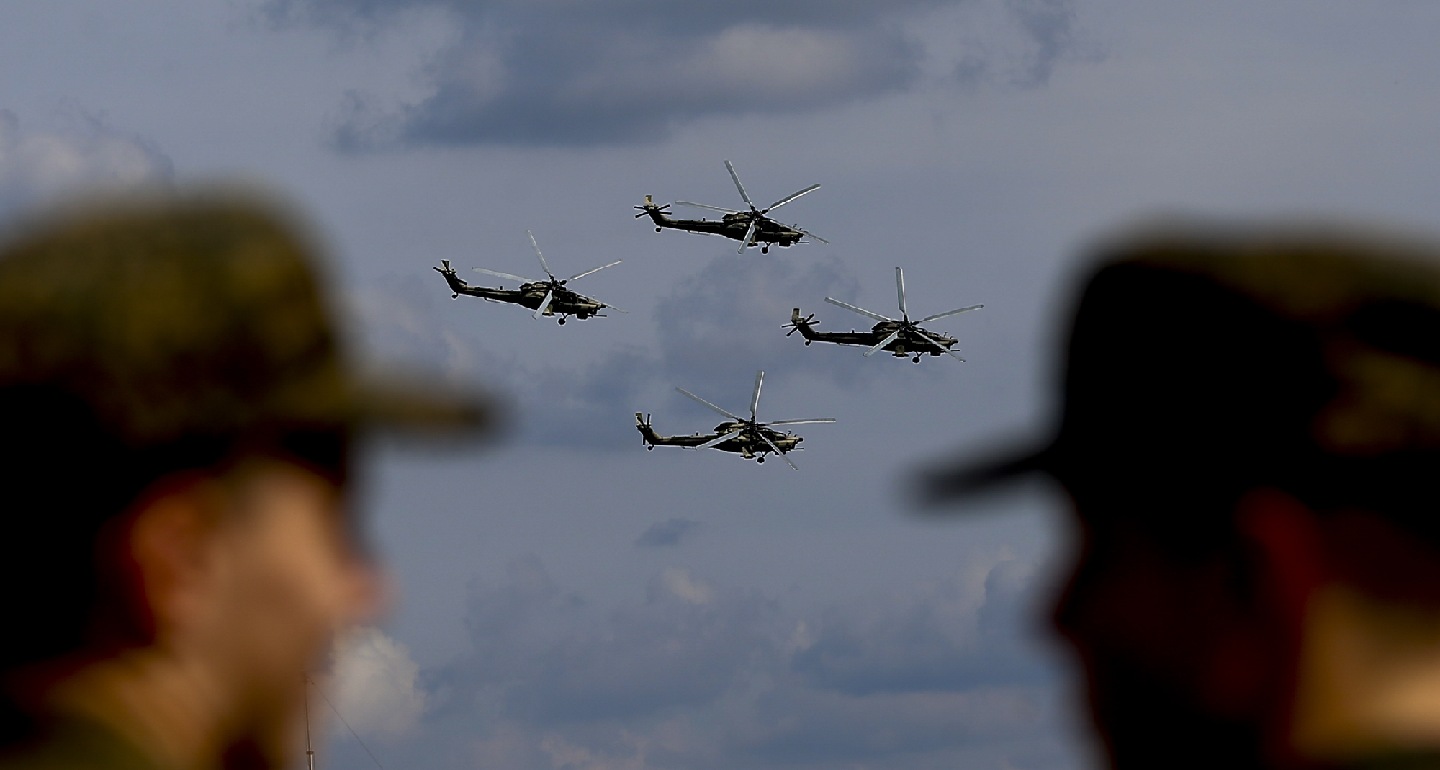
In January 2026, evidence surfaced that Iran was also in possession of up to six Russian Mi-28 attack helicopters, which Iranian pilots already appear to be mastering in the skies over Tehran. That is significant, given the doubts expressed by military experts over Russia’s readiness to supply Iran with such hardware. The Mi-28 is currently in active use by Moscow in military operations against Ukraine, resulting in increased domestic demand for it. Yet the Kremlin still agreed to send the helicopters to Iran, demonstrating its willingness to accommodate Tehran and prioritize certain orders.
It’s also telling that most of the information about Russian arms supplies to Iran comes from photographs and videos taken in the Islamic country itself. Last February, for example, a large number of Russian Orsis T-5000M sniper rifles were on show during Islamic Revolutionary Guard Corps military exercises. Neither Russia nor Iran had reported any such contracts, nor had there been any media reports on the subject.
Similarly, Russian Spartak armored vehicles began appearing in footage from Iran in late 2024, though no information about their export had been released through either official sources or media leaks. Judging by videos on social media, Tehran has received dozens of the armored vehicles from Moscow and has already used them to suppress the January protests.
Russia and Iran are apparently managing to keep a significant chunk of their agreements over military technology secret, which only adds to the intrigue surrounding the intensive military transport flights from Russia and Belarus to Iran over the past two months. At least six flights landed in Iran in February alone, and several more in December and January.
This can be partially but not fully explained by the delivery of the first Mi-28s. Russia may also be supplying Iran with parts for Su-35 aircraft, S-300 missile systems damaged during the twelve-day war, electronic warfare systems, or other items. For now, however, this is mostly speculation, which will only be confirmed as new visual data emerges from Iranian exercises, parades, or military operations.
Still, despite Iran’s efforts to expedite the acquisition of new types of weapons, Russian supplies—while growing—are insufficient to significantly alter the current balance of power. At best, they will prove useful in suppressing any further protests or uprisings.
At the same time, the very fact that cooperation over military technology between the two countries is growing indicates that Moscow still has serious plans for Iran. Accordingly, Russian arms supplies to Iran will not only not dry up any time soon, but could increase significantly if Russia has the opportunity. Right now, the Kremlin is too preoccupied with the war in Ukraine and has no intention of saving Tehran from U.S. and Israeli attacks. But there may come a time when the Kremlin’s calculations and priorities change. The Iranian protesters forcibly dispersed by Spartak armored vehicles have seen firsthand the reality of Russia’s influence in their country.

Expert on Iranian foreign and domestic policies, Islamism, and Russia's policy in the Middle East
Recent Work
Nikita Smagin
Nikita Smagin
Carnegie does not take institutional positions on public policy issues; the views represented herein are those of the author(s) and do not necessarily reflect the views of Carnegie, its staff, or its trustees.

Ongoing uncertainty in the Middle East allows Moscow to both increase its influence in Tehran and continue to enjoy the financial windfall of higher oil prices.
Nikita Smagin

The Russian leadership wants to avoid a dangerous precedent in which it is squeezed out of Iran by the United States and Israel—and left powerless to respond in any meaningful way.
Nikita Smagin
The future trajectory of the U.S.-Iran war remains uncertain, but its impact on global energy trade flows and ties will be far-reaching. Moscow is likely to become a key beneficiary of these changes; the crisis in the Gulf also strengthens Russia’s hand in its relationships with China and India, where advantages might prove more durable.

Sergey Vakulenko
The Kremlin expects to not only profit from rising fertilizer prices but also exact revenge for the collapse of the 2023 grain deal.

Alexandra Prokopenko
Most of Moscow’s military resources are tied up in Ukraine, while Beijing’s foreign policy prioritizes economic ties and avoids direct conflict.


Alexander Gabuev, Temur Umarov