

Commentary
Arkady Moshes
{
  "authors": [
    "Arkady Moshes"
  ],
  "type": "commentary",
  "blog": "Carnegie Politika",
  "centerAffiliationAll": "",
  "centers": [
    "Carnegie Endowment for International Peace",
    "Carnegie Russia Eurasia Center"
  ],
  "englishNewsletterAll": "",
  "nonEnglishNewsletterAll": "",
  "primaryCenter": "Carnegie Russia Eurasia Center",
  "programAffiliation": "",
  "regions": [
    "Russia",
    "Europe"
  ],
  "topics": [
    "Defense",
    "NATO",
    "Security",
    "EU Foreign Policy"
  ]
}
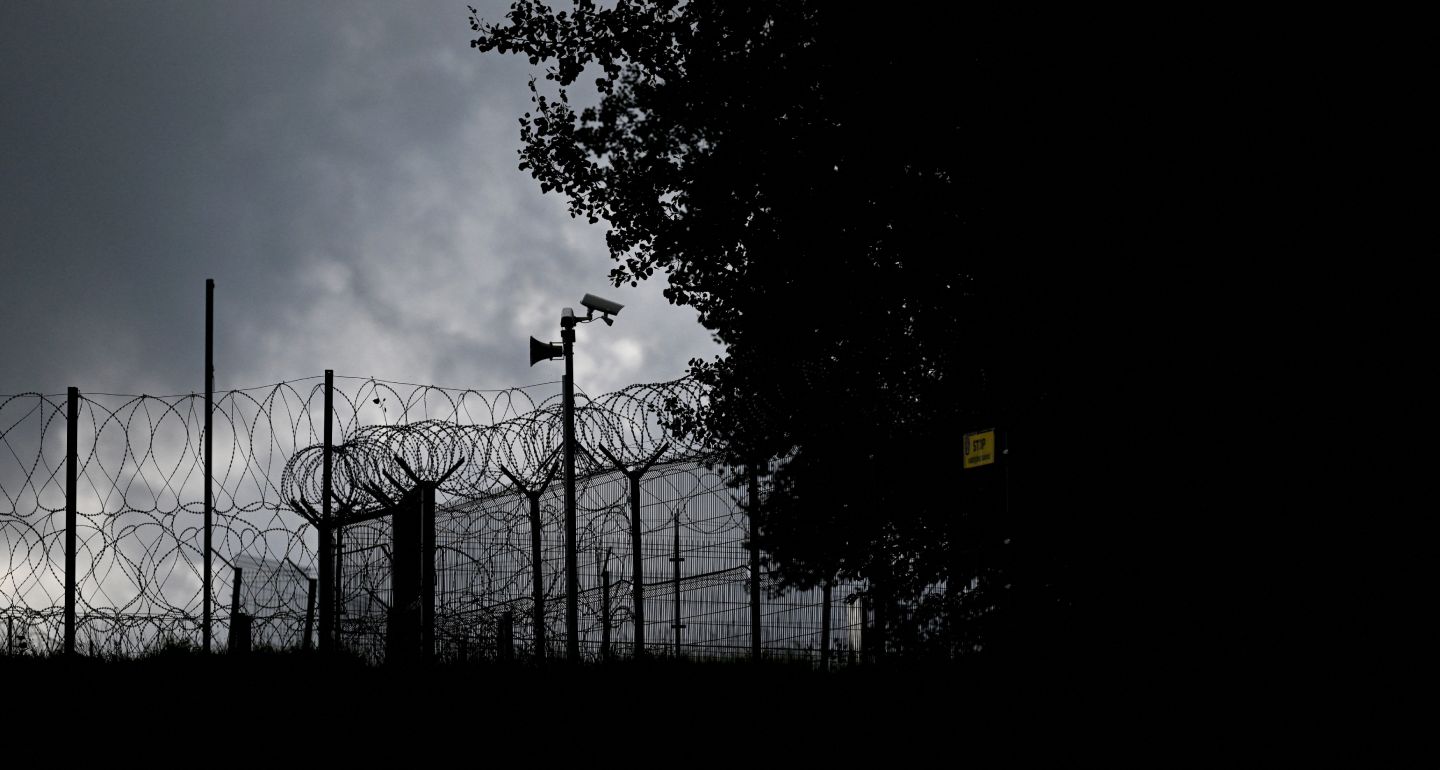
Фото: Getty Images
The truth of the strategic situation is that Europe and Russia are extremely unlikely to be able to “turn the page” on their confrontation within the next two decades.
Despite ongoing discussions about the future of Russian-European relations and calls in Europe to relaunch a dialogue with Moscow, there is no realistic chance of a diplomatic reset. Elected officials have the right to take whatever public position they deem best, but the expert analysis informing policymaking should be unequivocal. As of now, there is only one conceivable scenario in the medium to long term: political conflict with the risk of a direct military standoff.
All the details cannot be predicted, of course. But the drone incident at Leipzig airport in August and the seizure of French and Swiss assets in Russia in September show that the relationship continues to deteriorate.
On what terms could Russia’s war in Ukraine come to an end? What shape will the Russian and Ukrainian economies find themselves in at that moment? Is Europe prepared to keep funding Ukraine’s military effort and economic reconstruction, or will that become untenable amid the rise of populism, residual wishful thinking vis-à-vis Russia, and “Ukraine fatigue”?
If Russia does not achieve its goals before a ceasefire, will it immediately start preparing for new hostilities and/or looking for compensation elsewhere, likely in the post-Soviet space? How will Europe react? If Moscow considers itself to be victorious, will it become even more assertive toward its neighbors? At this point, will Russia still be ruled by President Vladimir Putin, or will a post-Putin regime be in place?
The answers to all these questions are important. But the endless permutations should not cause analysts to miss the broader strategic picture: Europe and Russia will not be able to “turn the page” on their current confrontation in the next twenty years.
While the full psychological impact of the war in Ukraine on European society is difficult to gauge, the conflict is the first large-scale “hot war” in Europe for three generations, which has already resulted in substantial material losses for ordinary people. Even though most Europeans live far from the battlefields, they nevertheless pay high energy prices, suffer the negative effects on businesses related to trade and tourism, and fund the commitments of their national governments to Ukraine and Ukrainian refugees. The longer the war lasts, the greater their losses.
Europeans are unlikely to agree to simply forget such a negative experience. And they expect a peace deal that guarantees the fighting won’t restart (especially if European tripwire forces are deployed to Ukraine) and that obliges Russia to pay Ukraine’s reconstruction costs (given that Europe controls billions of dollars of frozen Russian assets). Calls for the aggressor to face justice will seriously limit the freedom of maneuver of those Western policymakers who might be inclined to go relatively easy on Russia in the name of peace.
However, this reckoning is extremely unlikely to happen. Regardless of whether Ukraine loses more territory or manages to reconquer what it has lost, Russia will not agree to be treated as a defeated nation. It will not be occupied. Ukrainian banners will not be raised over the Kremlin. The Russian military will still be a formidable fighting force, and Russia will remain a nuclear power.
As concerns Europe, Central European countries—with all their historical grievances against Russia—will play a major role in any talks (unlike the negotiations about ending the Cold War in 1991). Other European capitals will see this as fair because there is far more at stake for frontline states when it comes to “getting Russia right” and because their warnings were not heeded prior to the full-scale invasion of Ukraine. While the division between “old” and “new” members of the European Union and NATO has not been fully overcome, publicly denying the right of “new members” to influence decisionmaking (as, for example, France’s then president Jacques Chirac did ahead of the invasion of Iraq in 2003) is now politically unthinkable.
Like every large organization, the EU suffers from enormous inertia. Between 2022 and 2024, that delayed long-overdue decisions to embark on fundamental defense and procurement reform. However, once these processes gain the necessary momentum, it will be cheaper to complete them than to abort. The Kremlin is aware that an arms race played a significant role in the demise of the Soviet Union, and would like to avoid a repeat. But it may not have a choice: If it refuses to engage, the military balance will quickly change to Russia’s disadvantage.
Another fundamental shift has been the end of Europe’s reliance on Russian energy. Europe paid dearly for its prewar belief in “interdependence,” but now that this has largely been overcome, Russia has much less leverage—both when it comes to pressuring European capitals, and bribing individual businesspeople and politicians.
The economic sanctions that the EU imposed on Russia are not likely to be lifted anytime soon. That will negatively affect the capacity of Russian markets (once very attractive for Europeans), limiting investment and technology transfer.
There may be some in the European business community interested in economic reengagement, but the majority will tread very carefully. It might take decades before trust in Russia as an economic partner can be restored. In the meantime, European businesses will not be lobbying their respective governments to wind down the conflict, as most of their losses are already on the books.
On the global stage, Russian-European relations are no longer a bilateral affair, but an element of a trilateral construct including China, which has benefited enormously from Russia’s rift with the West. In exchange for economic and diplomatic support, Moscow has allowed China to dominate certain segments of its economy, such as the automobile industry, and obtain a monopsony over new gas exports.
In geopolitical terms, China has detected and studied the weaknesses in the Western response to Russia’s war, which may later inform its own decisionmaking (in regard to Taiwan and elsewhere). Generally speaking, as long as the Ukraine war is a challenge for the West and consumes Western resources, China has an interest in ensuring it continues.
Finally, there is no reason to presume that Russia will be willing—or able—to break free from the conflict. Some sociologists argue that Russian society is increasingly consumed by war fatigue. This is not a consensus view and, even if true, does not mean the emergence of an anti-war movement. According to the Levada Center pollster, as of July 2026, as many as 56 percent of Russians wanted to end the war through military escalation that would force Kyiv to capitulate.
At the same time, repression in Russia is at a level not seen since the time of Stalin, and that has systemic consequences. Since the end of the conflict with the West could undermine the omnipotence of the Russian security services, they will do their utmost to preserve the current situation.
In these circumstances, the emergence of a new Mikhail Gorbachev in Russia who would seek to halt the standoff with the West is simply impossible. It’s worth remembering that while Gorbachev was well received in Western countries, his failure to communicate domestically was a factor in his eventual downfall.
Today, it would be even easier to derail any initiative to make a peace deal with the West. It would suffice to ask a prospective Russian leader: “Who does Crimea belong to?” If the answer were “Russia,” negotiations with the West would be stillborn. If the answer were “Ukraine,” his or her political appeal inside Russia would collapse.
If the above analysis is correct, there are only two scenarios for European-Russian relations worth considering (or, more accurately, one and a half). One is the continuation of current trends. With or without Putin, Russia and Europe remain locked in confrontation, imposing economic sanctions and conducting hybrid attacks. “Besieged fortress” rhetoric will help Russian rulers to stay in power. Russia will miss out on economic and international opportunities, and Europe will also suffer.
Unfortunately, this is the most plausible scenario. The other “half” scenario is very much hypothetical. It sees the emergence of a Russian regime that would be willing to end the confrontation, but—due to the obvious political risks—would play for time. The visibility of conflict would be preserved and conflict rhetoric continued, but de-escalation would occur on the ground.
This would require political skill and brinkmanship from the Kremlin—as well as Europe agreeing to play along in a simulation of conflict. And if it could be sustained, it might prove possible to reestablish mutual trust and implement some joint economic projects, paving the way for a certain normalization in relations. But it is more likely this approach would fail.
Director for the Russia, Eastern Europe, and Eurasia research program at the Finnish Institute of International Affairs, Helsinki.
Recent Work
Arkady Moshes
Arkady Moshes
Russia spent years building a “sovereign internet,” concentrating web infrastructure exclusively within Russian territory. Ukrainian drone attacks have shown how vulnerable that approach has left the Russian internet.

Maria Kolomychenko
Putin’s conservative staffing policies and search for ever greater control have cemented parliament’s transformation into a bureaucratic appendage of the executive branch.
Andrey Pertsev

Russia’s AI-driven propaganda campaigns operate in a fragmented, chaotic, and often illogical manner. That’s not necessarily a problem for the Kremlin, though: It’s much easier to mimic genuine public debate that way.
Ilya Klishin
Russian strikes are weakening the economy sustaining Ukraine’s war effort. Closing the growing funding gap will require more European support and politically contentious reforms in Kyiv.
Balázs Jarábik
Despite a new textbook, an influx of Russian teachers and managers, and an end to the teaching of Ukrainian, the Kremlin is unlikely to have “reprogrammed” locals.
Konstantin Skorkin