

Commentary
This year’s wars have made alternative routes to transit through Russia no less risky for Central Asian countries.
Galiya Ibragimova
{
  "authors": [
    "Jamie Metzl"
  ],
  "type": "legacyinthemedia",
  "centerAffiliationAll": "",
  "centers": [
    "Carnegie Endowment for International Peace"
  ],
  "collections": [],
  "englishNewsletterAll": "",
  "nonEnglishNewsletterAll": "",
  "primaryCenter": "Carnegie Endowment for International Peace",
  "programAffiliation": "",
  "programs": [],
  "projects": [],
  "regions": [],
  "topics": [
    "Foreign Policy"
  ]
}
REQUIRED IMAGE
Source: Carnegie
Reprinted with permission from iMP Magazine, July 2001
A spate of high profile incidents of espionage over recent years, including the Robert Hanssen, Aldrich Ames and John Walker cases, has rightly concerned many Americans about the sanctity of official secrets. But although dangerous breaches such as these demand a crackdown on imperfect security practices, changes in the global information and communications environment make it more important than ever before that all government agencies, including the FBI, CIA and State Department, learn to operate in an open and transparent manner. In a world increasingly influenced by interactive mass media, the overall benefits of greater openness far outweigh the very serious cost of these high profile lapses. This will only become more true to 2015 and beyond, as the information revolution continues to influence the development of global consciousness and public participation in affairs of state. The U.S. government must find a more appropriate balance between vigorously protecting a limited field of state secrets and fostering a culture of public accountability, transparency and openness appropriate for a networked information age.
Information is power, and governments have always safeguarded their own secrets and sought to uncover those of competing states. In the United States, the 1917 Espionage Act, the 1947 National Security Act and a host of Executive Orders have tightened a secrecy regime inspired by the challenges of two world wars, the Cold War and the nuclear arms race. The bureaucratic structures put in place to ensure high levels of official secrecy have also spawned a government culture of excessive secrecy.
Secrecy and compartmentalized information by definition hamper internal government and public discussion and debate. Because standards for classification are not clearly articulated by statute, and because institutional prudence encourages officials to over-classify materials, the torrent of classified materials continues. In 1999 alone, an estimated eight million new secrets were classified, a ten percent increase the previous year.
These high levels of secrecy have become a national liability in the information age. With massive amounts of relevant information on most topics now available on the Internet and elsewhere, relevance does not come from hoarding information. Instead, it comes from developing and identifying appropriate filters to sort through masses of data, and by building relationships with those, often outside of government, who have the most immediate access to relevant information.
Although extensive official secrecy was empowering when governments had more information than non-governmental actors, it now often amplifies intelligence shortfalls and prevents governments from partnering with and fully engaging non-state actors in open knowledge networks. In a networked information environment, we can learn more by developing close and cooperative links with the thousands of non-governmental organizations (NGOs) operating throughout Africa, for example, than by relying on a small number of political and intelligence officers reporting from African capitals. The secrecy that interferes with developing these types of relationships harms critical public outreach and makes government agencies less able to attract young people and private-sector specialists who live, work and breathe in open and free communications environment.
Thinking differently about official secrecy will require a long overdue shift in the way the U.S. government views itself and understands the source of its global power. Openness is a key element of national power and influence in an information age. A nation's foreign policy is today played out on every level of society. Cities, states, NGOs, corporations, private associations, global news organizations and others have multiple contacts around the globe and interact with increasingly sophisticated foreign counterparts. A nation?s ability to promote its values and policies and the relevance of its institutions now rests on government participation alongside such actors in a multi-dimensional global dialogue. As one voice among many, governments that maintain transparent processes and carefully explain and justify their actions to these domestic and foreign constituencies will be far more able to advance policies and principles than those who do not. Excessive secrecy harms the national interest of the United States as much as compromised secrecy.
Initial steps have been taken to address this problem. Following a series of high-level studies and commissions on over-classification, the Public Interest Declassification Act now before the Senate calls for the establishment of a board to advise the President on declassification issues. This important but pedestrian legislation replaces the abandoned and more ambitious Government Secrecy Act of 1997, which had called for a new federal statute on document classification and a national declassification center to streamline the declassification process. Ambitious measures such as those in the 1997 act will be needed to transform a government culture of secrecy to a culture of openness, with clearly articulated, limited areas where secrecy is appropriate and necessary.
As long as rogue nations seek to build nuclear, chemical and biological weapons, terrorist groups plan deadly attacks and international criminal organization construct global crime networks, America will still need to define and protect essential secrets and severely punish those who compromise secret materials. A more focused classification system would allow for a stronger but limited protective system based on clear statutory guidelines.
As we protect legitimate secrets, however, we must remember that a culture of secrecy hampers our overall interests far more than a more open system. Only by building a narrow classification system that defines a limited field of materials for classification can we begin to discuss official secrecy in the context of our overriding national interest in a more open, transparent and popularly interactive government. The U.S. government must shed all but the most critical secrecy components of its post-War architecture and institutional culture if its foreign policy institutions are to maintain their relevance in a networked world.
Former Visiting Scholar
Jamie F. Metzl was a visiting scholar in the Project on the Information Revolution and World Politics at the Carnegie Endowment for International Peace. He has served as Senior Advisor for Information Technology, Senior Advisor to the Under Secretary for Public Diplomacy and Public Affairs, and Senior Coordinator for International Public Information at the U.S. Department of State.
Carnegie does not take institutional positions on public policy issues; the views represented herein are those of the author(s) and do not necessarily reflect the views of Carnegie, its staff, or its trustees.

This year’s wars have made alternative routes to transit through Russia no less risky for Central Asian countries.

Galiya Ibragimova

Reestablishing a dialogue with Moscow is not a goal in its own right. The goal is to guarantee the independence of Ukraine and the peace and security of Europe.
Arkady Moshes
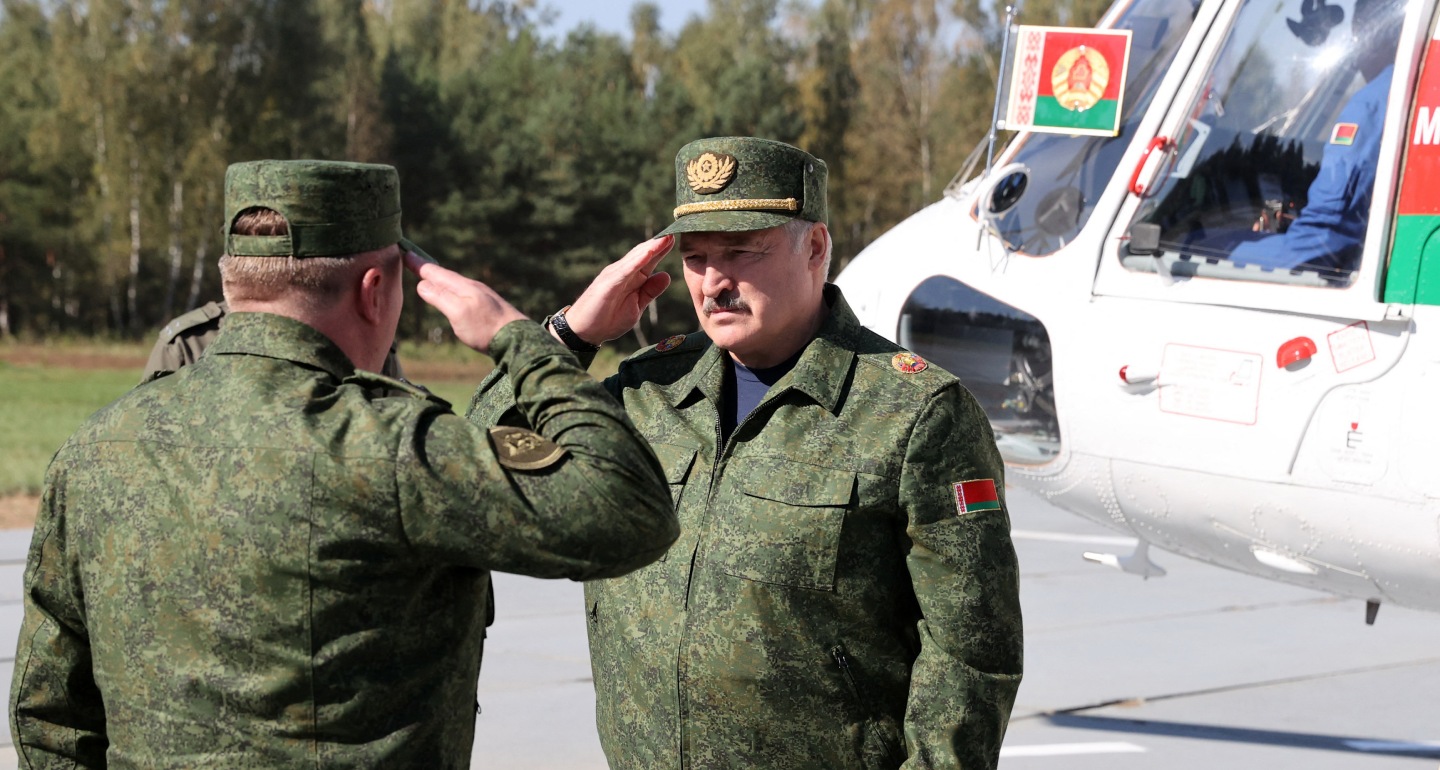
Ukraine’s increasingly confrontational posture on Belarus reflects Kyiv’s effort to shape the emerging regional order in Eastern Europe. Kyiv wants to limit European normalization with Minsk—and any future rapprochement with Russia.

Balázs Jarábik

By fueling the arguments of both supporters and opponents of Armenian Prime Minister Nikol Pashinyan, Azerbaijan wants to ensure he is re-elected with a weaker mandate.

Bashir Kitachaev
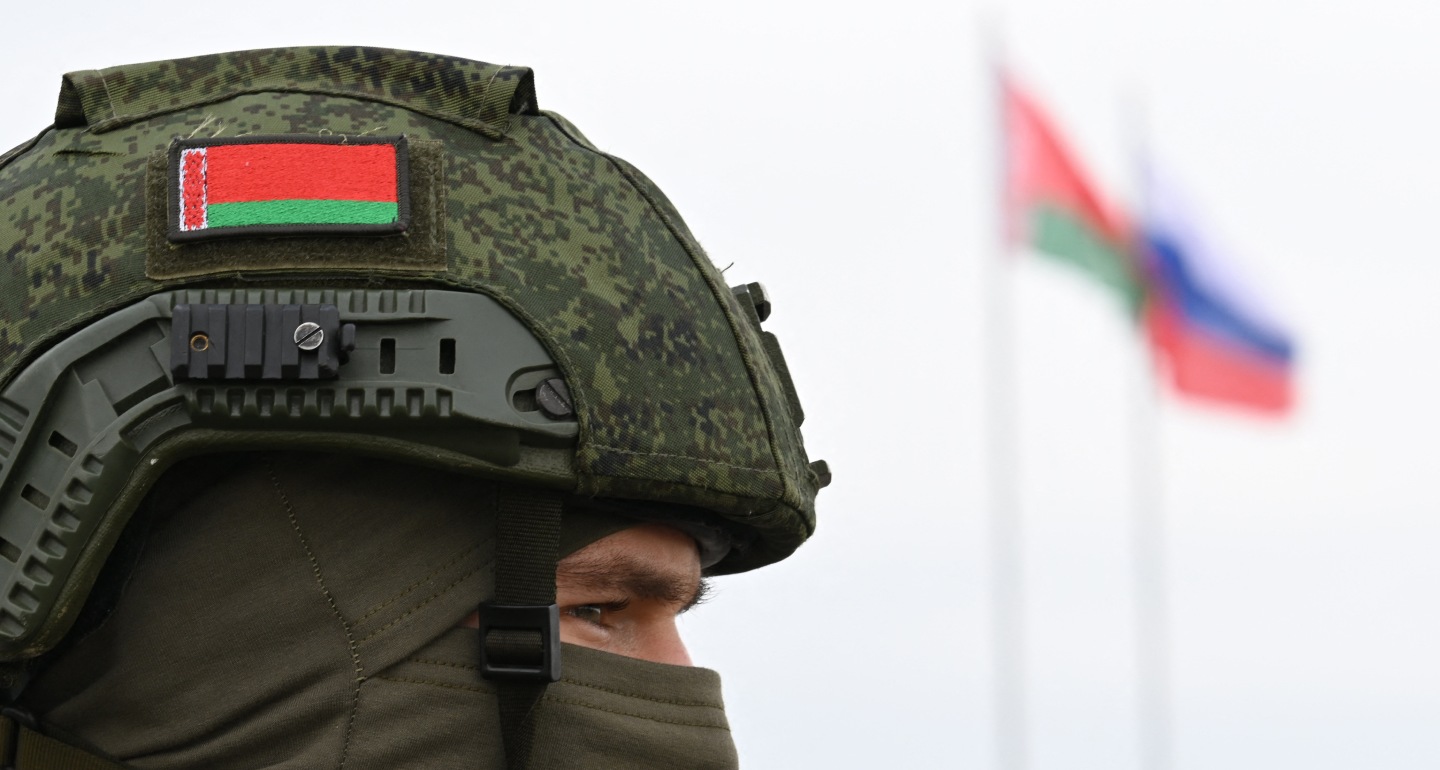
By reminding the world that Lukashenko is a threat to NATO and Ukraine, Kyiv is trying to return the focus to why the Belarusian regime needs to be contained rather than rewarded.

Artyom Shraibman