

In The Media
Josh Kurlantzick
{
  "authors": [
    "Josh Kurlantzick"
  ],
  "type": "legacyinthemedia",
  "centerAffiliationAll": "dc",
  "centers": [
    "Carnegie Endowment for International Peace"
  ],
  "collections": [],
  "englishNewsletterAll": "asia",
  "nonEnglishNewsletterAll": "",
  "primaryCenter": "Carnegie Endowment for International Peace",
  "programAffiliation": "AP",
  "programs": [
    "Asia",
    "Democracy, Conflict, and Governance",
    "South Asia"
  ],
  "projects": [],
  "regions": [
    "South Asia",
    "India",
    "China",
    "Southeast Asia"
  ],
  "topics": [
    "Political Reform",
    "Economy"
  ]
}
Source: Getty
For days, thousands of average Burmese and respected Buddhist monks have paraded through the streets of Burmese cities, calling for democracy and picking up supporters as they march. The events of today are reminiscent of 1988 when the Burmese military took power, convinced that there would be no sanctions from the international community. Twenty years on, history is in danger of being repeated.
Source: The New Repubilc

This scene could describe Burma today, where a major protest movement against the military junta appears to be gathering force, culminating in this week's 100,000-strong demonstrations in Rangoon, Burma's largest city. But they also could describe Burma of two decades ago, when even larger demonstrations rocked the country during the summer of 1988. Unfortunately, today's protests are reminiscent in another way as well. In the late 1980s, many average Burmese took heart from foreign media interest in their struggle, and thought foreign countries would come to their aid. But outside powers did little, and after weeks of just watching the protests the army cracked down. Are contemporary Burmese soon to suffer the same fate?
Like today, when small protests spiraled into nationwide action, in the summer of 1988 the unrest began with small student demonstrations in Rangoon. Hatred of the junta, which had destroyed Burma's economy and paralyzed the country, ran deep, and the students soon picked up support from monks, civil servants, ethnic minority groups, and many other important sectors of society. (This time the monks started a small protest, and gathered support from other groups.) By September 1988, the demonstrations had spiraled into nationwide action involving over a million people, complete with new publications that sprung up to criticize the regime.
At the time, diplomats in the British and American embassies in Rangoon worked hard to support Burma's democracy movement. According to a new book by Justin Wintle, The Perfect Hostage: A Life of Aung San Suu Kyi, staff at the British embassy served as a kind of conduit for messages between the democracy movement and the outside world. U.S. Congressman Stephen Solarz traveled to Burma and met with top officials and democracy activists. Many Burmese tuned into the BBC's Burmese service to learn about events in their own country, and some believed that the deployment of U.S. naval ships in the waters off Burma meant America was going to invade, to help topple the junta.
But on a higher level, the 1988 protests did not attract enough international attention. America was not going to invade--the ships were there to help evacuate American citizens. The United Nations offered only lukewarm interest in the Burmese protests. Burma's critical neighbors, Thailand and China, said little about the protests and offered tacit support for the Burmese military.
The scandal may be about to repeat itself. Despite high-profile condemnation of the Burmese by President Bush and First Lady Laura Bush, and vows to bring up Burma at the United Nations, the U.N. has moved slowly. The U.N.'s special envoy to Burma has not publicly pushed for a return visit to the country.
Worse, the neighbors on Burma's borders once again are staying mute. Though Secretary of State Rice has vowed to bring up Burma at meetings with Southeast Asian officials on the sidelines of the U.N. meeting this week, the Indian and Thai governments--Thailand's run since last year by generals--offer few comments, even as other Southeast Asian nations farther from Burma, like the Philippines, call for democracy. Even the Indian media has been slow to cover events in Burma.
Many Western powers believe that China, the most important foreign actor in Burma, can be convinced to withdraw its blanket backing for the junta. In a British cable earlier this year obtained by The New Republic, British diplomats argue "China is closer than any other country to Burma's military regime ... China's interests had changed in Burma. They [are] investing heavily and want to see a return on their investment ... There may be an opportunity to persuade China that it is in their interest to see a stable and developing Burma." Indeed, some of this week's Burma protests have signaled popular anger at China as well, with demonstrators pointedly going by the Chinese embassy; several Burmese previously told me of kidnappings of Chinese businesspeople in the north of the country. Recently, according to AFP, senior Chinese official Tang Jiaxuan offered a gentle rebuke to the Burmese junta, telling its foreign minister that "China sincerely hopes that Myanmar can bring stability back to its domestic situation."
Yet beyond these words, China has done little. It still has not thrown its support for tougher U.N. action against Burma. Unlike in North Korea, where China cut off some types of aid when trying to pressure Pyongyang to come to the bargaining table, Beijing has taken no such apparent actions towards the Burmese. Meanwhile, placing so much trust in China conceals the fact that there are still steps other nations can take on Burma. India and Thailand could at least demonstrate greater concern for the protestors, signaling to the Burmese junta there might be some consequences from neighbors if they crack down. The U.S. could appoint a special coordinator on Burma, thus placing more pressure on the U.N.'s coordinator and on China. While meeting with Chinese officials the White House also could more publicly call for specific actions from Beijing on Burma.
Apparently convinced they'd risk no serious sanction, in September 1988 the Burmese military stepped in, staging a kind of auto-coup. In the course of suppressing protests, Burmese troops killed as many as three-thousand people. Today, similar fears are rising. More soldiers reportedly are taking positions in Rangoon, and the regime reportedly is recruiting criminals, possibly to infiltrate protests and cause havoc, a tactic utilized in 1988. Burmese opposition radio has reported rumors that senior junta leader Than Shwe has ordered that authorities can use violence to squash demonstrations. Twenty years on, 1988 looks nearer than ever.
Josh Kurlantzick is a visiting scholar at the Carnegie Endowment and a special correspondent for The New Republic

Former Visiting Scholar, China Program
A special correspondent for The New Republic, a columnist for Time, and a senior correspondent for The American Prospect, Kurlantzick assesses China’s relationship with the developing world, including Southeast Asia, Africa, and Latin America.
Recent Work
Josh Kurlantzick
Carnegie does not take institutional positions on public policy issues; the views represented herein are those of the author(s) and do not necessarily reflect the views of Carnegie, its staff, or its trustees.

Depleted financial reserves and a shrinking tax base mean it is no longer possible to simultaneously deliver high defense spending, price stability, and economic growth.

Alexandra Prokopenko

In the tenth year of his presidency, President Mirziyoyev’s system is becoming even more personalized than that of his predecessor Karimov.

Galiya Ibragimova

With the growth in points of friction between the great powers, organizations like the SCO will continue to play a role in the strategic adaptation of the smaller powers caught between them.

Temur Umarov

The greater threat to Zelensky comes not from Fedorov alone, but from the convergence between the former defense minister’s political campaign and the anti-corruption investigations moving ever closer to the presidential administration.

Balázs Jarábik
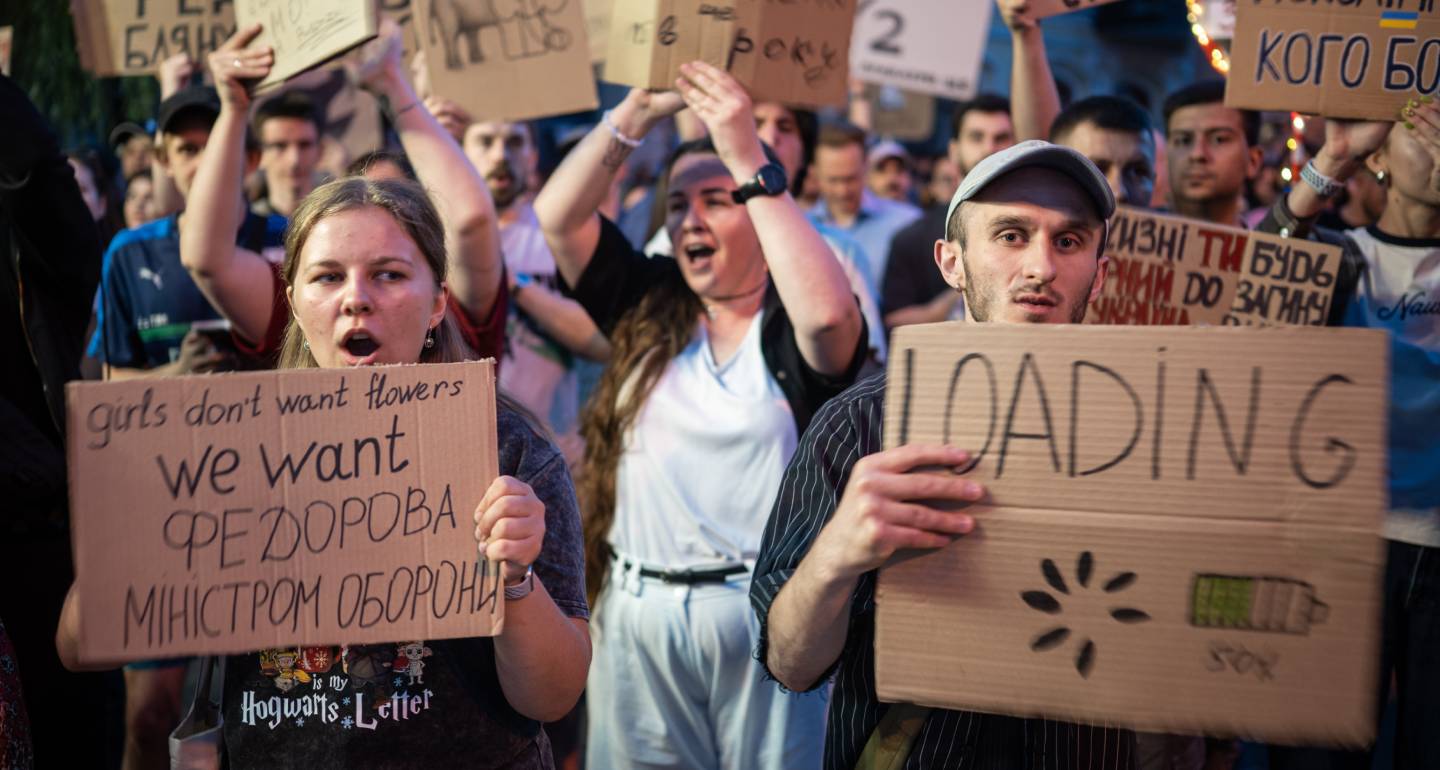
With his public call for new elections in Ukraine, ex-defense minister Mykhailo Fedorov has opened Pandora’s box.

Konstantin Skorkin