

Q&A
Christopher Boucek
{
  "authors": [
    "Christopher Boucek"
  ],
  "type": "legacyinthemedia",
  "centerAffiliationAll": "dc",
  "centers": [
    "Carnegie Endowment for International Peace"
  ],
  "collections": [],
  "englishNewsletterAll": "menaTransitions",
  "nonEnglishNewsletterAll": "",
  "primaryCenter": "Carnegie Endowment for International Peace",
  "programAffiliation": "MEP",
  "programs": [
    "Middle East"
  ],
  "projects": [],
  "regions": [
    "Saudi Arabia"
  ],
  "topics": [
    "Political Reform",
    "Economy"
  ]
}
Source: Getty
The prominent role of the internet in propagating and perpetuating violent Islamist ideology is well known. As such, identifying methods to short-circuit internet radicalization has become an urgent goal for numerous governments. Saudi Arabia has quietly supported initiatives to combat internet radicalization. One of the most developed programs is the Sakinah Campaign.
Source: CTC Sentinel

In recent years, Saudi Arabia has quietly supported initiatives to combat internet radicalization. One of the most developed programs is the Sakinah Campaign, which began several years ago to fight online radicalization and recruitment. Named after the Arabic word for religiously inspired tranquility, the Sakinah Campaign operates as an independent, non-governmental organization, supported by the Ministry of Islamic Affairs. Similar to other counter-radicalization and demobilization strategies in the kingdom, the Sakinah Campaign uses Islamic scholars to interact online with individuals looking for religious knowledge, with the aim of steering them away from extremist sources.
This article originally appeared in CTC Sentinel Combating Terrorism Center, West Point

Former Associate, Middle East Program
Boucek was an associate in the Carnegie Middle East Program where his research focused on security challenges in the Arabian Peninsula and Northern Africa.
Recent Work
Christopher Boucek

Christopher Boucek, Karim Sadjadpour
Carnegie does not take institutional positions on public policy issues; the views represented herein are those of the author(s) and do not necessarily reflect the views of Carnegie, its staff, or its trustees.

Russia’s ruling party would have benefited from Putin appearing as its distant patron, but as an active frontman imposing his views on the public, he has done nothing but harm both the party’s election campaign and the ruling system overall.

Andrey Pertsev

Depleted financial reserves and a shrinking tax base mean it is no longer possible to simultaneously deliver high defense spending, price stability, and economic growth.

Alexandra Prokopenko

In the tenth year of his presidency, President Mirziyoyev’s system is becoming even more personalized than that of his predecessor Karimov.

Galiya Ibragimova

The greater threat to Zelensky comes not from Fedorov alone, but from the convergence between the former defense minister’s political campaign and the anti-corruption investigations moving ever closer to the presidential administration.

Balázs Jarábik
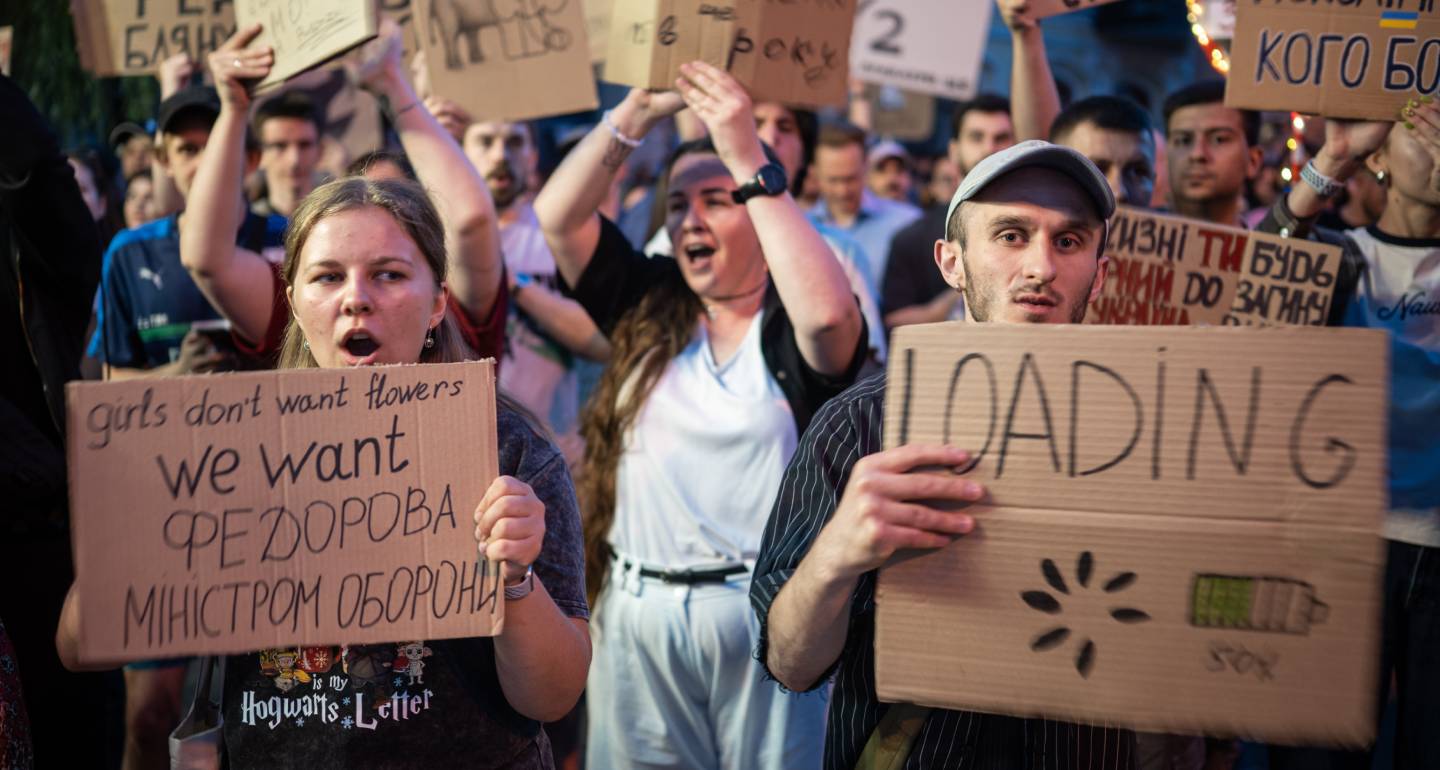
With his public call for new elections in Ukraine, ex-defense minister Mykhailo Fedorov has opened Pandora’s box.

Konstantin Skorkin