

Commentary
Russian strikes are weakening the economy sustaining Ukraine’s war effort. Closing the growing funding gap will require more European support and politically contentious reforms in Kyiv.
Balázs Jarábik
{
  "authors": [
    "James F. Collins",
    "Alexander Bessmertnykh",
    "Yuri V. Dubinin",
    "Arthur Hartman",
    "Jack Matlock",
    "Thomas R. Pickering"
  ],
  "type": "other",
  "centerAffiliationAll": "dc",
  "centers": [
    "Carnegie Endowment for International Peace"
  ],
  "collections": [],
  "englishNewsletterAll": "ctw",
  "nonEnglishNewsletterAll": "",
  "primaryCenter": "Carnegie Endowment for International Peace",
  "programAffiliation": "russia",
  "programs": [
    "Russia and Eurasia"
  ],
  "projects": [],
  "regions": [
    "Caucasus",
    "Russia"
  ],
  "topics": [
    "Foreign Policy"
  ]
}
REQUIRED IMAGE
At a crucial point in U.S.-Russia relations, many of the former Russian and U.S. ambassadors gathered together and urged both the Russian and U.S. governments to exercise reflection and restraint. In a joint statement released as the culmination of a several-day meeting, the ambassadors called upon the creation of an improved framework for consultations and negotiations between the two nations.
Source: A Joint Statement
For the past two days we former Ambassadors to Washington and Moscow from Russia and the United States have held an intense and substantive discussion about the present state of U.S.–Russia relations and the immense challenges facing their long-term development.
We have concluded that, despite the promise for constructive progress on bilateral matters following the 2008 Sochi Strategic Framework Declaration, the shockwaves released by recent hostilities in the Caucasus have brought about an alarming downward spiral in relations.
We are gravely concerned that heated rhetoric today often seems to take the place of a thoughtful analysis of the common interests of the United States and the Russian Federation in the 21st century.
Indeed, we believe that without urgent attention, our relations could lead to a protracted period of confrontation and counterproductive activity.
We noted that the present crisis has already had significant costs for our relations, including for the agenda set at Sochi, and that the present action-reaction dynamic risks inflicting more permanent damage, unless it is halted and reversed.
As a result, we urge that every effort be made now to relieve the immediate tensions surrounding the unstable situation in the Caucasus and to be cautious in actions that may exacerbate the present tense atmosphere.
As professionals who were deeply involved in efforts to end the Cold War and build a new cooperative relationship between our two countries, we call for action to avoid the repetition of past mistakes.
We further believe that recent events call for reflection and restraint by all sides. We believe that we are entering a period when new leadership in Moscow and Washington will face decisions that will reshape the U.S.–Russia agenda, set new priorities, and define the machinery we will use to conduct the business of our complex relationship.
We noted that the Caucasus conflict has brought to a head a variety of trends over the past few years that have altered in significant ways the environment within which our relations will develop further.
Among these trends are Russia’s political and economic recovery, the emergence of several significant new players in the global economy and international system, the evolution and growth of European and Euro-Atlantic institutions, and the continuing existence of unresolved conflicts that may engage the United States and Russia.
We also devoted substantial attention to the elements of our bilateral agenda which clearly reflect mutual interests and which therefore will demand priority attention in the near term.
Among these are:
We agreed, finally, that new administrations in Washington and Moscow must create an improved institutional framework for consultations and negotiations and for implementation of the programs and initiatives this agenda will require. Our experience suggests that such machinery will require attention and support from our Presidents. That would allow us to sustain the flow of multilayered negotiations and agreements, consultations and working-level discussions, as well as to support the implementation of programs agreed upon by both sides. U.S.–Russia relations will require that appropriate elements of government and the private sector should be mobilized to achieve success.
We also believe that there is an urgent need for expanded public dialogue, involving former government officials, academic experts, business leaders and other citizens, who want to contribute to the new agenda for our two countries. Russian-American relations should not be left hostage to political inertia.
As diplomats and practitioners who have experience in the management of U.S.–Russia relations over several decades, we believe that we are on the threshold of a time of decisions on the conduct of relations between our two nations in today’s rapidly changing world. Much has happened in the past two decades. Our world has seen transformational changes and the emergence of new and formidable challenges. But we are one in our conviction that the United States and Russia, in an ever more interdependent world, have special responsibilities for leadership in critical international areas and that our capacity to work effectively together to deal with global, regional and bilateral issues can remain a positive force for global stability and well-being.
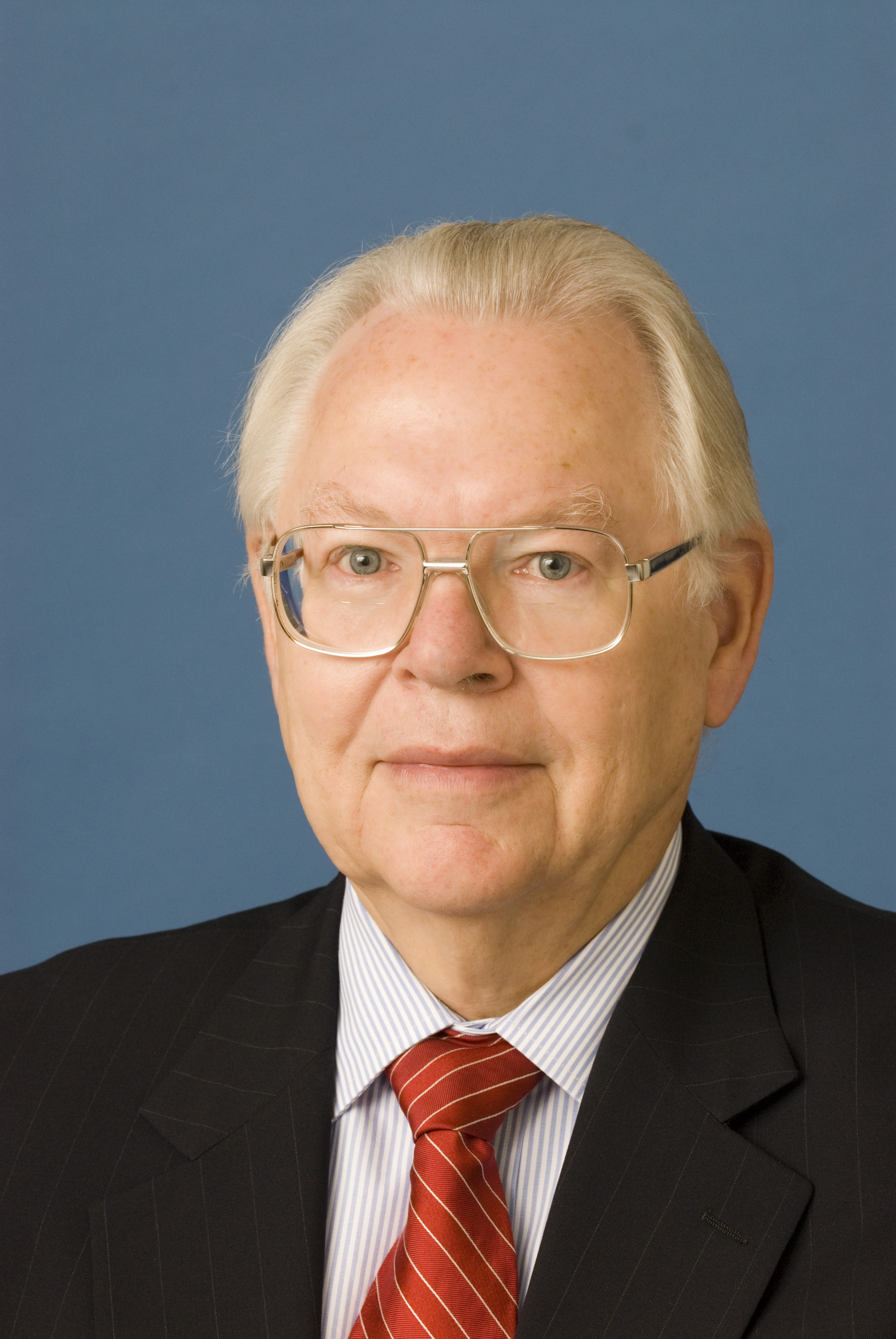
Nonresident Senior Fellow, Russia and Eurasia Program; Diplomat in Residence
Ambassador Collins was the U.S. ambassador to the Russian Federation from 1997 to 2001 and is an expert on the former Soviet Union, its successor states, and the Middle East.
Alexander Bessmertnykh
Yuri V. Dubinin
Arthur Hartman
Jack Matlock
Thomas R. Pickering
Carnegie does not take institutional positions on public policy issues; the views represented herein are those of the author(s) and do not necessarily reflect the views of Carnegie, its staff, or its trustees.

Russian strikes are weakening the economy sustaining Ukraine’s war effort. Closing the growing funding gap will require more European support and politically contentious reforms in Kyiv.

Balázs Jarábik

Despite a new textbook, an influx of Russian teachers and managers, and an end to the teaching of Ukrainian, the Kremlin is unlikely to have “reprogrammed” locals.

Konstantin Skorkin

For every ruble allocated to social policy, health, and education in 2027, double that amount is earmarked for the army, the police, and the security services.

Alexandra Prokopenko

Cargo traffic through Russia’s Northern Sea Route has increased because of the disruption caused by the conflict in the Middle East, the Ukraine war, and U.S.-China tensions.

Mikhail Korostikov
An analysis of traffic accident data suggests that Ukrainian drone attacks caused a material but not disastrous fall in Russian gasoline consumption over the summer.

Sergey Vakulenko